

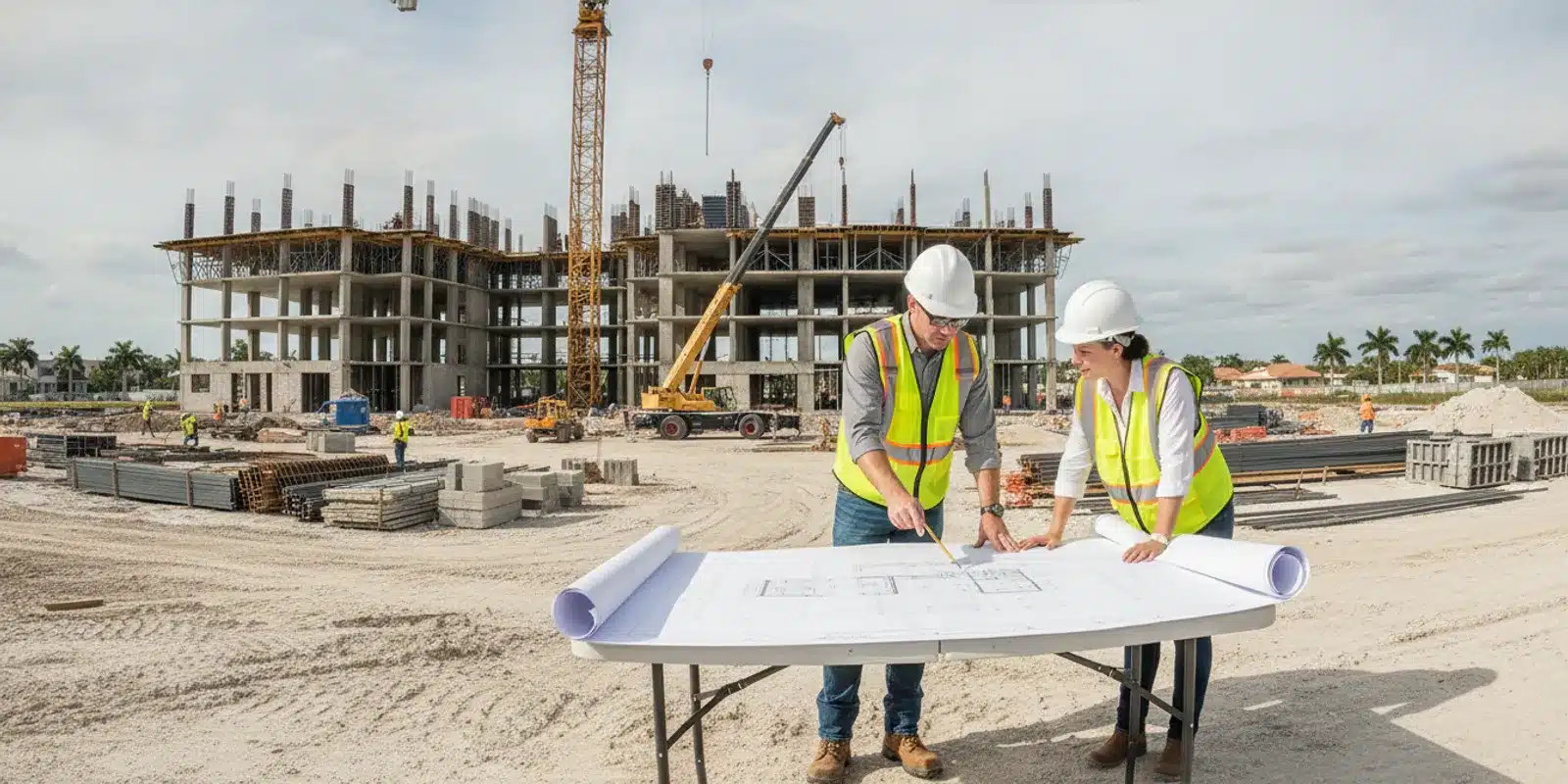
The Sweetwater building permit process for a commercial project starts with one control that prevents avoidable rework: confirm which authority has jurisdiction over the property and the proposed scope before assembling the permit package. Then coordinate the plans, supporting documents, trade scopes, fees, and inspection responsibilities against that authority’s current instructions. Do not assume another Miami-Dade-area municipality’s portal, checklist, fee schedule, or review timeline applies to Sweetwater.
Request a proposal for your Sweetwater permit package
How should teams confirm the Sweetwater building permit process and responsible authority?
Start with the parcel, not the project team’s customary permit route. A mailing address or a nearby city name does not, by itself, establish the permitting jurisdiction. Confirm the property’s municipal boundary and the authority responsible for the specific work before opening an application or relying on a prior project’s checklist. For a commercial parcel near a boundary, document the confirmation in the project file.
Ask the authority having jurisdiction (AHJ) to confirm the correct intake channel and the departments or agencies whose review may apply to the scope. Depending on the work, the permit path may involve building plan review and separate trade, fire, site, or other reviews. The required reviewers depend on the parcel, existing approvals, and proposed work; do not treat this list as a Sweetwater-specific determination.
Make that jurisdiction check concrete. Have the parcel address and, when available, the parcel identification number, a concise scope narrative, and a site plan or location reference ready when contacting the authority. Ask whether the building application and any related reviews are handled through the same channel, whether separate applications or approvals are expected, and which current submittal instructions govern. Record the name or office contacted, the date, and the answer. If the scope changes materially after this confirmation, repeat the check rather than assuming the original answer still covers the revised work.
Keep a written record of what was confirmed, when, and by whom. Save the applicable application instructions, forms, plan-submission standards, and fee information with the project’s permit log. A dated record makes it easier to distinguish a current requirement from an old project note or a procedure used by a neighboring jurisdiction.
The City of Sweetwater’s financial reports are government records that include building permit revenues, but financial statements are not current application manuals or sources for review timelines. Use them only for that limited financial context, and verify process requirements directly with the AHJ: City of Sweetwater financial report and prior-year City of Sweetwater financial report.
What should a commercial team settle before opening an application?
Define the permit scope and the intended sequence before filing. Identify whether the application covers new construction, an addition, an interior alteration, a change to building systems, or multiple work packages. A scope that is too broad can make the application difficult to review; a scope that omits work shown in the drawings can create corrections, separate permit needs, or inspection coordination issues later.
Assign one person to own the application record and one process for distributing AHJ comments to the full design and construction team. Establish who can answer architectural, structural, mechanical, electrical, plumbing, fire-protection, and site-related questions as applicable. Confirm that the owner’s authorization, contractor information, and any required professional credentials are available in the format the authority requests.
Before opening the application, align the scope narrative with the owner’s procurement package, drawing title blocks, and contractor work breakdown. For example, if the narrative says “tenant build-out” but the plans also show a service upgrade or exterior equipment, clarify whether those elements are included in this application or handled separately. That early alignment helps the team avoid conflicting descriptions across forms, drawings, and supporting reports. It also gives the AHJ a clearer basis for identifying the reviews that may apply.
Before submission, compare the documents against the AHJ’s current checklist. A useful starting point for organizing files is this Florida permit documents checklist; the final list must still come from the jurisdiction and the specific project scope.
Which plans and supporting documents belong in the package?
Build one coordinated submittal set rather than collecting independent discipline files at the last minute. The precise requirements are project- and AHJ-specific, but commercial teams commonly need to evaluate the following document groups before intake:
- Application and ownership: application forms, owner or authorized-agent information, contractor details, and signatures or authorizations required by the AHJ.
- Design drawings: applicable site, architectural, structural, and building-system plans, with consistent project address, scope, sheet references, and revision information.
- Supporting calculations and reports: engineering, energy, product approval, or other documentation when required for the proposed design and jurisdiction.
- Existing-condition information: relevant prior approvals, existing plans, surveys, or field information when needed to establish what is already on the parcel or building.
- Related approvals: documentation for reviews or permits that the AHJ identifies as prerequisites or coordinated items for the project.
Use a submission index that names each file, discipline, revision date, and purpose. Check that the index matches the uploaded or delivered documents. Keep superseded sheets out of the active package, and make sure every revised sheet is clearly identifiable. These controls reduce ambiguity when reviewers issue comments against a particular drawing version.
Run a cross-discipline consistency check before transmitting the package. Verify that the site address, project name, scope, sheet numbering, revision dates, and key equipment or room identifiers agree across disciplines. Check that referenced details and schedules are included, that no page is rotated or illegible in the final file, and that required seals or signatures appear where the AHJ expects them. A simple file-opening review by someone other than the person who assembled the upload can catch missing sheets and corrupted exports before they become intake issues.
For a more detailed explanation of drawing-set coordination, review how a permit set supports project approval. It is a preparation resource, not a substitute for Sweetwater’s current submission standards.
How do intake, plan review, and corrections affect the schedule?
Think of intake as a completeness gate, not proof that the project is approved. After the team submits, track whether the AHJ has accepted the application for review, identified missing information, routed the package to reviewers, or returned comments. The exact portal and status labels must be confirmed with the jurisdiction; do not assume a neighboring city’s terminology or workflow applies.
At intake, save the receipt, application or record identifier, timestamp, submitted-file index, and any initial notices. Designate one person to check the confirmed status channel and distribute updates to the project team. If an application is returned as incomplete, identify whether the issue concerns a missing form, unreadable file, absent supporting item, fee, or a scope question. Record the exact request and responsible party instead of treating all intake holds as design comments. This distinction helps the team direct the correction to the right owner.
Once comments arrive, route each item to a named discipline lead. Maintain a response log with the reviewer’s comment, responsible person, proposed response, revised drawing or document, and completion status. Resolve coordination issues across disciplines before resubmission. For example, an architectural revision that changes an equipment room or rated assembly may require related structural, mechanical, electrical, plumbing, or life-safety updates, depending on the design.
Use the comment log as a control document, not just a list of tasks. Preserve the reviewer’s wording, note the sheet and detail cited, and separate questions requiring a design decision from requests for clarification or added documentation. Assign a due date internally and flag dependencies, such as an owner decision or consultant calculation, that could prevent a coordinated response. Before closing an item, confirm the revised sheet actually addresses the question and that the response identifies the change. This makes the resubmittal easier for both the project team and reviewer to follow.
Submit a consolidated, clearly labeled response package in the format requested by the AHJ. Answer each comment directly and point the reviewer to the revised sheet or supporting document. Avoid sending a partial response without identifying what remains outstanding; unclear resubmissions can create another review cycle. Keep the submitted revision set and response log together so the field team can distinguish permit-approved documents from drafts.
Do not publish or promise a review duration based on an unrelated city, an old project, or a general estimate. Ask the AHJ what current intake and review information is available for this application and record the date and scope of the answer. Build the project schedule around confirmed milestones and realistic internal buffers for coordination, resubmission, and downstream approvals.
How does the Sweetwater building permit process move from submittal to issuance?
For schedule control, manage the application as a chain of accountable handoffs rather than a single submission date. Set internal milestones for jurisdiction confirmation, package readiness, application intake, review responses, payment, permit issuance, and field distribution. These are project-management checkpoints, not promised AHJ turnaround times. Record the actual status and date for each milestone so the owner, design team, and contractor can see whether a delay is waiting on agency review, missing information, a design decision, or a payment action.
Before filing, identify the person authorized to respond to the AHJ and the people who must approve changes to the design. Establish a document-control rule: every resubmission should have a clear revision date, a list of changed sheets, and a complete response to open comments. When several disciplines are involved, avoid parallel responses that could contradict one another. A short coordination review before resubmission can catch mismatched equipment schedules, dimensions, system notes, or scope descriptions that would otherwise prompt another clarification cycle.
Also separate agency dependencies from internal dependencies in the schedule. The team controls how quickly it assembles a complete package, routes comments, makes design decisions, and returns coordinated revisions. The AHJ controls its own review and issuance steps. Keep those workstreams visible without assigning an unverified duration to either one. If the application status is unclear, use the confirmed official channel to ask what is outstanding and document the response; do not interpret silence or a portal label as approval.
For a multi-permit project, maintain a simple dependency map alongside the master schedule. List each application or approval, its responsible owner, prerequisite documents, known handoffs, and the field activity that depends on it. A building permit, trade permit, site approval, or other review may not share the same status or sequence; confirm the relationship with the AHJ and track each record separately. This avoids marking an entire project “ready” because one application has advanced while a required related item remains unresolved.
Before issuance, verify that the permit scope, job address, contractor details, approved documents, and stated conditions align with the project’s intended work. Resolve discrepancies through the AHJ’s stated process before mobilization. This final document check helps prevent a field team from acting on a receipt, a draft plan, or a permit record that does not cover the work scheduled.
What should teams confirm about fees and permit issuance?
Obtain the current fee basis and payment instructions from the AHJ for the proposed work. Do not calculate a Sweetwater permit charge from a different city’s schedule or assume that the application fee is the only amount due. Depending on the jurisdiction and scope, fees may be assessed at different stages or across related permits and reviews; confirm what applies, when payment is due, and whether any additional documentation is needed.
For project controls, assign one person to reconcile fee notices against the budget and application scope. Record the amount requested, the related permit or review, the payment deadline or trigger given by the authority, and proof of payment. If a fee changes after the scope is revised, connect the change to the revised work and update the forecast rather than leaving the original allowance untouched. Do not substitute a fee estimate from a different municipality for an official assessment.
| Project checkpoint | What the team should verify | Useful record to retain |
|---|---|---|
| Before intake | Correct AHJ, current submittal requirements, application scope, and required supporting reviews | Written jurisdiction confirmation, checklist, and submission index |
| At intake | Accepted file format, completeness status, payment instructions, and application identifier | Receipt, confirmation, and initial status record |
| During review | Reviewer comments, response format, revised-document requirements, and any outstanding fees | Comment log and revision-controlled response package |
| Before mobilization | Permit issuance, approved plans, conditions, and any separate trade or prerequisite approvals | Issued permit and complete approved document set |
| During construction and closeout | Required inspections, accepted results, corrections, and closeout prerequisites | Inspection log, approved revisions, and final closeout records |
Before field work proceeds under a permit, confirm that the permit has been issued, the scope and conditions match the planned work, and the field team has access to the approved documents. A payment receipt or an application status is not the same as an issued permit. Assign responsibility for distributing the issued permit, approved plans, and applicable conditions to the superintendent and relevant subcontractors.
For budget planning, this overview of how Florida project permit fees can be organized can help teams prepare questions. It does not state or replace the current Sweetwater fee schedule.
How should inspections and closeout be managed?
Translate the issued permit and approved plans into an inspection plan before work starts. Confirm with the AHJ which inspections apply, how they must be requested, any notice or access requirements, and how results are recorded. The inspection sequence depends on the permitted scope and approved documents. Do not infer local inspection names, booking rules, or availability from another jurisdiction.
Coordinate inspection readiness across the superintendent, trade contractors, and design team. The person requesting an inspection should know the permit identifier, work area, relevant approved drawing revision, and any prerequisites the AHJ has specified. Maintain a log of requested dates, results, corrections, reinspection needs, and the person assigned to resolve each item. If field conditions require a design change, ask the responsible design professional and AHJ how that change must be documented and approved before building from a revised condition.
Before requesting an inspection, hold a short readiness check with the trade lead responsible for the work. Confirm that the inspected area is accessible, the work is at the stage described in the request, required documentation is available, and any prerequisite inspection or approval has been addressed. If the work is not ready, reschedule through the authority’s prescribed channel and update the project log. A missed or premature request can disrupt subcontractor sequencing, so make inspection readiness a field coordination item rather than an administrative afterthought.
Closeout is a managed sequence, not a single final inspection. Track outstanding inspection results, correction items, required certificates or affidavits, and any records the AHJ requires before it will mark the permit complete or support occupancy. Confirm the exact closeout standard for the project rather than assuming that passing a particular inspection automatically closes every related permit.
Use this resource on managing inspection results and next steps to structure follow-up, then verify local inspection and closeout instructions with the AHJ. If occupancy documentation is part of the project, review the Florida certificate-of-occupancy application overview as general preparation, not as confirmation of a Sweetwater-specific closeout requirement.
A Sweetwater commercial permit checklist for project teams
- Confirm the parcel’s permitting jurisdiction and document the AHJ’s current intake channel.
- Describe the project scope, identify the permits and reviews the AHJ says apply, and name an application owner.
- Obtain current forms, checklists, file standards, fee instructions, and inspection procedures from the AHJ.
- Coordinate drawings and supporting materials across disciplines; use a revision-controlled submission index.
- Submit the package, retain the application identifier and receipt, and monitor the confirmed status channel.
- Log every review comment, assign an owner, coordinate revisions, and submit a complete response package.
- Confirm fees, issuance status, permit conditions, and access to the approved plans before field work relies on them.
- Plan inspections from the issued permit, record outcomes, resolve corrections, and verify closeout requirements.
Teams handling multiple Florida jurisdictions can also use a permit tracking framework to keep applications, comments, and deadlines visible without treating one municipality’s workflow as another’s.
Request a proposal for commercial permit coordination
Frequently Asked Questions
Can a team use another Miami-Dade municipality’s permit checklist for Sweetwater?
Use it only as an internal planning reference, not as the governing submittal standard. Confirm the current forms, file requirements, fees, and review path with the authority responsible for the Sweetwater parcel and project scope.
Does submitting an application mean the permit is approved?
No. Submission or intake confirmation is not the same as permit issuance. Track the application through review, resolve comments, satisfy payment and other stated prerequisites, and confirm issuance before relying on the permit for field work.
Where can a team find the Sweetwater review timeline?
Ask the AHJ for current information that applies to the application and record when it was provided. Do not apply a timeline from another municipality or an unrelated past project to the current schedule.
What should the project team do when a reviewer requests a revision?
Assign each comment to a responsible discipline lead, coordinate affected sheets, prepare a direct response, and resubmit a clearly labeled package in the requested format. Keep the comment log and approved revision set available to the field team.
When is the permit ready for closeout?
Confirm the AHJ’s requirements for the permitted scope. Track inspection results, corrections, and any required closeout records, then verify that the authority has accepted the required items and updated the permit status as applicable.
A disciplined jurisdiction check, coordinated application, and revision-controlled closeout plan give commercial teams a practical way to manage a Sweetwater permit without relying on unverified local assumptions.