


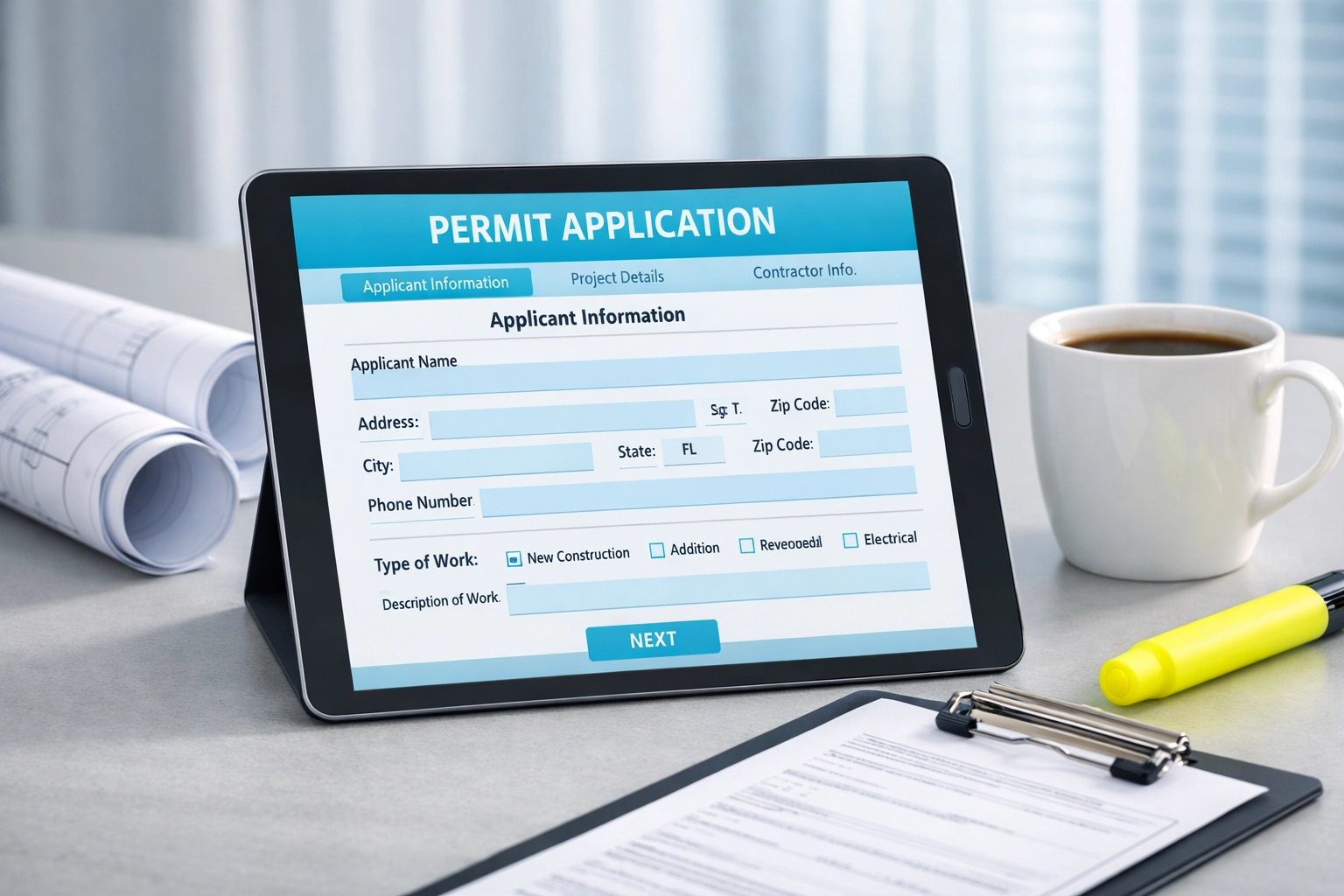
Working on commercial projects in Florida? Get ready for a major shift in 2026. A new standardized statewide application for your commercial building permit is on the way, and it’s one of the most contractor-friendly updates we’ve seen in years. But this new form doesn’t eliminate every hurdle. Understanding all of Florida’s commercial building permit requirements—from initial paperwork to final inspections—is still the key to avoiding costly delays. I’ll walk you through everything you need to know, including the new application, required documents, and how to streamline the entire approval process.
Understanding Florida’s Uniform Commercial Building Permit
Florida’s construction industry has long dealt with fragmented, county-specific permit applications. Each jurisdiction had its own forms, terminology, and submission requirements. That changes in 2026 with the introduction of a standardized statewide commercial building permit application.
This uniform application offers major advantages for contractors operating across multiple Florida counties:
- Single standardized form used for all commercial projects statewide
- Consistent terminology eliminating confusion over terms like “gross floor area” or “occupancy classification”
- Digital-first design compatible with online portals in municipalities across Florida
- Standardized supporting document checklist simplifying pre-submission preparation
For contractors juggling projects in Miami-Dade, Broward, Palm Beach, and beyond, this means no more adapting to different application formats. The uniform system reduces administrative burden and speeds up your team’s ability to submit accurate applications the first time.
Commercial vs. Residential Permits: What’s the Difference?
While both fall under the umbrella of “building permits,” commercial and residential projects are worlds apart in terms of requirements. Commercial permits involve a much higher level of scrutiny due to public safety, accessibility (ADA compliance), and zoning regulations. Think fire suppression systems, structural engineering for larger loads, and approvals from multiple agencies like health and fire departments. Residential permits are typically more straightforward, focusing on compliance with the Florida Building Code for single-family homes or duplexes. The new uniform application simplifies the submission process for commercial work, but it doesn’t change the underlying complexity of the plans and documentation required to get that submission approved. Understanding which category your project falls into is the first step in gathering the right paperwork and setting a realistic timeline for approval.
Planning Permits vs. Building Permits
It’s a common point of confusion, but planning permits and building permits are two distinct hurdles in the development process. Think of it this way: a planning (or zoning) permit is about the *use* of the land. It ensures your project aligns with the local municipality’s master plan—for example, confirming you can build a retail store in a commercially zoned area. A building permit, on the other hand, is about the *structure* itself. Once you have zoning approval, the building permit process involves a detailed review of your construction plans to ensure they meet the stringent safety and technical standards of the Florida Building Code. You need the first to even apply for the second, making it a critical two-step sequence for any new construction or major renovation.
Work That May Not Require a Permit
Not every job requires a trip to the building department. Generally, minor repairs and cosmetic upgrades don’t require a permit. This can include projects like interior or exterior painting, installing new flooring, replacing kitchen cabinet doors, or fixing a leaky faucet. However, the line gets blurry quickly. For example, replacing a single broken roof shingle is a repair, but re-roofing your entire home definitely requires a permit. The rules vary between counties and even cities, so what’s exempt in Orlando might not be in Miami. Before you start any work, it’s always the safest and most cost-effective strategy to verify with your local building authority or consult with an expert to avoid fines and work-stoppage orders down the road.
Who’s Eligible for a Florida Commercial Building Permit?
Under Florida Statute 553.79 and the Florida Building Code, licensed contractors must submit and accept permit issuance for most commercial construction projects. This ensures accountability and compliance with state licensing requirements.
However, owner-builders have a limited option: if your commercial project costs less than $75,000, you may apply for the permit yourself under the exemption to Florida Statute 489.103(7)(a). This exemption allows property owners to act as their own contractor for smaller-scale work. Keep in mind that some jurisdictions may impose additional limitations on owner-builder eligibility, so verify with your local building department before proceeding.
Before You Apply: Key Planning Steps
Jumping straight into the application without proper groundwork is a recipe for delays. Taking a few key planning steps beforehand can make the entire process smoother and more predictable. Here’s where to focus your efforts before you submit anything to the building department.
Confirm Your Project’s Jurisdiction
Understanding which building department has authority over your project is the first critical step. It’s essential to confirm local rules early to prevent unexpected delays, especially since many projects require plans prepared by a licensed architect or engineer. Florida’s landscape of cities and counties means your project’s location dictates which specific building codes, zoning ordinances, and submission protocols apply. Getting this wrong can lead to submitting to the wrong office, using incorrect forms, or designing a project that doesn’t comply with local regulations, forcing you back to the drawing board. This initial verification sets the foundation for a successful application.
Consult with Local Planners and Utility Companies
Your local building department isn’t the only entity you’ll need to work with. Before you finalize your plans, it’s wise to consult with local planners and utility providers. You’ll need to contact utility companies to determine if you’ll owe impact fees or if existing lines for water, sewer, and power need to be upgraded to support your commercial project. Simultaneously, a conversation with the planning and zoning department can confirm that your project aligns with land use regulations, parking requirements, and any special district overlays. These proactive discussions help you identify potential red flags and costly requirements before you’ve invested heavily in detailed architectural drawings, saving significant time and money.
Consider Using Pre-Approved Building Plans
If your project involves a design that will be replicated, such as a franchise restaurant or a specific retail store model, look into whether your municipality offers a master plan or prototype plan review program. Using a pre-approved design can significantly speed up the permitting process. As officials in many cities have noted, when you use a pre-vetted plan, your plan review fees are often lower and your permit can be issued much faster because the core design has already been cleared for code compliance. This approach is particularly effective for developers and contractors building multiple similar structures, as it creates a predictable and efficient path to approval, allowing you to get to construction sooner.
Gathering Your Documents: A Commercial Permit Checklist
All commercial construction plans submitted in Florida must be signed and sealed by a licensed Florida architect or engineer. This requirement ensures professional oversight and compliance with state building standards.
Standard documentation requirements include:
- Site plan or survey with dimensions, setbacks, and property location
- Architectural and engineering plans conveying the full scope of proposed work
- Floor plans and exterior elevations for all structures
- Construction type and occupancy classification per Florida Building Code
- Energy conservation calculations demonstrating compliance with energy efficiency standards
- Fire flow calculations and life safety plans
- Door and window installation plans with product specifications
- Foundation plan and floor/roof framing details
- Proof of approved site construction plan
- Notice of Commencement (required before your first inspection)
Depending on your project’s location and scope, additional documentation may be required:
- Utility connection plans (water, sewer, electrical service)
- Landscaping and irrigation plans
- Stormwater management and drainage reports
- Environmental impact assessments
- Soil studies and geotechnical reports
As Florida continues prioritizing hurricane preparedness, water management, and energy efficiency, expect tightened documentation requirements in 2026. Many jurisdictions now demand more detailed structural calculations, enhanced MEP (mechanical, electrical, plumbing) plans, and comprehensive stormwater compliance documentation.
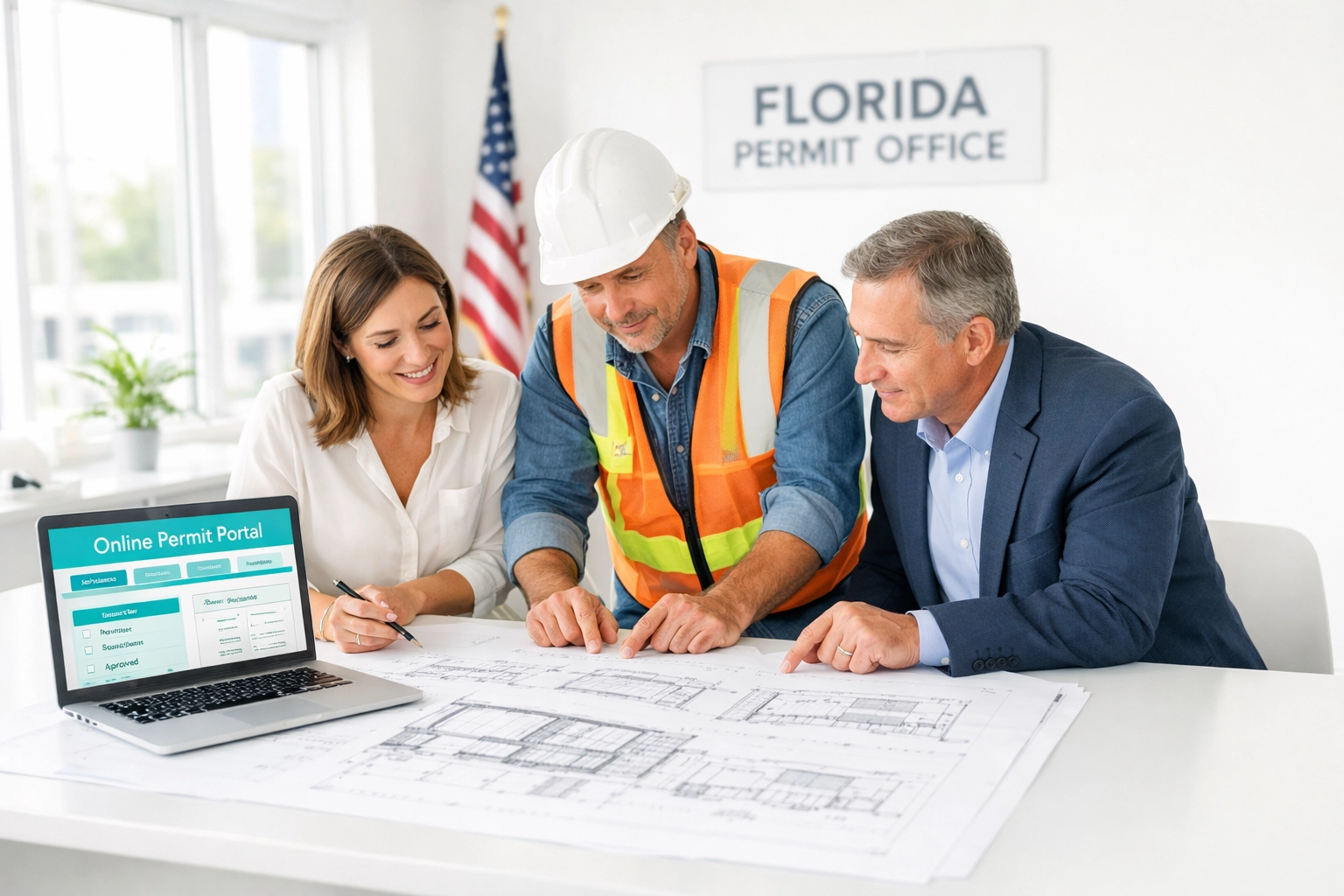
Your Step-by-Step Guide to the Commercial Permit Process
Navigating Florida construction permits becomes more straightforward when you understand the sequential steps. Here’s the complete process for 2026:
Step 1: Fill Out the Standard Application
Fill out the new uniform commercial building permit application. This single form now applies to all Florida counties, eliminating the need to learn different formats for each jurisdiction.
Step 2: Upload Your Paperwork
Submit your completed application and all supporting documentation through your county’s online permitting portal. While portal names vary (Orange County uses “Fast Track,” for example), the standardized checklist ensures consistency in what you need to upload.
Step 3: Submit Your Plan Review Checklist & Deposit
Pay the initial deposit fee required by your local building department. This allows the plan review process to begin.
Step 4: What Happens During Plan Review?
Your submitted plans will undergo review by building department staff and, depending on complexity, may involve simultaneous reviews by multiple departments (structural, fire safety, engineering, zoning). Under 2026 provisions, many jurisdictions now conduct concurrent reviews to reduce overall timeline.
Environmental Reviews and Public Input
As Florida places a greater emphasis on sustainability, expect more scrutiny on your project’s environmental impact. Your plans will likely undergo detailed environmental reviews, focusing on things like stormwater management, drainage, and potential effects on local ecosystems. The real challenge is that these requirements aren’t uniform across the state; counties and cities often have their own specific sustainability standards and documentation needs. This means a project in Miami-Dade might face different environmental hurdles than one in Orlando. Staying ahead of these local regulations and being prepared to address public input is crucial for keeping your project on track and ensuring community support.
Required Legal Documents
Beyond the standard plans, a couple of legal documents are absolutely essential. First, the Florida Building Code mandates that all your construction plans must be signed and sealed by a licensed Florida architect or engineer. This is a non-negotiable step that ensures professional accountability. Second, you must file a Notice of Commencement (NOC) with the county clerk before your first inspection can be scheduled. This document officially marks the start of construction and protects all parties involved by creating a clear public record of the project’s timeline and key players.
Step 5: Pay the Final Permit Fees
Once your plans are approved, you’ll receive notification to pay the remaining building permit cost Florida. Fees vary by jurisdiction, project size, and construction value.
Step 6: Don’t Forget Your Sub-Permits
Depending on your project scope, apply for necessary specialized permits (covered in detail below).
Step 7: File Your Notice of Commencement
Upload a certified copy of your Notice of Commencement to the permit system before requesting your first inspection.
Step 8: Schedule and Pass Your Inspections
Coordinate required inspections throughout construction, from foundation to final Certificate of Occupancy.
For contractors managing projects in Miami-Dade County, Broward County, or Palm Beach County, understanding county-specific portal requirements can prevent submission errors and delays.
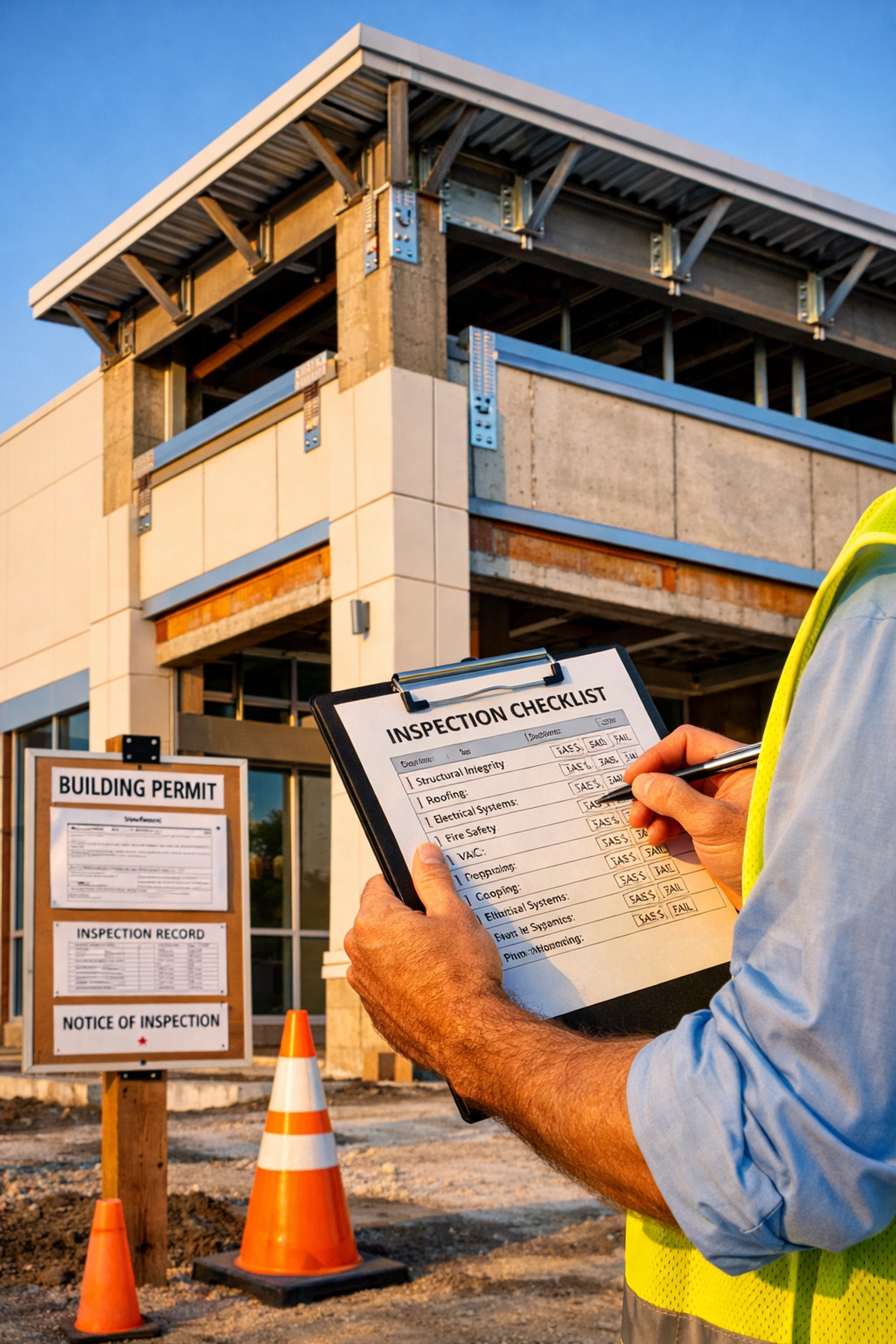
Step 9: Keep Required Documents On-Site
Once your permit is issued and construction begins, it’s essential to keep a complete set of the approved plans and permit documents at the job site at all times. Think of it as your project’s rulebook. When an inspector arrives, they’ll need to see the signed and sealed architectural and engineering plans to verify that the work being done matches what was approved according to the Florida Building Code. Having everything organized and readily available—from the main permit card to detailed site plans and energy calculations—shows professionalism and helps the inspection go smoothly. This simple step can be the difference between passing an inspection and facing a frustrating stop-work order.
Do You Need Sub-Permits or Specialized Approvals?
Most commercial projects require multiple sub-permits for specialized building systems. Each trade-specific permit ensures compliance with relevant codes and safety standards:
- Electrical permits – Must comply with the National Electrical Code
- Plumbing permits – Required for all water supply and drainage systems
- Mechanical permits – Covers HVAC systems per Florida Building Code mechanical provisions
- Fire system permits – Must comply with National Fire Prevention Code and local fire marshal requirements
- Roofing permits – Especially critical in Florida due to hurricane standards
- Gas permits – For natural gas or propane installations
- Irrigation permits – Required for commercial landscaping systems
- Landscape permits – Many jurisdictions require separate approval for commercial landscaping
The 2026 uniform application doesn’t eliminate sub-permit requirements, but it does create clearer guidance on which permits your project needs and when to apply for them.
Approvals from Other Government Agencies
Your local building department is a major checkpoint, but it’s rarely your only stop. Many commercial projects also require approvals from other government bodies before a building permit can be issued. Depending on your project’s scope and location, you may need sign-offs from the Department of Environmental Protection, the Department of Transportation, or your local water management district. Florida law requires building officials to verify that you’ve secured all other necessary government approvals before they finalize your permit. The good news is that some local governments are implementing programs to expedite this process for certain developments, which helps streamline the timeline. Managing these multiple agency interactions is a complex task, which is why many contractors rely on expert permit expediting services to coordinate communication and ensure all requirements are met in the proper sequence.
Navigating Homeowner Association (HOA) Rules
If your commercial project is located within a planned community or a development governed by a Homeowner Association (HOA), you have another layer of rules to follow. HOA approval is a separate process from your municipal permit application, and it’s one you can’t afford to ignore. These associations have their own specific covenants regarding building materials, aesthetics, landscaping, and even construction hours. While local governments are prohibited from unfairly delaying permits, they operate with an awareness of established HOA regulations. You must satisfy both entities. Securing written approval from the HOA’s architectural review board is often a prerequisite for your government permit submission. Overlooking this step can lead to significant delays or even legal challenges from the association down the road, making it a critical part of your pre-construction due diligence.
How Much Will Your Permit Cost and How Long Will It Take?
Building permit costs in Florida vary significantly based on project value, jurisdiction, and complexity. Factors affecting your permit fees include:
- Total construction value
- Square footage of the project
- Building occupancy type
- Number of required inspections
- Plan review complexity
- Sub-permit requirements
Most jurisdictions calculate permit fees using a combination of flat fees and percentage-based charges tied to construction value. The $75,000 threshold for owner-builder eligibility provides a useful reference point for smaller commercial projects.
Timeline expectations have improved with the 2026 reforms. Standardized applications and concurrent review processes mean many contractors are seeing faster plan review turnarounds. However, complex projects involving multiple departments, environmental reviews, or variance requests still require substantial lead time.
For contractors looking to minimize delays, expedited building permits Florida services can help ensure complete, accurate submissions that avoid common rejection issues. Professional permit expediting services Florida understand jurisdiction-specific requirements and can coordinate with building departments on your behalf.
Estimating Your Permit Fees
Figuring out the exact cost of your commercial permit isn’t always straightforward, as fees are calculated locally and depend entirely on your project’s specifics. The final price tag is influenced by several key factors, including the total construction value, the project’s square footage, its intended use or occupancy type, and the complexity of the plan review. Most building departments use a sliding scale, combining flat administrative fees with charges based on a percentage of your total construction cost. While the $75,000 project value threshold for owner-builders can give you a rough idea for smaller jobs, the best way to get a clear number is to consult your local fee schedule or request a proposal for a precise estimate tailored to your project.
Typical Permit Timelines in Florida
The good news is that the 2026 reforms are helping to shorten permit timelines across the state. Thanks to standardized applications and concurrent review processes, where multiple departments check your plans at the same time, many contractors are getting approvals faster. However, it’s important to set realistic expectations. If your project is complex—requiring environmental reviews, zoning variances, or approvals from several different agencies—you should still plan for a significant lead time. To avoid unnecessary setbacks, ensuring your initial submission is complete and accurate is critical. Working with a professional who understands each jurisdiction’s unique requirements can help you sidestep common errors that lead to rejections and keep your project on schedule. Our end-to-end services are designed to manage this entire process for you.
Don’t Forget: Local County Requirements
While the 2026 uniform permit standardizes core requirements, individual counties and municipalities maintain specific procedures and supplemental requirements. Always verify with your local enforcement agency regarding:
- Online portal access and login procedures
- Supplemental forms required by your jurisdiction
- Local amendments to the Florida Building Code
- Special district requirements (historic districts, coastal zones, etc.)
- Filing locations for physical document submission (if required)
For example, Jacksonville requires civil engineering plan review with 10-set preliminary and final submissions for new commercial projects: a local requirement that supplements the statewide standard. Similarly, coastal counties often impose additional wind load and flood elevation documentation beyond baseline state requirements.
Contractors working in specific markets can benefit from understanding regional nuances. Whether you’re navigating Miami permit expediting, Fort Lauderdale permit expediting services, or West Palm Beach permit expediting services, local expertise makes a measurable difference in approval timelines.
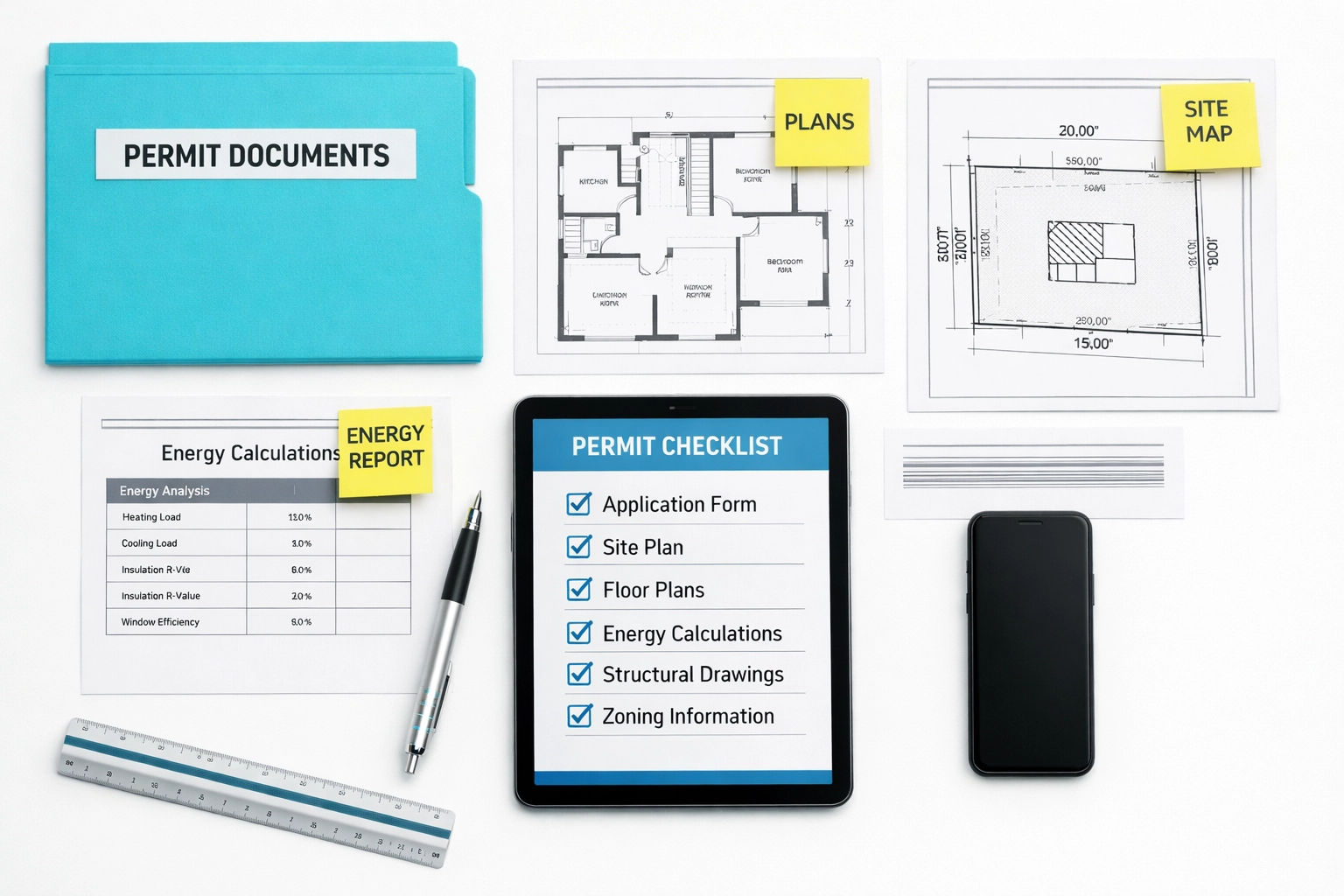
How to Prepare for Inspections and Stay Code-Compliant
Florida’s focus on disaster resilience and public safety means Florida building code requirements are rigorously enforced. Inspection failures delay projects and increase costs, making thorough preparation essential.
Key compliance areas to prioritize:
- Structural integrity – Hurricane-rated connections, wind load calculations, and foundation specifications
- Energy efficiency – Insulation values, HVAC efficiency ratings, and window performance
- Fire safety – Proper egress, fire-rated assemblies, and sprinkler system compliance
- Accessibility – ADA compliance for commercial facilities
- Life safety – Emergency lighting, exit signage, and fire alarm systems
Staying current with updates to the Florida Building Code is critical. Recent changes affect everything from energy conservation methods to structural requirements. Contractors can stay informed by reviewing resources like Florida Building Code Updates 2025-2026.
Common Pitfalls and How to Avoid Them
Effectively Communicating with Building Department Staff
One of the biggest hurdles in the permitting process isn’t the paperwork itself—it’s the communication. Trying to get clear answers from busy building department staff can feel like a full-time job, and miscommunication can easily stall your project. To keep things moving, it’s best to be proactive and organized. Before you even submit, reach out to clarify any confusing requirements. When you do have questions, consolidate them into a single, clear email. This respects their time and makes it easier for them to give you the information you need. This is often where a professional permit expediting service becomes invaluable, as they already have established lines of communication and understand each department’s specific workflow, saving you countless hours of back-and-forth.
Watch Out for Payment Scams
As you get ready to pay your permit fees, it’s crucial to be aware of potential payment scams. Scammers sometimes pose as county officials, contacting applicants by phone or email to request credit card numbers or wire transfers. Remember, a legitimate Florida building department will never ask for this sensitive information through an unsolicited call or email. Official payments should only be made directly through the county’s secure online portal, by mail, or in person. If you receive a suspicious request, do not provide any information. Instead, contact the building department directly using the official phone number on their website to verify the request. You can learn more about how to spot these issues from the Federal Trade Commission.
Your Next Steps for a Smooth Permitting Process
The 2026 standardized commercial building permit application represents a significant step forward for Florida contractors. Combined with comprehensive documentation preparation, understanding of sub-permit requirements, and awareness of county-specific procedures, you’re positioned to navigate the permitting process more efficiently than ever.
However, the complexity of commercial building permits Florida remains substantial. From professional plan preparation to coordinating multiple inspections, the administrative burden can pull your focus away from actual construction management.
Navigating permit requirements across multiple jurisdictions can be complex: All Florida Permits helps contractors prepare complete applications, coordinate with building departments, and avoid costly delays. Our expertise in Florida’s permitting landscape means your projects move forward on schedule while maintaining full code compliance.
Disclaimer: Permit requirements and procedures may vary by jurisdiction. Always verify specific requirements with your local building department or consult a licensed permitting professional before beginning your project.
Frequently Asked Questions
What should I do for commercial projects I’m starting before the new 2026 form is available? Great question. Until the statewide form officially rolls out, you’ll still need to use the specific application provided by the county or city where your project is located. The core principles of preparing thorough documentation, like signed and sealed plans and site surveys, remain exactly the same. Think of this time as a great opportunity to perfect your submission process so you’re ready to hit the ground running when the new, simpler system arrives.
Can I really act as my own contractor for a commercial project under $75,000? Yes, Florida law allows for an owner-builder exemption for smaller commercial projects, but it’s important to understand the responsibilities that come with it. When you pull a permit as an owner-builder, you are legally responsible for the entire project, including ensuring all work meets code, managing subcontractors, and passing inspections. It’s a significant undertaking, so you should be confident in your ability to manage the construction process from start to finish.
What is the most common mistake that gets a commercial permit application delayed or rejected? The most frequent issue we see is an incomplete submission package. This often means missing a required document, like energy calculations or a signed survey, or providing plans that lack the necessary details for a reviewer to approve. Every piece of information, from structural details to fire safety plans, must be present and accurate. A single missing signature or an outdated site plan can send your application right back to the beginning of the queue.
If the new application is standardized, why would I still need a permit expediter? The uniform application simplifies the initial form, but it doesn’t change the complex review process that follows. A permit expediter’s value comes from managing the entire journey: coordinating with various departments like zoning and environmental protection, resolving reviewer comments quickly, and handling the submission of sub-permits. We act as your project’s advocate within the system, ensuring all the moving parts are aligned for the fastest possible approval.
What if my HOA’s rules conflict with the city’s building code requirements? This is a tricky situation, but the rule is simple: you must satisfy both. The city’s building code is the legal minimum for safety and construction standards, so it is non-negotiable. If your HOA has stricter requirements, for instance, demanding a specific type of roofing material that exceeds code, you must follow the HOA’s rule. It’s always best to get written approval from your HOA’s architectural review board before you even submit your plans to the city to ensure there are no conflicts.
Key Takeaways
- The new statewide permit form streamlines submissions, not requirements: While the 2026 uniform application simplifies the paperwork process across Florida, your project’s approval still hinges on providing complete, accurate, and professionally sealed plans that meet strict building codes.
- Proactive planning prevents permit headaches: Before you even apply, confirm your project’s jurisdiction, consult with local planners and utility companies, and gather all necessary documentation to sidestep common delays and rejections.
- Look beyond the main building permit: A successful project requires more than one approval; you must also secure all necessary sub-permits for trades, get sign-offs from other government agencies, and pass a series of on-site inspections.