

The construction is done. Final inspections are scheduled. Your tenant is ready to move in, or your business is set to open its doors. Then you hit a wall. Your Certificate of Occupancy is delayed, all because of a small mistake that could have been avoided weeks earlier. This isn’t just a last-minute hiccup; it’s a costly problem that often begins long before the final walkthrough. Treating the CO as an afterthought is one of the most expensive mistakes you can make. Understanding the common pitfalls is the key to keeping your project on schedule and on budget.
In Florida’s complex permitting environment, CO delays don’t just push back your timeline: they trigger penalty fees, force tenants to extend temporary housing, and create cascading financial losses that can reach tens of thousands of dollars. Whether you’re developing commercial property in Miami-Dade County or completing a residential project in Palm Beach, understanding these seven common mistakes can save you both time and money.
What is a Certificate of Occupancy?
Before we get into the common pitfalls, let’s start with the basics. A Certificate of Occupancy, or CO, is an official document issued by your local building or zoning department. Think of it as the government’s official stamp of approval, confirming that a building is safe for human occupancy. This document certifies that your project complies with all relevant building codes, zoning regulations, and the original plans submitted with your permit. Without a valid CO, you generally cannot legally occupy a new building, open your business to the public, or allow tenants to move into a residential unit. It’s a critical final step that stands between a completed construction site and a functional, revenue-generating property.
What It Is and Why It Matters
A Certificate of Occupancy is more than just a piece of paper; it’s legal proof that your property is up to code and safe. This matters for several key reasons. First, it’s a legal requirement for occupancy in most cases across Florida. Trying to use a building without one can lead to significant fines and legal trouble. Second, insurance companies and lenders often require a valid CO before they will issue a policy or finalize a mortgage on a new or substantially renovated property. It serves as verification that their investment is sound and not at risk due to code violations. Essentially, the CO is the final gatekeeper that ensures a building is structurally sound, has safe electrical and plumbing systems, and meets all fire safety and accessibility standards.
Decoding the Information on Your CO
When you receive your CO, it will contain specific details about the property. It’s important to understand what this information means. A typical Certificate of Occupancy will clearly state the building’s designated purpose, often called its “use group” (e.g., residential, commercial, or industrial). It will also specify the type of construction, whether the building is equipped with an automatic sprinkler system, and the maximum occupant load. Reviewing these details carefully is crucial. An error on the CO, such as an incorrect use group, could prevent you from legally operating your intended business, forcing you to go back through a lengthy correction process with the building department.
Common Exemptions for COs
While most new construction and major renovations require a CO, there are some exceptions. In many Florida jurisdictions, single-family homes and townhomes might not need a formal Certificate of Occupancy upon completion, as the final inspection approval often serves the same purpose. However, this is not a universal rule, and it’s vital to check with your local municipality. Furthermore, these exemptions typically do not apply if you change the building’s use. For example, converting a garage into a living space or turning a single-family home into a duplex will almost certainly trigger the need for a new CO to ensure the modified structure meets the codes for its new purpose.
Understanding the Different Types of COs
Not all Certificates of Occupancy are the same. Depending on the stage of your project and its specific circumstances, you might encounter different types of COs. Knowing the difference can be a huge advantage, especially on large or phased projects where you want to begin operations as soon as possible. For developers and contractors, using options like a Temporary Certificate of Occupancy can be a strategic tool to get parts of a building occupied and generating income while final touches are completed elsewhere. Understanding these variations helps you plan your project timeline more effectively and communicate clearly with building officials about your needs.
Temporary Certificate of Occupancy (TCO)
A Temporary Certificate of Occupancy, or TCO, is a game-changer for phased projects. It allows you to legally occupy a portion of a building that is deemed safe, even if the entire project isn’t 100% complete. For instance, if you’re building a multi-story commercial building, you could obtain a TCO for the completed ground-floor retail spaces while construction continues on the upper floors. This requires that all life-safety systems for the occupied area are fully functional. Securing a TCO involves careful coordination of inspections and paperwork, a process where an experienced permit expediter can ensure everything is aligned for a smooth, partial opening.
Conditional Certificate of Occupancy (CCO)
A Conditional Certificate of Occupancy (CCO) is similar to a TCO but is typically issued when there are specific, outstanding non-safety-related issues that must be resolved within a set timeframe. For example, a building might be safe to occupy, but required landscaping or parking lot striping has been delayed due to weather. A CCO allows occupancy on the condition that these remaining items are completed by an agreed-upon deadline. It provides flexibility for owners while still holding them accountable for finishing the project according to the approved plans. Missing the deadline, however, can result in the CCO being revoked.
Core and Shell CO
A Core and Shell CO is specific to commercial buildings and is incredibly useful for developers leasing out unfinished spaces. This type of certificate covers the building’s primary structural elements—the “core” (lobbies, elevators, stairwells) and the “shell” (foundation, exterior walls, roof). It certifies that the main structure is complete and safe. This allows the owner to lease individual units to tenants, who will then apply for their own permits for the interior “fit-out” or “build-out.” This separates the landlord’s responsibilities from the tenant’s, streamlining the process for large commercial developments like shopping centers or office buildings.
COs for Changes in Use or Ownership
A Certificate of Occupancy isn’t just for new construction. You often need a new one when a property’s use or ownership changes. If a retail store is converted into a restaurant, a new CO is required because the building code requirements for fire suppression, ventilation, and accessibility are drastically different. Even a simple change in ownership for a commercial property may trigger the need for a new CO to ensure the new owner is on record. This process confirms that the building remains compliant with current codes for its specific use, protecting both the business owner and the public.
The CO Application and Review Process Explained
Once all final inspections are passed, you can officially apply for your Certificate of Occupancy. This final administrative phase can feel like the last mile of a marathon, and unfortunately, it’s where many projects get tripped up by paperwork and procedural delays. Each municipality in Florida has its own unique submission process, required documents, and review timeline. A simple mistake on an application or a missing form can send you to the back of the line, delaying your opening by days or even weeks. Understanding the key steps and requirements beforehand is the best way to ensure a smooth and speedy approval.
The Administrative Steps: From Submission to Review
The application process typically begins after your project has passed all required inspections—building, electrical, plumbing, mechanical, and fire. You’ll then submit a formal application, usually through the city or county’s online portal. Once submitted, your application enters a queue for review by a plans examiner or zoning official. They will verify that all associated permits are closed out, all required documents are present, and all fees have been paid. This is a purely administrative check, but it’s exacting. For complex projects, managing this final step across multiple departments can be a challenge, which is why many builders and developers rely on a dedicated service to handle the process and ensure nothing falls through the cracks.
Key Documents You’ll Need to Provide
The specific documents required for a CO can vary, but some are nearly universal. You will almost always need a completed CO application form, final, approved inspection reports, and sometimes a letter from the project’s architect or engineer certifying that the construction conforms to the approved plans. For commercial projects, you may also need to provide documentation from other agencies, such as the health department for a restaurant or the fire marshal. Gathering these documents ahead of time is essential. A missing signature or an outdated form is one of the most common reasons for a CO application to be rejected, forcing you to start the submission process all over again.
Factoring in Application Fees
Finally, don’t forget about the fees. Every municipality charges a fee to process a Certificate of Occupancy application. This cost can range from under a hundred dollars to several hundred, depending on the jurisdiction and the complexity of the project. While it may seem like a minor expense compared to the total construction cost, it’s a non-negotiable one. The application will not be processed until the fee is paid in full. Be sure to check your local building department’s fee schedule early in the process so you can budget accordingly and avoid any last-minute surprises that could hold up your final approval.
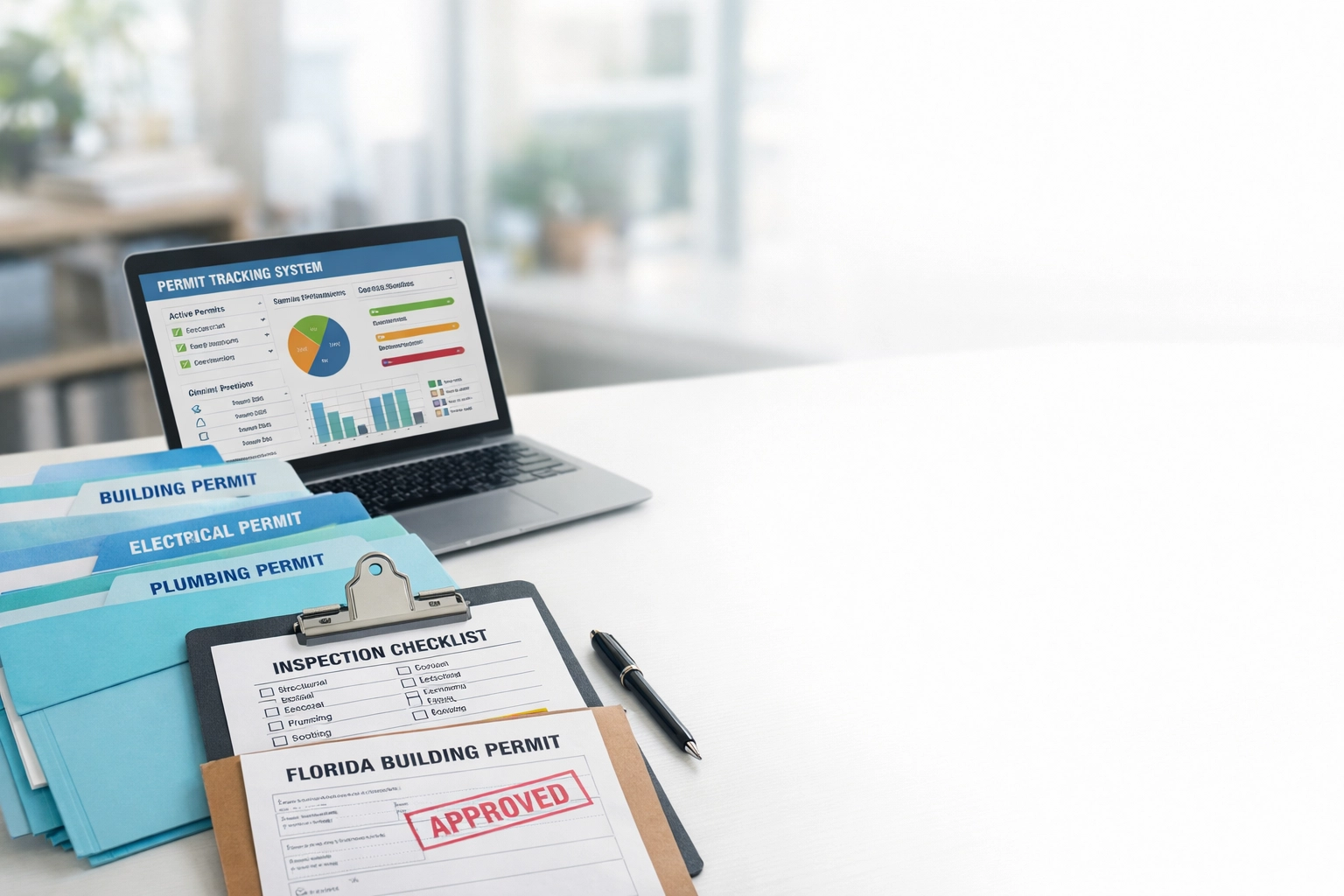
Mistake #1: Is Permit Closure Just an Afterthought?
One of the most common: and costly: mistakes is failing to close out all related permits before requesting your Certificate of Occupancy. In Florida, every life safety-related permit and sub-permit must be complete and closed before a CO will be issued.
This includes:
- Fire suppression system permits
- Smoke control and detection system permits
- Emergency lighting and exit signage permits
- Public safety radio booster (BDA System) permits where required
- All electrical, plumbing, and mechanical sub-permits
Many property owners assume that passing the final building inspection is enough. It’s not. Each trade permit requires its own closure process, and building departments won’t issue a CO until they verify that all related permits show “closed” status in their system.
The Fix: Start tracking permit closure status at least 30 days before your anticipated CO date. Confirm with each contractor that they’ve scheduled their final inspections and obtained sign-offs. Working with experienced Florida permit expediting services can help ensure nothing falls through the cracks during this critical phase.
Mistake #2: Forgetting About Outside Agency Sign-Offs
Your local building department isn’t the only agency with approval authority over your project. Florida construction projects often require certifications from multiple outside agencies, and missing even one can halt your CO application completely.
Common outside agency requirements include:
- County-level environmental approvals
- Florida Department of Transportation (F.D.O.T.) permits for projects affecting roadways or drainage
- Health department approvals for food service establishments
- Fire marshal certifications
- Water management district permits
These agency approvals must be complete and submitted to your local building department before they’ll process your CO request. The challenge? These agencies operate on their own timelines, which don’t always align with your construction schedule.
The Fix: Identify all required outside agency approvals during your initial permit planning phase: not weeks before you need the CO. Submit applications to these agencies early in your construction timeline, and maintain regular contact to track approval status.
Mistake #3: Falling into the “Almost Done” Inspection Trap
Florida building departments require that all building disciplines be approximately 100% complete before issuing a Certificate of Occupancy. That “approximately” doesn’t mean 85% or even 95%: it means functionally complete with only minor punch list items remaining.
This includes:
- Structural systems: All load-bearing elements complete and inspected
- Electrical systems: Complete installation with panel labeling, grounding, and all fixtures operational
- Plumbing systems: All fixtures installed, tested, and functional
- Mechanical systems: HVAC equipment installed, balanced, and operational
The mistake many developers make is requesting the CO inspection while significant work remains, thinking they can complete it during the inspection window. Florida inspectors will fail the inspection and require you to restart the process, adding weeks to your timeline.
The Fix: Conduct a thorough pre-CO walkthrough with all trade contractors at least one week before scheduling the official inspection. Document any incomplete items and ensure they’re finished before the inspector arrives.

Mistake #4: Assuming You’re Zoning and Planning Compliant
Your building might meet all construction code requirements, but if it doesn’t comply with zoning and planning approvals, you won’t get your Certificate of Occupancy. This is especially common in Florida municipalities where zoning regulations frequently change.
Planning and zoning compliance issues that delay COs include:
- Incomplete landscape installation required by site plan approval
- Missing required parking spaces or improper striping
- Signage that doesn’t match approved plans
- Incomplete required buffering or screening
- Failure to implement special conditions from planning board approvals
These requirements were established when your project received initial approval, but they’re often forgotten during the construction push to completion.
The Fix: Review your original planning and zoning approval documents before requesting the CO. Create a compliance checklist that includes every condition and requirement, and verify completion with site photographs. Many Florida building permit expediting professionals maintain these checklists as part of their project management services.
Mistake #5: Missing the Mark on Accessibility Compliance
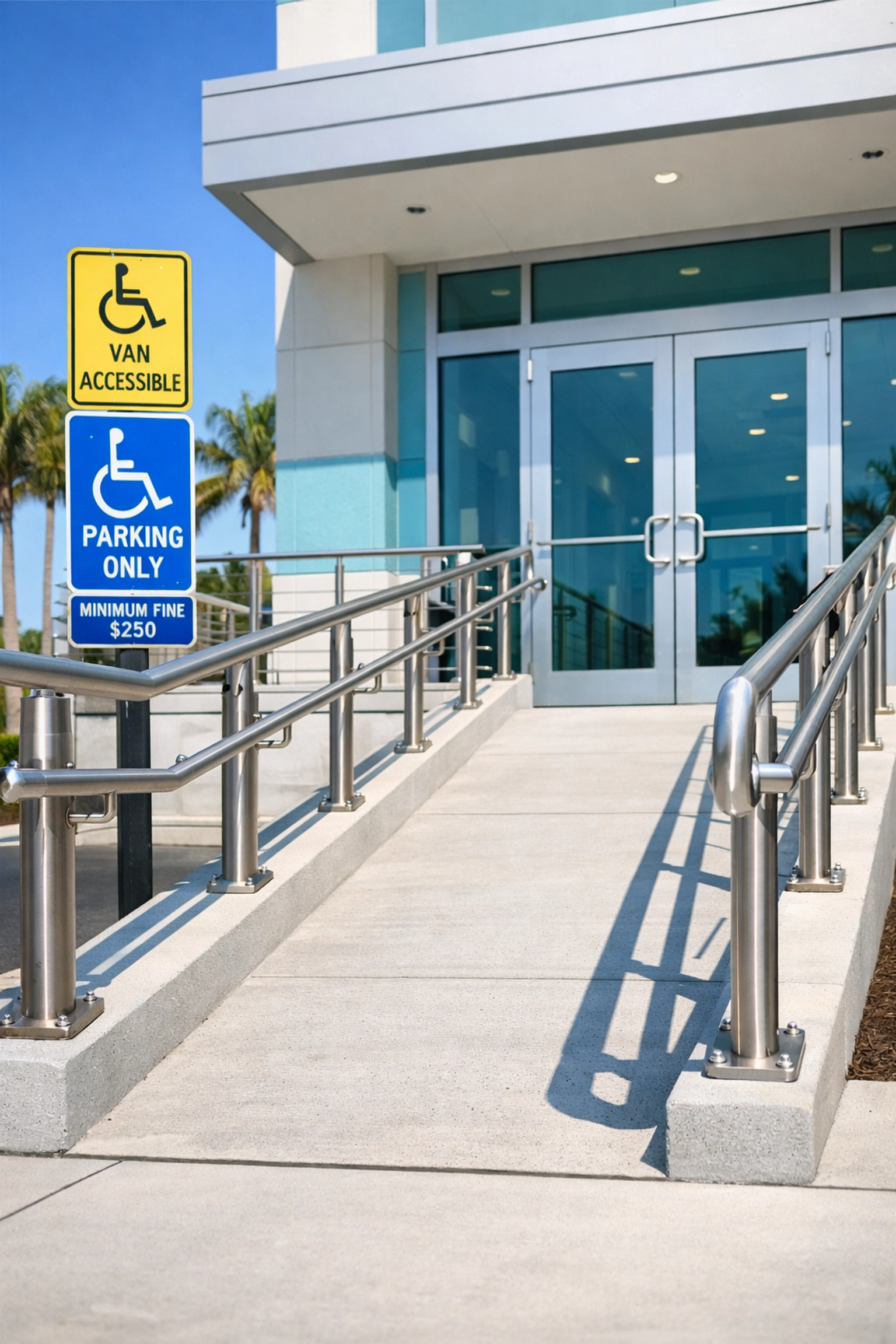
Florida law mandates full ADA (Americans with Disabilities Act) compliance before any Certificate of Occupancy: including temporary COs: can be issued. This is non-negotiable, and inspectors will not compromise on accessibility requirements.
Common accessibility oversights include:
- Improper door hardware or opening force
- Missing or incorrectly placed signage
- Non-compliant restroom fixtures or grab bars
- Inadequate accessible parking spaces or improper signage
- Pathway obstructions or improper slopes
- Missing van-accessible spaces in parking areas
A single non-compliant element can delay your CO for days or weeks while you source materials and schedule contractors to make corrections.
The Fix: Hire an accessibility consultant to conduct a comprehensive review before your final inspection. This investment: typically a few hundred dollars: can prevent delays that cost thousands. Ensure your contractor understands that accessibility compliance is binary: either everything is compliant, or you don’t get the CO.
Mistake #6: Forgetting Crucial Flood & Hurricane Docs
Florida’s unique environmental requirements add another layer of complexity to the CO process. Due to the state’s flood zones and hurricane exposure, building departments require specific certifications before occupancy approval.
Required documentation may include:
- FEMA elevation certificates for structures in flood zones
- Coastal Construction Control Line (CCCL) certifications
- Hurricane protection system installation verification
- Impact-resistant window and door certifications
- Flood-resistant construction documentation
- Flood venting compliance for below-base-flood-elevation spaces
These requirements vary significantly by county and even by municipality within counties. What’s required in Miami-Dade County may differ from requirements in Palm Beach County or Brevard County.
The Fix: Confirm jurisdiction-specific flood and hurricane protection requirements during your initial permit application. Schedule required third-party inspections and certifications well before your CO date, as qualified inspectors often have weeks-long backlogs.
Mistake #7: Getting Hit with Unpaid Fees and Occupancy Penalties
The simplest mistake is often the most expensive: failing to pay all required fees before the CO is issued, or worse, occupying the building before receiving the Certificate of Occupancy.
Florida municipalities take illegal occupancy seriously. If you occupy a building without a valid CO, you face:
- Double the standard CO fee
- Additional $500 fine (varies by jurisdiction)
- Potential stop-work orders affecting other permits
- Liability issues if accidents occur in an unoccupied building
- Insurance coverage problems if the building isn’t legally occupiable
Additionally, some jurisdictions charge daily fees for CO delays beyond a certain timeframe, creating mounting costs for every day your application remains incomplete.
The Fix: Confirm all outstanding fees at least one week before your planned CO date. Never allow occupancy before receiving the official Certificate of Occupancy, regardless of pressure from tenants or business partners. The short-term convenience isn’t worth the long-term penalties and liability exposure.
After the CO is Issued: What’s Next?
Receiving your Certificate of Occupancy is a huge milestone, but it’s not quite the end of the road. Think of it as the official start of your building’s operational life, which comes with its own set of responsibilities. Staying compliant is an ongoing process, and a few key steps immediately follow the issuance of your CO. Understanding these post-occupancy requirements ensures your project remains in good standing with local authorities and that you’re prepared for the future, whether that involves running a business, welcoming tenants, or eventually selling the property. It’s about protecting your investment and ensuring the long-term safety and legality of your building.
Preparing for Post-Occupancy Inspections
Once your building is occupied, you should anticipate follow-up inspections from other agencies. For commercial properties, a common requirement is a post-occupancy inspection by the local Fire Marshal. In many jurisdictions, this inspection must occur within a few days of occupancy to verify that all fire safety systems are functioning correctly under normal operational conditions. This isn’t about re-inspecting the construction; it’s about ensuring the space is being used safely. Keeping clear access to fire extinguishers, ensuring exit pathways aren’t blocked by furniture or inventory, and maintaining alarm systems are all part of this ongoing compliance check.
Understanding CO Revocation
A Certificate of Occupancy is not set in stone. Building departments have the authority to revoke a CO under specific circumstances. This can happen if the certificate was issued by mistake or based on inaccurate information provided during the application process. More commonly, a CO can be revoked if significant building code violations arise after occupancy, indicating that the property is no longer safe. This underscores the importance of proper maintenance and adherence to code. For commercial properties in Florida, this ties directly into requirements like the building recertification process, which ensures structures remain safe over their lifespan.
Securing a CO for an Existing or Older Building
What if you own or are looking to buy an older building, and the local building department has no record of a Certificate of Occupancy? This is a common issue, but it’s solvable. An owner can apply for a CO for an existing structure. The building official will typically conduct a thorough inspection to ensure the property has no current code violations and that its use hasn’t changed from its original design. If everything checks out, they can issue a new CO. This process can be complex, involving historical research and coordinating inspections, which is where getting expert help can make all the difference.
Why Your CO is Crucial for Real Estate Deals
Beyond being a legal requirement for occupancy, the Certificate of Occupancy plays a pivotal role in nearly every real estate transaction. For sellers, a valid CO is a non-negotiable document that proves the property is legally habitable and compliant with building codes. For buyers, it provides essential peace of mind and is often a requirement for securing financing. A missing or invalid CO can bring a promising deal to a screeching halt, creating costly delays and potentially killing the transaction altogether. It’s one of the most important documents in a property’s official record.
The CO as a Requirement for Closing a Sale
In most Florida municipalities, you cannot sell a property without a valid Certificate of Occupancy. Title companies and real estate attorneys will verify its existence as part of their due diligence before closing. The CO serves as official proof that the home or commercial building meets all local building, zoning, and safety regulations, making it a cornerstone of a legitimate sale. If you’re a seller, discovering an open permit or a missing CO just weeks before closing can be a nightmare. Proactively ensuring all your documentation is in order is one of the smartest things you can do to facilitate a smooth transaction.
How a Missing CO Affects Buyers and Lenders
For a buyer, purchasing a property without a CO is a massive gamble. You could be inheriting a building with serious code violations, facing fines, or even being ordered to vacate the premises. This is why most mortgage lenders will refuse to finance a property that lacks a valid CO. The certificate assures the lender that their investment is sound, legal, and insurable. Without it, the property is considered a high-risk asset. Resolving these issues requires a deep understanding of local codes and processes, and our comprehensive permit services are designed to help property owners clear these hurdles efficiently.
How Long Does It Really Take to Get a CO in Florida?
Most Florida building departments require a minimum of three business days to process a Certificate of Occupancy application after all requirements are met. However, this timeline assumes everything is in order. If the inspector identifies any deficiencies, you’ll need to correct them and restart the clock.
For complex commercial projects, the realistic timeline from CO application to approval is typically 7-14 business days, assuming no major issues are discovered.
Your Next Steps for a Smooth Certificate of Occupancy Process
Obtaining your Certificate of Occupancy represents the final hurdle in your construction project, but it’s not a formality: it’s a comprehensive compliance verification that requires careful planning and attention to detail. Each of these seven mistakes can individually delay your CO by days or weeks, and the costs multiply quickly when you factor in holding costs, lost revenue, and penalty fees.
The key to avoiding these delays is treating CO preparation as a distinct project phase that begins weeks before you need the certificate, not something you address after construction is complete. Maintain detailed records, track all permits and approvals, and ensure every trade contractor understands their role in the CO process.
Permit requirements and procedures may vary by jurisdiction. Always verify specific requirements with local building departments or consult a licensed permitting professional.
Whether you’re managing a commercial development or residential construction project, navigating Florida’s Certificate of Occupancy requirements can be complex. All Florida Permits helps property owners, contractors, and developers throughout the state prepare complete CO applications and avoid costly delays by ensuring all compliance requirements are met before inspection.
Frequently Asked Questions
Can I get a temporary CO to open my business while minor work is still being finished? Yes, this is often possible through a Temporary Certificate of Occupancy (TCO) or a Conditional Certificate of Occupancy (CCO). A TCO is typically used for phased projects, allowing you to occupy a completed and safe portion of a building while work continues elsewhere. A CCO might be issued if the building is safe but has minor, non-safety items left to finish, like landscaping. The key for both is that all life-safety systems must be fully operational in the areas you plan to occupy.
What actually happens if I occupy a building without a Certificate of Occupancy? Occupying a building without a valid CO is a serious violation with significant consequences. You can face hefty fines, which sometimes include double the standard CO fee plus additional penalties. The city can also issue a stop-work order, halting any other progress on your property. More importantly, it creates major liability issues for you as the owner, and your insurance provider could deny coverage for any incidents that occur in the illegally occupied space.
I’m buying an older property. What if it doesn’t have a CO on file? This is a common situation with older buildings. If a CO is missing, you or the current owner will likely need to apply for one before the sale can close, as most lenders require it. This process involves a building official inspecting the property to confirm it meets current safety standards and has no outstanding code violations. If issues are found, they must be corrected before a new CO can be issued, so it’s crucial to address this early in the due diligence period.
What’s the most important step I can take to prevent CO delays? The single most effective thing you can do is to start your CO preparation process long before construction ends. Don’t treat it as a final step. About a month before your target completion date, create a checklist to confirm that all your sub-permits are closed, outside agency approvals are submitted, and zoning conditions have been met. A proactive approach that tracks all these moving parts is the best way to avoid last-minute surprises that can derail your timeline.
Besides the application fee, are there other hidden costs I should know about? Absolutely. The application fee is just the start. The real costs come from delays. If your CO is held up, you could be paying for extended equipment rentals, extra labor, and holding costs for the property itself. For commercial projects, this also means lost revenue for every day your business can’t open. Furthermore, failing an inspection might require you to pay re-inspection fees, and penalties for illegal occupancy can add hundreds or even thousands of dollars to your final bill.
Key Takeaways
- Proactively manage all permits and approvals: Don’t wait until construction is done to confirm that every trade permit is closed and all outside agencies, like the fire marshal or health department, have provided their necessary sign-offs.
- Verify every compliance detail before your final inspection: A successful CO depends on more than just the construction itself; ensure your project meets all zoning conditions, ADA accessibility standards, and special environmental requirements like flood certificates.
- Recognize the CO’s financial and legal importance: A missing Certificate of Occupancy can lead to expensive fines and stop a real estate sale in its tracks, as lenders and title companies require it for closing. Never allow occupancy without this official document.