

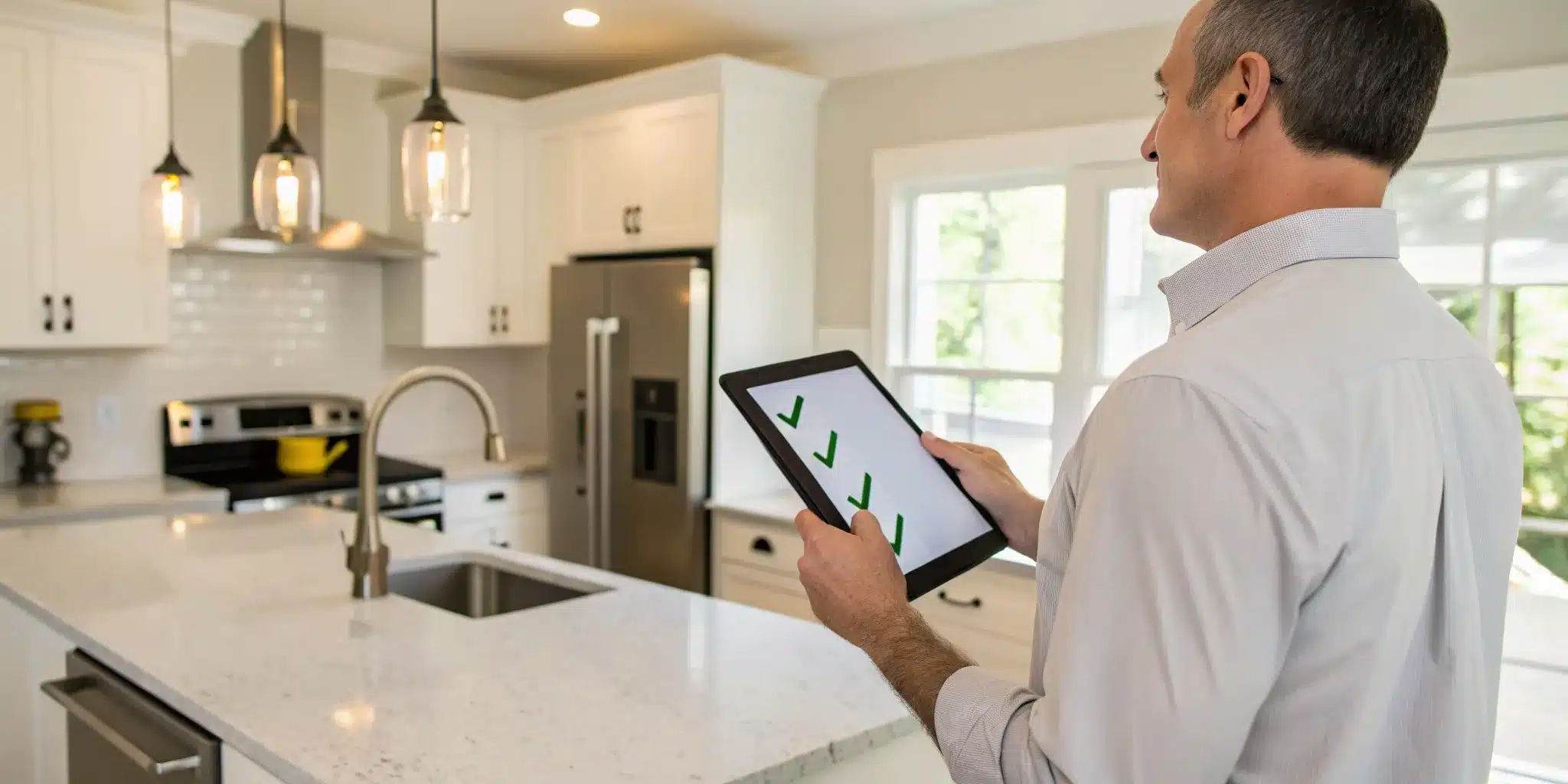
Your entire project comes down to one piece of paper: the Certificate of Occupancy. And the final inspection is the last hurdle standing between you and getting it. It’s a detailed review where tiny oversights—like a missing outlet cover or a poorly sealed window—can cause you to fail. A failed inspection means frustrating delays and more money spent on re-inspections. But you can avoid all that. This guide shows you exactly what to look for and provides a detailed final inspection checklist to make sure you pass on the very first try.
Key Takeaways
- Your Certificate of Occupancy Depends on the Final Inspection: This official review is the final hurdle, confirming your project meets all safety and building codes, and it’s the only way to legally occupy your new space.
- A Pre-Inspection Walkthrough Puts You in Control: Systematically test everything from outlets to faucets and mark issues with painter’s tape. Addressing small problems ahead of time is the best way to prevent a failed inspection.
- Treat a Failed Inspection as an Actionable Plan: If you don’t pass, use the inspector’s report as a precise guide. Prioritize the required fixes with your contractor, complete the work, and then schedule the re-inspection.
What Is a Final Inspection and Why Does It Matter?
You’ve made it to the finish line of your construction project. The dust has settled, the tools are packed away, and your vision is finally a reality. But before you can move in, there’s one last crucial step: the final inspection. Think of it as the final exam for your building. It’s a thorough review conducted by your local building authority to confirm that every aspect of the project meets Florida’s strict building codes, safety standards, and local regulations.
This isn’t just about checking boxes. The final inspection is a critical safety measure that ensures the property is completely safe for anyone who will live or work there. From the foundation to the roof, inspectors verify that all work has been done correctly and that there are no hidden hazards. Passing this inspection is your official green light, confirming that your new or renovated space is sound, secure, and ready for occupancy. It’s the final step that stands between your completed project and its legal use.
The Financial Stakes of an Inspection
Let’s be direct: a failed inspection costs money. It’s not just about the fee for a re-inspection; the real financial damage comes from the delays. Every day your project is stalled is a day you can’t use your property. For a business, that means lost revenue. For a homeowner, it could mean paying for temporary housing longer than planned. The costs multiply quickly when you discover major issues late in the game. Imagine finding faulty wiring hidden behind a newly painted wall. Fixing that isn’t just a minor repair; it’s a significant setback that can blow your budget and derail your timeline, all of which delays your ability to get that crucial Certificate of Occupancy.
The financial fallout doesn’t stop at project delays. A failed inspection creates a domino effect of expenses. You have to pay your contractor for the extra time and labor to fix the issues, cover the costs of any new materials, and then pay the city’s re-inspection fee. These unexpected costs can add up fast. This is why catching problems early is so important. If you identify issues before the official inspector shows up, you can ask for repairs or adjustments while they are still on-site, which is far more efficient. Getting ahead of potential failures protects your investment and prevents small mistakes from turning into major financial headaches.
Why Building Authorities Are Involved
Your local building department is the key player in this process. They are responsible for sending a qualified inspector to your site to perform the final check. The inspector’s job is to make sure every detail of the construction, from electrical wiring to plumbing fixtures, aligns with the approved plans and adheres to all required building codes and safety regulations.
A crucial tip for a smooth process is scheduling the inspection at the right time. You’ll want to call for your final inspection only after every single piece of work is finished. This timing is important because it helps you avoid unnecessary delays and ensures you present a completed project for review, setting you up for success.
How to Get Your Certificate of Occupancy
Passing the final inspection is the only way to get your Certificate of Occupancy (CO). This document is non-negotiable; it’s the official permit that legally allows you to use or occupy the building. Without a CO, you can’t move in, open your business to the public, or even sell the property. If your project doesn’t pass, the inspector will provide a list of corrections that must be made.
Failing an inspection can lead to frustrating delays and unexpected costs. You’ll have to coordinate repairs, schedule a re-inspection, and wait for approval, all while your property sits empty. This can be a significant financial setback, but getting expert help can make all the difference. If you need support, you can always request a proposal to see how we can streamline the process for you.
Your Essential Final Inspection Checklist
Walking through your nearly finished project is exciting, but the final inspection can feel a bit daunting. This is the last major hurdle before you can get your Certificate of Occupancy and officially call the job done. To make sure it goes smoothly, it helps to think like an inspector. They aren’t just looking for pretty finishes; they’re confirming that the entire structure is safe, functional, and built according to the approved plans and Florida’s building codes. This isn’t just about ticking boxes; it’s about ensuring the long-term safety and quality of your investment, whether it’s a new home or a commercial space.
Think of this checklist as your guide to a successful pre-inspection walkthrough. By catching potential issues ahead of time, you can address them on your own terms and avoid the stress of a failed inspection and the delays that come with it. Grab a notepad, a flashlight, and maybe your phone charger, and let’s walk through your property together. We’ll cover everything from the foundation to the fixtures, so you can feel confident when the inspector arrives. This proactive step can save you time, money, and headaches down the road. If you ever feel overwhelmed by the details, remember that our team at All Florida Permits is here to help you manage the entire permitting process.
Inspect Structural and Safety Features
First, let’s look at the big picture: the structure itself. Your primary goal here is to confirm that the final build matches the blueprints that the building department approved. Walk through the property with your plans in hand and verify that room dimensions, window placements, and structural supports are all correct. Inspectors will also focus heavily on safety and accessibility. Check that all handrails on stairs and balconies are secure. Ensure the property meets Americans with Disabilities Act (ADA) standards for accessibility, like proper door widths and ramp slopes, if applicable to your project. These foundational checks are non-negotiable for passing your inspection.
Stairways, Hallways, and Guardrails
Inspectors pay close attention to areas where people move around the most, especially stairs. Safety here is paramount. If you have stairs with four or more steps, they must have both a guardrail and a handrail. Grab a tape measure and check the handrail height; it needs to be between 34 and 38 inches from the steps. For guardrails, look at the vertical bars, often called pickets or balusters. An inspector will check that they are no more than four inches apart. This specific rule is in place to prevent a small child from getting stuck. Give every railing a firm shake to ensure it’s securely fastened and doesn’t wobble. These are the exact details outlined in the Florida Building Code that an inspector will verify.
Fire Safety and Egress Routes
Nothing is more important than ensuring a safe exit in an emergency. An inspector will meticulously check all fire safety features and egress routes, which are just clear, unobstructed paths to get outside. Walk through your property and test every door and window; they must open smoothly without sticking. In commercial properties, ensure all exit signs are illuminated and clearly visible. If your project includes a fire sprinkler system, confirm it’s operational. Finally, verify that all required smoke alarms and carbon monoxide detectors are installed and functioning correctly. According to the National Fire Protection Association, these systems are your first line of defense, and an inspector will treat them as a top priority during the final review.
Detector Placement and Function
The placement and functionality of smoke and carbon monoxide detectors are critical checklist items. Building codes are very specific about this. You must have smoke detectors installed in every bedroom, as well as in hallways outside of sleeping areas. When you check them, look up. They should be placed on the ceiling or high on a wall, within 12 inches of the highest point of the ceiling. Go to each detector and press the “test” button to ensure the alarm sounds. If the detectors are interconnected, when you test one, they should all go off. This confirms the entire system is working together as it should. Forgetting to test every single unit is a simple mistake that can easily cause you to fail an inspection. Proper detector maintenance is a key part of home safety.
Verify All Electrical Systems
Now, it’s time to check every switch, outlet, and fixture. Flip every light switch on and off to ensure it works correctly and is connected to the right fixture. A simple and effective way to test outlets is to bring a phone charger and plug it into every single one. Don’t forget to test GFCI (ground fault circuit interrupter) outlets, which are typically in kitchens, bathrooms, and outdoor areas, by pressing the “test” and “reset” buttons. Make sure the circuit breaker panel is clearly and accurately labeled. Finally, test all smoke and carbon monoxide detectors to confirm they are functioning properly.
Outlet and Switch Requirements
Inspectors are meticulous when it comes to outlet placement, and for good reason—it’s all about preventing the overuse of extension cords, which are a common fire hazard. They will walk the perimeter of each room to verify that your outlets meet the National Electrical Code (NEC) standards. Generally, this means an outlet must be present within six feet of a doorway and every 12 feet along a wall thereafter. Any wall space that is 24 inches or wider requires its own outlet. Take a moment to measure these distances yourself to ensure everything is up to code before the inspector arrives.
Specialty Electrical Code Rules
Beyond standard placement, certain areas require special types of outlets for added safety. You’ll need to have Ground Fault Circuit Interrupter (GFCI) outlets in any area where electricity and water could potentially meet, such as kitchens, bathrooms, laundry rooms, garages, and all outdoor receptacles. These life-saving devices are designed to shut off power instantly if they detect an imbalance, preventing electric shock. Similarly, most living areas, including bedrooms, living rooms, and hallways, now require Arc-Fault Circuit Interrupter (AFCI) protection to prevent fires caused by dangerous electrical arcs. Confirm these are installed in the correct locations and test each one.
Test Your Plumbing and HVAC
Let’s move on to the systems that keep your home comfortable. Turn on every faucet and shower to check for adequate water pressure and to see how long it takes for the hot water to arrive. While the water is running, look under every sink for drips or leaks. Flush all the toilets to ensure they function correctly and don’t continue to run. Next, test your heating and air conditioning. Turn on the HVAC system and let it run for a bit. Walk through the home to feel the airflow from the vents and listen for any unusual noises from the unit itself.
Key Plumbing and Gas Fixtures
Beyond the main systems, the inspector will scrutinize every fixture. Go through the property and methodically test each one. Turn on every faucet and shower, checking for solid water pressure and timing how long it takes for hot water to arrive. While the water is running, use a flashlight to check under every sink for even the smallest drip—leaks are an instant red flag for inspectors. Flush every toilet to confirm it functions properly and, just as importantly, stops running after the tank refills. For gas appliances like stoves or water heaters, safety is the top priority. Confirm all connections are secure and that there are no signs of a gas leak. Taking the time to check these fixtures yourself is one of the best ways to ensure a smooth final inspection.
Inspect Windows, Doors, and Finishes
The details matter, so take your time with this step. Open and close every single door and window. Do they operate smoothly? Do they latch securely? Check for any drafts or gaps in the seals. Next, examine the finishes with a critical eye. Look for any paint smudges, scuffs on the walls, or scratches on flooring and countertops. Check that all hardware, like doorknobs, cabinet pulls, and locks, is installed correctly and feels secure. Make sure all the trim, baseboards, and caulking are complete and neatly finished. These small items are often what separate a good job from a great one.
Examine the Exterior and Drainage
Head outside to inspect the exterior of the building. Look at the siding, brick, or stucco for any cracks or imperfections. Check that all exterior lights and outlets are working. Pay close attention to the property’s drainage. Gutters and downspouts should be clear of debris and angled to direct water away from the foundation. The ground around the building should slope away from the structure to prevent water from pooling. Also, inspect driveways, sidewalks, and patios for any significant cracks or uneven surfaces that could be a safety hazard.
Address Numbers and Exterior Fixtures
This might seem like a minor detail, but it’s one that inspectors never miss. Your building’s address numbers must be clearly visible from the street. This isn’t just for mail delivery; it’s a critical safety requirement so that emergency services can find you without delay. Make sure the numbers are the correct size, typically four to six inches tall, and contrast with the background they’re mounted on. While you’re at it, double-check that all other exterior fixtures are properly installed and secure. This includes your mailbox, any outdoor lighting fixtures, and hose bibs. These small items are easy to overlook, but they are part of the complete package that an inspector reviews to ensure compliance with local regulations.
Test Appliances and Fixtures
Finally, it’s time to test everything that comes with the house. If appliances are included, run them through a quick cycle. Start the dishwasher, turn on all the burners on the stove, and preheat the oven. Test the microwave, garbage disposal, and any exhaust fans in the kitchen and bathrooms. If a washer and dryer are installed, run a small test load. The goal is to ensure every appliance and fixture is not only installed correctly but is also fully operational. Finding a problem now is much easier to fix than after you’ve moved in or handed over the keys.
Required Appliance Safety Features
Beyond just making sure your oven preheats, an inspector will be looking closely at the safety features of your appliances. For example, your stove must have an anti-tip bracket installed to prevent it from falling forward, and your dishwasher needs to be securely anchored to the countertop so it doesn’t shift during a cycle. Inspectors will also check that ventilation systems, like your range hood and dryer vent, are properly installed and ducted to the outside—not just into an attic or wall space, which can create a fire hazard. These details are critical because they ensure every appliance is not only functional but also safe for daily use. Getting these things right is a key part of our end-to-end permit expediting services, as we help you confirm every detail is covered before the inspector arrives.
Common Issues That Can Fail an Inspection
Even the most diligent construction projects can have a few loose ends. During a final inspection, it’s the small details that often get flagged, turning a straightforward sign-off into a frustrating delay. Knowing what to look for ahead of time can help you address these points before the inspector even arrives, making the process smoother and faster for everyone involved. Think of it as the final proofread before you submit your masterpiece; a chance to catch the typos and smudges that could distract from the quality of the overall work.
Focusing on these common problem areas during your own pre-inspection walkthrough can save you from the headache of a failed inspection and get you one step closer to securing your Certificate of Occupancy. This proactive approach not only impresses inspectors but also ensures the final product is truly move-in ready. From a stray paint drip to a misaligned cabinet door, these issues are typically easy fixes for your contractor, but they can add up on an inspector’s report. By identifying them early, you maintain control over the project timeline and avoid last-minute scrambles. Let’s walk through the typical culprits so you can spot them first and handle them on your own terms.
Look for Minor Paint and Cosmetic Flaws
It’s amazing how many little scuffs and smudges appear once all the tools and equipment are gone. Look closely for paint touch-ups that don’t quite match, missed spots behind light fixtures, or small cracks where the house has settled. While these are usually minor, they are some of the most common issues an inspector will note. Walk through each room and view the walls from different angles, as the light can reveal imperfections you might otherwise miss. Check for clean lines where the walls meet the ceiling and trim. These cosmetic fixes are typically quick to resolve but are essential for a polished, finished look that signals a job well done.
Check for Hardware and Alignment Problems
Now is the time to get hands-on with every moving part of the house. Open and close every single door, window, and cabinet. Do they swing freely and latch securely? Or do you find doors that don’t line up right and stick in their frames? Jiggle doorknobs and cabinet pulls to make sure they are fastened tightly. Slide open every drawer to see if it operates smoothly on its tracks. These are the functional details you’ll interact with every day, and they need to work correctly. Loose or misaligned hardware is a simple fix for your contractor, but it’s often overlooked in the final rush to complete the project.
Identify Plumbing Leaks and HVAC Needs
Water can cause major damage, so a thorough plumbing check is non-negotiable. Turn on every faucet and shower, testing both hot and cold water. As the water runs, look under every sink for even the smallest drip. Flush all the toilets to ensure they function properly and don’t continue to run. It’s also a good idea to check all taps and make sure they drain efficiently. Don’t forget the HVAC system. Turn on the heat and the air conditioning (yes, both!) to confirm they respond correctly and that air is flowing from the vents. You want to catch any potential leaks or system malfunctions before they become bigger, more expensive problems.
Spotting Common Electrical Glitches
An electrical system needs to be more than just functional; it needs to be safe. Go through the home and flip every single light switch. Bring a phone charger with you to test every outlet to confirm it has power. Pay special attention to the GFCI (ground fault circuit interrupter) outlets in kitchens, bathrooms, and outdoor areas. Press the “test” and “reset” buttons on each one to ensure this critical safety feature is working. Also, check any dimmer switches to see if they adjust the lighting smoothly. If you have ceiling fans, test all their settings. A systematic check of every electrical component will give you peace of mind and satisfy the inspector.
Don’t Overlook Unfinished Caulking and Trim
Caulking might seem like a minor detail, but it plays a big role in sealing gaps against moisture and drafts. Carefully inspect the seams around tubs, showers, sinks, backsplashes, and windows. You’re looking for a smooth, continuous bead of caulk with no gaps or cracks. Similarly, examine all the trim work, including baseboards, door casings, and window frames. Are the corners mitered cleanly? Is the finish consistent, with no nail holes left unfilled? Incomplete caulking or sloppy trim work can be a sign of a rushed job, so it’s worth taking a moment to ensure these finishing touches are complete and professional.
How to Prepare for Your Final Inspection
The final inspection can feel like the last big hurdle before you can finally relax and enjoy your new space. A little preparation goes a long way toward ensuring everything goes smoothly. By getting organized and doing your own walkthrough first, you can address potential issues before the inspector ever steps foot on the property. Think of it as studying for a final exam; the more you prepare, the more confident you’ll be.
Why You Must Complete Prior Inspections First
Before you can even think about the final inspection, your project needs to pass a series of earlier, specialized inspections. These are often called “rough-in” inspections and cover critical systems like the foundation, plumbing, electrical wiring, and framing before they get covered up by drywall and finishes. The goal is to catch major problems early. Make sure you have cleared all these preliminary checks and, more importantly, that any issues flagged by inspectors have been fully corrected. A clean record from these prior stages is the foundation for a successful final inspection.
Get Your Paperwork and Schedule in Order
Don’t wait until the last minute to get on the inspector’s calendar. Building departments are often swamped, so book your final inspection well in advance. You’ll want to schedule it for a date after all work is 100% complete. At the same time, start gathering all your project documents in one place. This includes your approved building plans, permits, and reports from all previous inspections. It’s also smart to have photos of work that’s now hidden, like wiring or in-wall plumbing, to provide extra context if needed. Keeping your project documentation organized shows the inspector you’re professional and prepared.
Proactively Requesting the Inspector’s Checklist
One of the smartest moves you can make is to get a copy of the inspector’s checklist before they even arrive. This isn’t some secret document; think of it as the official study guide for your final exam. Many local building departments across Florida post these checklists right on their websites, giving you a clear roadmap to a successful inspection. By getting your hands on this list, you take all the guesswork out of the process. Instead of wondering what the inspector will focus on, you’ll have an itemized guide that shows you exactly what needs to be perfect to pass.
This proactive step does more than just help you prepare; it shows the inspector you’re serious about getting things right. Using the official checklist is a key part of your final inspection preparation because it shows you’re speaking their language. It demonstrates that you respect the process and have made a genuine effort to comply with every code and regulation. This simple action can help set a positive tone for the entire visit, showing that you’re a partner in ensuring the building’s safety.
Having the checklist transforms your final walkthrough from a casual look-around into a systematic review. It ensures you don’t overlook the small details that could cause a failure, from testing GFCI outlets to confirming proper handrail installation. The entire purpose of the inspection is to make sure new and renovated buildings follow all building codes and safety standards. By addressing every item on the list before the official visit, you dramatically increase your chances of passing on the first try, saving you from the cost and frustration of a re-inspection.
Tips for Your Pre-Inspection Walkthrough
Before the official inspector arrives, conduct your own detailed walkthrough. This is your chance to see the project through an inspector’s eyes and catch any last-minute problems. Grab a checklist, your phone for taking pictures, and a roll of blue painter’s tape. Go through every room and test everything: flip every light switch, run every faucet, open every window, and check every outlet. Use the blue tape to mark any spots that need attention, like a paint touch-up, a sticky door, or a missing outlet cover. This simple step can save you the headache of a failed inspection.
The General Contractor’s Role in the Inspection
Your general contractor is the key player on inspection day. They are responsible for scheduling the final inspection and should absolutely be on-site when the inspector arrives. The contractor acts as the main point of contact, ready to answer any technical questions, provide immediate access to all areas of the property, and present the necessary paperwork. Their role is to demonstrate that the project was built according to the approved plans and meets all relevant codes. A prepared and present contractor shows professionalism and accountability, which can help the entire inspection process go much more smoothly and efficiently.
Creating a Clear Path for the Inspector
Making the inspector’s job as easy as possible is one of the smartest things you can do. Before they arrive, ensure the property is clean, and there is a clear, unobstructed path to all the areas they need to see, including utility rooms, attics, and crawl spaces. Have all your documents—permits, approved plans, and previous inspection reports—organized and ready for review. Many local building departments provide a final inspection checklist on their website; it’s a great idea to download one ahead of time. This preparation shows respect for the inspector’s time and signals that you are organized and have taken the process seriously.
What to Bring on Inspection Day
On the day of the inspection, have a small toolkit ready to go. Bring your project contract and all the documents you gathered so you can reference them easily. Your phone is essential for taking photos of any issues the inspector points out. It’s also helpful to bring a small appliance, like a phone charger, to quickly test all the electrical outlets. A notepad and pen are great for jotting down the inspector’s comments and creating a clear to-do list for any required fixes. Being equipped and organized helps the inspection proceed efficiently and leaves a positive impression.
What Homebuyers Should Expect on Inspection Day
The final inspection, often called the final walkthrough, is your last opportunity to review your new home before the keys are officially in your hand. This is your chance to confirm that all construction is complete, that everything is in working order, and that the property meets the standards you agreed upon. It’s an exciting moment, but it’s also a time to be diligent and thorough. This step is crucial because once you close on the home, getting the builder to come back for minor fixes can be more challenging.
Think of it as a final quality check. You’ll walk through the entire home with your builder, testing systems and looking closely at the finishes. This is when you create a “punch list,” which is simply a list of any items that need correction, from a scratch on the wall to a faucet that drips. Being prepared with a clear plan and knowing what to look for will help you feel confident and ensure your new home is truly move-in ready. The goal is to address any outstanding issues before you close, making the transition into your new space as smooth as possible. It’s not about finding fault, but about ensuring the quality and craftsmanship you paid for. This process protects both you and the builder by setting clear expectations and resolving problems before the final papers are signed.
Consider Hiring an Independent Inspector
While your builder will guide you through a walkthrough, they have a vested interest in closing the deal. For true peace of mind, consider hiring your own independent inspector. For a few hundred dollars, you get a completely unbiased professional whose only job is to protect your interests. They bring a trained eye for issues you might miss, like faulty wiring, subtle plumbing leaks, or structural problems that aren’t obvious during a standard walkthrough. An independent inspector can provide an unbiased assessment of the property, ensuring every detail meets safety and quality standards. This small investment is one of the smartest you can make, potentially saving you from discovering costly, hidden problems long after you’ve moved in.
What Happens During the Inspection?
Your final walkthrough is typically scheduled a day or two before your closing date. This timing is strategic, as it allows just enough time for the builder to address any minor issues you find without delaying the sale. You’ll meet with your builder or their representative at the property to go through the home room by room. This is a collaborative process where you can point out any concerns. It’s your dedicated time to ensure the work is finished and the home is in the condition you expect. This walkthrough is separate from the official municipal inspection, but it’s a critical step for you as the buyer.
How to Test Every System and Fixture
This is the time to be hands-on. Don’t be shy about testing everything you can. Open and close every single door, window, and cabinet to make sure they operate smoothly and latch correctly. Turn on every light switch and test every electrical outlet (a simple phone charger works well for this). Run all the faucets, both hot and cold, to check for water pressure and any leaks under the sinks. Flush every toilet. You should also look closely at the details: check for cracked tiles, missing grout, paint flaws, or unfinished trim. A thorough approach now prevents surprises later.
Red Flags to Watch For
While you inspect the home, keep an eye out for common issues that can pop up in new construction. Many are minor cosmetic fixes, like paint touch-ups or small cracks that appear as the house settles. Other red flags include loose hardware on doors and cabinets, dripping faucets, or toilets that wobble. Be sure to test the heating and cooling systems to confirm they are working correctly. While most problems are simple for a builder to fix, it’s important to document everything you find, no matter how small it seems. This creates a clear record of what needs to be addressed before you close.
Your Next Steps: Documentation and Follow-Up
As you identify issues, document them carefully. Use your phone to take photos and make detailed notes on your checklist. Once the walkthrough is complete, review the punch list with your builder and get a written agreement on a timeline for when the repairs will be completed. Clear communication and thorough records are your best tools. If you encounter delays, stay calm and persistent. Having all your project paperwork in order, including your building permits, can also help ensure a smooth final approval process. A well-documented journey from start to finish protects you and your investment.
Key Questions to Ask Your Builder
To make your final walkthrough as productive as possible, come prepared with a few key questions. Asking the right things can clarify expectations and prevent future misunderstandings. Start by asking, “What does the builder’s warranty cover?” This helps you understand what is protected long-term. For any issues you find, ask, “When will these repairs be finished?” to establish a clear timeline. It’s also helpful to inquire, “Is this problem just how it looks, or does it stop something from working?” This distinguishes cosmetic flaws from functional defects. Finally, make sure you know who to call for future needs by asking, “Who do I contact for repairs after I move in?”
Handling Unresolved Issues Before Closing
What happens if you find problems during the walkthrough that the builder can’t fix before your closing date? Don’t worry; you have options. The first is to proceed with the closing but have a written agreement, or “escrow holdback,” where the builder sets aside funds to complete the repairs by a specific date. Another choice is to ask for a credit, which means the builder gives you money back at closing to cover the cost of the repairs, and you handle them yourself. If the issues are significant, you can also delay the closing until the work is done. Discuss these possibilities with your real estate agent to decide which approach makes the most sense for your situation.
Managing Post-Move-In Repairs
Your relationship with the builder doesn’t end the moment you get the keys. A new house needs time to settle, and small issues will inevitably pop up. Most builders anticipate this and will ask for a list of new concerns within 30 to 90 days after you move in. This is the time to report common things like nail pops, creaky floors, or sticky windows. Keep a running list of anything you notice. Additionally, expect a one-year check-in before your builder’s warranty expires. This is your final opportunity to report any problems that have developed as the house has settled, ensuring your home remains in great condition for years to come.
What to Do If Your Inspection Fails
Finding out your final inspection didn’t pass can feel like a major setback. It’s frustrating, but it’s also a fixable problem. A failed inspection simply means there are specific items that need to be addressed before you can get your Certificate of Occupancy. The key is to have a clear plan for tackling the feedback and moving forward efficiently. Let’s walk through the exact steps to take to turn that failed report into a passing grade.
Decoding the Inspector’s Feedback
Your first step is to carefully review the inspector’s report. This document is your roadmap, detailing every issue that needs correction. Don’t just skim it; read every note to understand exactly what went wrong. Common problems often include faulty wiring, leaky pipes, structural issues, or deviations from the approved plans. Failing an inspection means delays and added costs, so getting a clear picture of the required fixes is essential. Think of the report not as a failure, but as a clear, actionable to-do list. If the technical language is confusing, our team can help you interpret the feedback and understand the next steps for your project.
How to Prioritize Critical vs. Minor Fixes
Once you understand the report, it’s time to organize the required fixes. Sort the list into critical and minor issues. A critical issue might be a structural problem or a building feature that doesn’t match the approved plans, which is a frequent reason for failure. Minor issues could be cosmetic details or small adjustments. Always address the critical safety and compliance problems first, as these are non-negotiable for passing a re-inspection. Creating a prioritized plan helps you allocate resources effectively and ensures your team is focused on what matters most. This strategic approach is a core part of our permit expediting services and is crucial for getting your project approved without further delays.
Understanding the Financial Consequences
A failed inspection report does more than just delay your project timeline; it directly impacts your budget. The costs aren’t limited to the labor and materials needed for the corrections. Each day your project is on hold, you’re likely still paying for insurance, utilities, and loan interest. For commercial projects, this delay also means lost rental income or a postponed business opening. Understanding these financial ripple effects is crucial because it helps you see the true value of getting the fixes right the first time. It shifts the focus from just passing the re-inspection to protecting your overall investment and getting your project back on track as quickly and cost-effectively as possible.
Re-inspection Fees
One of the most immediate costs of a failed inspection is the re-inspection fee itself. Your local building department charges for the inspector’s time, and when they have to come back for a second or third visit, you have to pay for it each time. While this fee might seem small on its own, it’s part of a larger financial drain. The real cost comes from the delay. Failing an inspection means you have to coordinate repairs, schedule another appointment, and wait for approval, all while your property sits empty and unproductive. These holding costs can add up fast, turning a minor setback into a significant expense and delaying your ability to finally get your Certificate of Occupancy.
Potential for Liquidated Damages
In some construction contracts, especially for larger commercial or development projects, there are clauses for liquidated damages. This is a pre-agreed-upon amount of money that a contractor must pay for every day the project is delayed past its completion date. A failed final inspection can directly trigger these penalties. Because you can’t legally use the building without a Certificate of Occupancy, the delay caused by inspection failures can push the project beyond its deadline. In these situations, the contractor might have to pay fines to the owner to compensate for the financial losses caused by the building not being ready for use on time.
Scheduling Repairs and Your Re-Inspection
With your prioritized list in hand, you can start coordinating with your contractor or relevant tradespeople to make the necessary repairs. Communicate clearly about what needs to be done and establish a timeline for completion. The goal is to work efficiently to minimize the project’s downtime. Once all the corrections are finished, you’ll need to schedule a re-inspection with the building department. Getting this process right is key to avoiding another failure. We can help you manage the entire end-to-end process, from coordinating with the city to ensuring everything is in order for your next inspection, so you can finally secure that Certificate of Occupancy.
How a Final Inspection Differs from Other Inspections
In the world of construction, the word “inspection” gets used a lot, but not all inspections are created equal. Each one serves a unique purpose at a specific point in your project’s timeline. Think of them as checkpoints in a marathon, not just a single finish line. Understanding the difference between an ongoing construction inspection, a final inspection, and a home buyer’s walk-through is key to keeping your project on track and avoiding confusion. Let’s break down what each one involves.
Final vs. Phased Construction Inspections
Before you can even think about the final inspection, your project will go through several ongoing inspections. These are crucial checks that happen at key stages of construction. For example, a foundation inspection occurs before the concrete is poured, and rough-in inspections for plumbing, electrical, and mechanical systems happen before they’re covered by drywall. The goal is to ensure everything behind the walls is safe and up to code. Passing these phased inspections is a requirement to move forward, making them essential milestones in your building journey. Managing these different permit services is vital for keeping your project on schedule.
Final Inspection vs. Home Buyer’s Inspection
This is where people often get mixed up. A final inspection and a home buyer’s inspection (often called a final walk-through) are two very different things. The official final inspection is conducted by a city or county building inspector. Their only job is to confirm that the entire project complies with building codes and is safe for occupancy. Passing this inspection is the last step to getting your Certificate of Occupancy. On the other hand, a home buyer’s inspection is for the buyer’s peace of mind. It’s your chance to walk through the property, spot any cosmetic issues, and make sure everything is in the condition you agreed upon before you sign the closing papers. If you need help coordinating the official inspection, you can always request a proposal to get expert assistance.
Florida’s Final Inspection Requirements
Florida’s final inspection process can feel like a puzzle. While the state sets a clear foundation for what’s required, each city and county adds its own unique pieces. Understanding both the statewide standards and the local variations is the key to passing your final inspection without a hitch and getting that coveted Certificate of Occupancy. Think of it as a two-level system: you have to satisfy the state, and you have to satisfy your local building department.
What Florida’s Statewide Standards Require
Across Florida, every construction project must follow the Florida Building Code. This is the official rulebook that ensures buildings are safe, sanitary, and structurally sound. The final inspection serves as the ultimate check to confirm that every aspect of your project aligns with the approved plans and meets these statewide standards. Once the inspector verifies that all work is complete and compliant, a certificate of compliance is prepared. This document is your official proof that the construction was done correctly according to the code, paving the way for you to officially use the space.
Don’t Forget Local County and City Rules
Here’s where things can get a little tricky. On top of the statewide code, local building departments have their own specific requirements and procedures. For example, a local agency might have unique rules for how it notifies condominium associations about required milestone inspections, a detail that isn’t the same everywhere according to The 2025 Florida Statutes. These local variations mean that what works for a project in Orlando might not be sufficient for one in Miami. This is why you can’t rely on a one-size-fits-all approach; you have to dig into the specific regulations for your project’s exact location to avoid surprises.
How to Easily Verify Your Permits in Florida
The best way to prevent a failed inspection is to verify that every single permit is secured and closed out before the inspector arrives. This includes checking for specific local requirements, like the detailed safety features required for a residential swimming pool to pass its final inspection. Missing even one permit can bring your entire project to a halt. Our team provides expert permit expediting services to handle this for you. We manage the entire process, ensuring all state and local requirements are met so you can approach your final inspection with confidence and avoid costly delays.
How All Florida Permits Streamlines the Process
At All Florida Permits, we know the final inspection is the last major hurdle to clear before you get your Certificate of Occupancy. It’s a detailed review where even small oversights can trigger frustrating delays and re-inspection fees. That’s why our entire approach is built on preparation. We help you get everything organized for the big day, giving you the chance to spot and fix potential issues long before the inspector arrives. We handle the coordination with your local building department, manage the schedule, and ensure every piece of paperwork is in order. This expert support means you can avoid the last-minute scramble that often leads to mistakes. If you need a partner to manage these final, critical steps, you can always request a proposal to see how our end-to-end service can help.
Related Articles
- Final Inspection 101: Your Ultimate Guide
- What Is a Final Inspection? A Complete Guide
- Building Inspection Management in Orlando: A 2025 Guide
- Inspection Report 101: Your Complete Guide
Contact Us
Frequently Asked Questions
What’s the difference between the official final inspection and my final walkthrough as a homebuyer? Think of it this way: the official final inspection is for the government, and the final walkthrough is for you. A city or county inspector conducts the official inspection to confirm the project meets all legal building codes and safety standards. Passing this is how you get your Certificate of Occupancy. The final walkthrough, on the other hand, is your personal quality check with the builder to spot cosmetic issues, like paint scuffs or a sticky cabinet, before you close on the property.
What’s the most common reason a final inspection fails? It’s rarely one huge, dramatic problem. More often, inspections fail due to an accumulation of small, overlooked details. Things like incomplete caulking around a tub, a GFCI outlet that won’t reset, a misaligned door that doesn’t latch properly, or missing hardware can add up. An inspector sees these as signs of a rushed or incomplete job, which is why doing your own thorough walkthrough beforehand is so important.
Can I move in or use the property if I’m still waiting for the final inspection? No, you absolutely cannot. Legally occupying a building without a valid Certificate of Occupancy (CO) is not allowed and can result in significant penalties. The final inspection is the last step to prove the property is safe for human use. Until you have that passed inspection report and the official CO in hand, the property is still considered an active construction site.
My inspection failed. Do I have to start the whole permit process over again? Not at all, so take a deep breath. A failed inspection doesn’t send you back to square one. The inspector will give you a detailed report listing the specific items that need to be corrected. Your job is to work with your contractor to fix only those issues. Once the repairs are complete, you simply schedule a re-inspection for the official to come back and verify the corrections.
Are the inspection requirements the same in Miami as they are in Tampa? While all construction in Florida must adhere to the statewide Florida Building Code, local jurisdictions often have their own specific rules and procedures. The core safety standards are consistent, but one city might have a different process for scheduling or a unique requirement for drainage that another doesn’t. It’s crucial to know the local regulations for your project’s exact location, as a one-size-fits-all approach doesn’t work.