

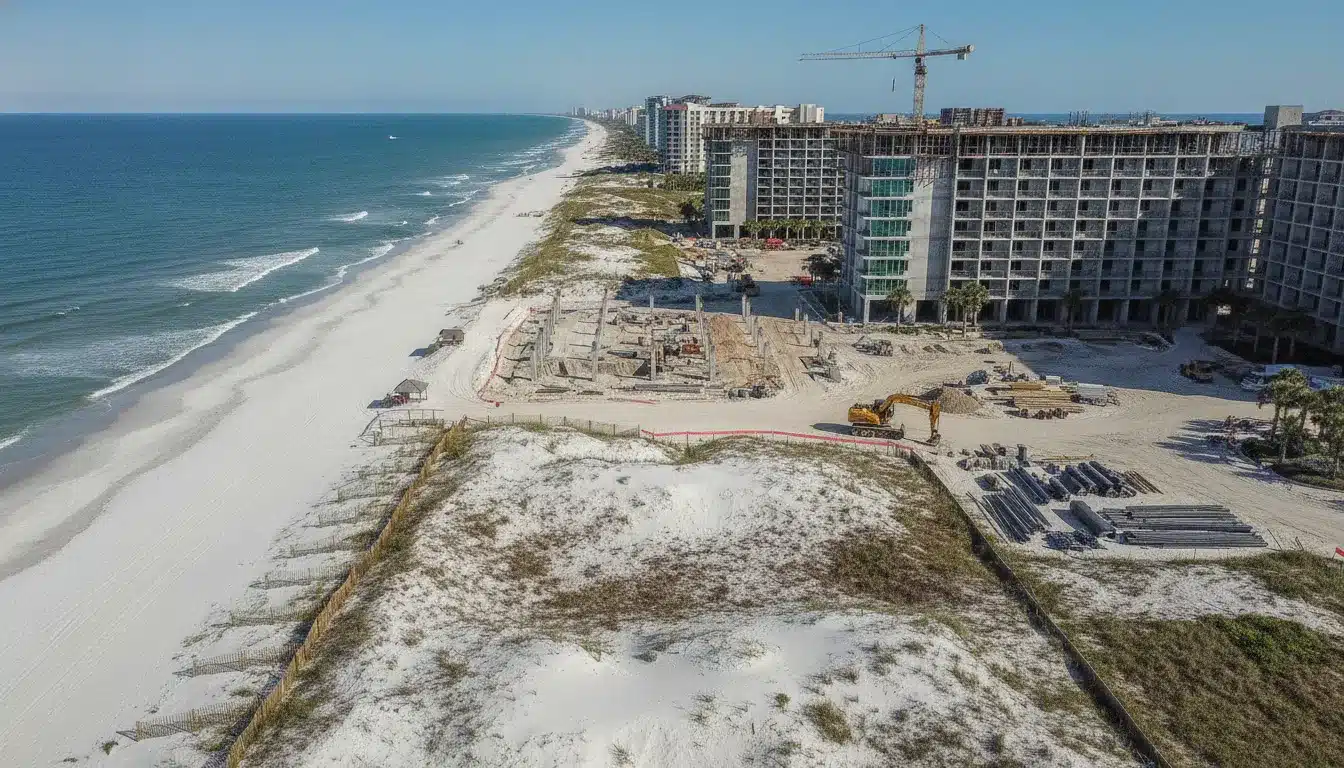
Building seaward of the Coastal Construction Control Line requires a permit from the Florida Department of Environmental Protection. Construction professionals must navigate these rules to maintain project timelines and avoid costly stop-work orders.
Florida CCCL permit requirements state that construction seaward of the Coastal Construction Control Line must receive approval from the Department of Environmental Protection. This permit program protects the state’s beach and dune systems from poor construction that can speed up erosion or harm upland structures during 100-year storm events. According to Florida Statute 161.053, the state sets these lines on a county basis. This ensures that coastal development does not block public beach access or weaken the natural shoreline. Developers and contractors must submit site surveys and impact reports to show they meet these standards. Because the CCCL serves as a legal boundary, expert review is often needed to manage state-level checks. Expert support helps developers navigate local building permits and keep the project on schedule.
Good coastal development requires a firm grasp of state rules to keep sites stable and compliant. Construction professionals can avoid delays by finding these boundaries before the design phase. To navigate these requirements, you must first understand What Is the Coastal Construction Control Line (CCCL)? The process begins with.
Florida Cccl Permit Requirements: What Is the Coastal Construction Control Line (CCCL)?
The Coastal Construction Control Line (CCCL) is the boundary that sets the limit of the Florida Department of Environmental Protection (FDEP) authority along sandy beaches. This line marks the part of the beach and dune system that faces high risk during severe storms. The state uses the 100-year storm event as the standard to map this zone. By setting this boundary, the state can control building activities that might harm the natural defense of the coast.
Legal basis and FDEP authority
Florida Statute 161.053 gives the state the power to set these lines on a county basis. The law aims to protect beach and dune systems from work that could hurt their stability. Seaward of this line, any digging or building needs a permit from the FDEP. Our team helps you navigate these specialty permit services to ensure your project stays on track and meets all state rules.
The 100-year storm standard
The FDEP bases the CCCL on data from a 100-year storm surge and wave action. This standard helps find where the land will likely shift or flood during a major weather event. The line covers shorelines along the Gulf of Mexico, the Atlantic Ocean, and the Straits of Florida. Because Florida Statute 161.053 focuses on protecting the dune system, the line may sit far inland from the high-tide mark.
Jurisdiction along sandy beaches
This boundary is not a limit on where you can build, but it does change how you build. The state looks at how a project might affect the beach, dunes, and nearby structures. While local building rules still apply, the CCCL adds a layer of state oversight to protect the coast. Projects in this zone must meet strict design standards to handle storm forces and keep the dunes intact.
Which Beachfront Projects Trigger CCCL Review?
Any work done near the coast in Florida needs close attention to state rules. Any build or digging seaward of the Coastal Construction Control Line (CCCL) needs a permit. This permit comes from the Florida Department of Environmental Protection (FDEP). This rule ensures that new work does not harm the beach or nearby homes. Under Florida Statute 161.053, these permits help stop damage to upland structures from storms and rising tides.
New Buildings and Major Site Changes
Most large projects on the beach fall under CCCL review. If you plan to build a new home, a hotel, or a store near the water, you will likely need this permit. The FDEP reviews these plans to make sure they can handle high winds and storm surges. It is not just about new builds. Major additions and structural changes also count. For example, adding a new wing to a building or changing its base will trigger a review. Even moving large amounts of sand or dirt requires a permit because it changes how the land reacts to waves.
Developers must also consider how their work affects the beach system. Digging near the shore can weaken the ground and lead to fast erosion during the hurricane season. The FDEP looks at the depth of the work and the type of soil moved. If your project involves any of the following, you must start a plans review early:
- Building new multi-family or commercial buildings.
- Building additions that change the footprint of a structure.
- Installing sea walls to protect the land.
- Mass grading or filling of sand to change the site grade.
Outdoor Structures and Accessory Features
Minor outdoor projects also face strict rules. Many contractors think that adding a pool or a deck does not need state review, but this is not true. Any structure built seaward of the line must meet state standards. This includes dune walkovers, fences, and even garden work that involves heavy digging. These rules protect the dunes that act as a shield for the shore. Before you start these tasks, you should check the Florida building code requirements to see how they match coastal laws.
Dune walkovers are common in coastal projects. They provide a safe path to the beach while keeping the plants and sand in place. However, the FDEP regulates the height, width, and wood or stone used for these paths. Even a small fence can change how sand moves during a storm. If your site plan includes any structure that sits on the sand, you will need to prove it will not harm the coast. This often requires a survey to show where the CCCL sits.
Local Permits vs FDEP Review
It is vital to know that CCCL permits are distinct from local building permits. Your city or county is the Authority Having Jurisdiction (AHJ) for local codes, but they do not manage the CCCL. You may get a local permit for your work, but that does not mean you are clear to build on the beach. The FDEP focus is on coastal protection rather than just local zoning or safety. While most work needs a permit, some exemptions exist for minor repairs or specific maintenance tasks. You should always consult with the FDEP guidance for your specific project case.
For most projects, the state review looks at how the structure will stay stable during a 100-year storm event. Local codes might focus on the electrical or plumbing work, but the state cares about the impact on the beach. This dual review process means you must manage two sets of timelines at once. Working with a pro can help you align these steps and keep your project on track. This helps you avoid the risk of having a local permit but no state approval to break ground.
Critical Design Criteria for CCCL Compliance
Meeting Florida CCCL permit requirements means following strict rules to protect the coast. Projects must focus on stopping erosion and keeping coastal dunes safe. According to Florida Statute 161.053, bad design near the shore can hurt the beach and speed up land loss. These rules make sure new buildings do not put other properties or the shoreline at risk.
Protecting Coastal Dunes
The state sees coastal dunes as a key shield against big storms. Design rules require that any work near these spots keeps the dune strong. The state can set the control line further back than the 100-year storm zone if it stays near the back of the dune. Saving these dunes is a must for project safety and long-term use.
Builders should think about how their plans affect the dunes early in the process. Our guide on Florida environmental permitting shows how these rules change site plans. Avoiding dune harm is often the best way to get a permit fast and save money.
Public Access and Safety
Compliance also means keeping public beach access open. The law stops any work that would block people from reaching the sand. This rule often leads architects to change site plans for large projects. You must balance your project needs with the law that keeps beach paths open for the public.
Safety also matters in the 100-year storm zone. Where you build and how high you build are both strictly watched. Good design in this zone stops building failure during rough weather. Pros must check that all plans meet state and local codes to avoid slow-downs or costly re-works. Following these rules keeps your project on track.
The CCCL Permit Application and Submission Process
Getting a specialty permit for coastal work involves a strict state review. The Florida Department of Environmental Protection (FDEP) leads this process to protect beach systems. You must follow a set path to get your permit and start your build.
Initial site assessment
You must first find out if your site sits seaward of the Coastal Construction Control Line. Most teams use FDEP Map Direct to check these limits. If your work crosses this line, you need a state permit before you dig or build. Missing this step can cause big delays in your project plan.
Required permit documents
The FDEP needs deep data to judge your project. You must submit detailed plans like site surveys and structural drawings. These files show how your build handles storm surges. You also need impact reports to show you will not hurt the dunes.
- Check site limits. Use state maps to see if your land falls under CCCL rules.
- Form your team. Hire experts who know Florida coastal law to guide your plan.
- Gather data. Prepare site surveys, structural drawings, and impact reports.
- Send the package. Use electronic submission steps to send your file to the FDEP.
- Manage the review. Answer questions from the state and update your plans if they ask.
- Get your permit. Once you have the permit, you must follow all its specific rules.
Professional plan review
You should have experts check your application before you hit send. This professional review ensures you meet all state rules for coastal safety. Correct files help you avoid extra rounds of state questions. A clean package speeds up your approval and keeps your project on track.
Exemptions and Special Circumstances
Coastal building projects face strict rules, but some tasks are exempt from the full review steps. Knowing these rules helps you save time and money on your project. The FDEP provides guidance on which work does not need a full state permit. You should check these rules early in your planning phase to avoid slow downs.
Common exemptions for minor coastal work
Some minor tasks and basic upkeep do not trigger the need for a full permit. This often includes small repairs to existing structures that do not change their size or spot. For example, swapping a deck board or fixing a small fence might be exempt if done right. These Florida building permit requirements still demand that you follow all local codes. You must ensure your work does not harm the dune system or coastal plants.
Other exempt tasks include non-structural work like painting or small roof fixes that do not use heavy gear on the beach. Even if you think your work is exempt, you should get a written sign-off from the state. This keeps your project safe from fines and stops. Small slips in judgment can lead to big costs in the coastal zone.
The 50-foot setback rule in non-CCCL counties
In counties where no line has been set, a general rule applies to all coastal work. Florida Statute 161.052 blocks building within 50 feet of the mean high water line. This rule is vital for sandy pocket beaches found in the Big Bend and the Florida Keys. Building in these zones can lead to legal issues if you do not have the right paperwork. Experts often refer to this as the 50-foot setback rule for Florida environmental permitting.
This setback exists to protect the shore from storm waves and surge. Without this buffer, new buildings could face fast damage during a hurricane. It also keeps the beach open for public use and protects wildlife. If your site falls into one of these counties, you must check the exact water line before you draw your plans. A small shift in the tide line can change your whole build zone.
Navigating the waiver and variance process
If your project must be in a closed zone, you may need a waiver or a variance. This process allows for special cases where the rules might be too hard to follow due to site limits. To get a waiver, you must submit a formal permit application to the state. This is not a simple letter; it needs full data, site surveys, and scale drawings. Doing these steps right is a key part of mastering Florida building code requirements.
The state will review your request to see if it harms the beach or nearby homes. You must prove that your project will not speed up erosion or block access. Most waivers take time to review, so you should build this into your project schedule. Getting help from an expert can help you file a clean form. This cuts the risk of the state asking for more data, which can stall your project for months.
CCCL vs. Local Building Permits: Key Differences
Florida coastal projects often need more than just a standard building permit. If your site sits seaward of the Coastal Construction Control Line, you must deal with two different review tracks. While local permits focus on the building code, Florida Statute 161.053 sets the rules for coastal protection. Projects in these areas usually need both approvals to move forward without delays.
Local and State Authority
A local building permit comes from your city or county. This local office is often called the AHJ. Their job is to make sure your plans follow the state building code. They check for safety in the build, wiring, and pipes. This review is a standard part of any construction project in the state.
The CCCL permit is very different and comes from the state level. The Florida Department of Environmental Protection (FDEP) manages this process. It is vital to know that the CCCL is not a limit for where you can build. It marks the zone where the state must review your impact on the beach. This review helps stop erosion and protects the shore from major storms.
Review Focus and Rules
Local reviews check for safe builds and follow Florida building permit rules. These permits ensure the building can stand up to wind and use. The focus stays on the property itself and how it works for the owner. It looks at how the structure will hold up over time.
In contrast, the CCCL review looks at how the project affects the beach system. The FDEP checks for nature impacts on dunes and plants. You will often need to submit a full study of these impacts with your plans. This process makes sure that new work does not hurt the shore or the public beach.
| Feature | Local Building Permit | CCCL Permit |
|---|---|---|
| Authority | City or County (AHJ) | State (FDEP) |
| Main Goal | Building code and safety | Beach and shore protection |
| Review Area | Structure and systems | Nature and storm surge |
| Primary Rule | Florida Building Code | Florida Statute 161.053 |
| Key Worry | Life safety and zoning | Erosion and dune health |
Handling both tracks at once can be hard for any team. Missing a single step in the FDEP review can stall your project for months. Experts can help you manage these paths to keep your timeline on point. Getting a full review early helps you avoid costly errors during the build.
CCCL Requirements in Counties Without an Established Line
Florida law applies strict coastal rules even in areas where the state has not set a specific Coastal Construction Control Line (CCCL). In regions like the Big Bend and the Florida Keys, the state uses a default setback to protect the shore. Most projects in these “pocket beach” areas must stay at least 50 feet back from the line of mean high water. Understanding these Florida building permit requirements is vital for any project near the coast.
The 50-Foot Setback Rule
In counties without a set CCCL, you cannot build or dig within 50 feet of the mean high water line. This rule exists to prevent storm damage and protect the natural beach. It applies to most sandy shorelines that do not have a mapped line. Citing Florida Statute 161.052, the state enforces this limit to keep new work away from active surf zones. For builders, this means site plans must show the high water mark and the 50-foot zone clearly.
Waiver and Variance Process
If your project must sit within the 50-foot zone, you will need a formal waiver or variance. You cannot skip the state review just because there is no mapped line. Per Florida Department of Environmental Protection (FDEP) rules, you must still file a full CCCL permit application. This step allows the state to check if your work will harm the beach or nearby lots. Many teams find that Florida environmental permitting goes faster when they plan for these setbacks early.
Big Bend and Florida Keys Specifics
The Big Bend region and the Florida Keys are the most common areas for these rules. These spots often have small beaches where a full CCCL is not yet set. Even though the map looks clear, the 50-foot rule still applies to any sandy area. You should check the local shore type before you start your design. If you build seaward of this line without a permit, you face big fines and stop-work orders. Getting the right advice early can save time and keep your project on track.
Frequently Asked Questions
How is the Florida CCCL jurisdiction limit determined?
According to the Florida Department of Environmental Protection, the CCCL defines the landward limit of state control along sandy beaches. This line is set based on the expected impact of a 100-year storm event. The boundary includes beach and dune systems that face severe shifts during such events. These state rules help protect Florida coastal resources from poor building choices that could lead to erosion or property damage.
Are there exemptions to Florida CCCL permit requirements?
Certain building tasks may be exempt from the standard review process. However, most work seaward of the line requires a permit. Projects like minor yard work or small repairs might qualify for an exemption. You should check All Florida Permits guides to see if your specific project needs a full application. Even if an exemption applies, you may still need to file a formal request or waiver to follow state law.
What documents are required for a Florida CCCL permit?
A complete application typically requires detailed project plans and site surveys. According to All Florida Permits, you must also provide building drawings and reports on environmental impacts. These documents show how your project will affect the beach and dune system. The state now requires all files to be sent through their online system. Hiring a professional to review these files can help you avoid delays and ensure your plans meet all state rules.
What is the coastal setback rule in counties without a CCCL?
In counties without a fixed line, building is generally banned within 50 feet of the mean high water line. This rule often applies to pocket beach areas in the Florida Keys or the Big Bend region. Per FDEP rules, you must apply for a waiver or variance if you plan to build in this zone. A formal permit application is still required to ensure the project does not harm the shore or nearby lands.
Ready to Navigate Your CCCL Permit Requirements?
The Florida Coastal Construction Control Line permitting process demands specialized knowledge of environmental regulations, submission procedures, and compliance criteria. An incomplete or inaccurate application can delay your project timeline and increase costs. All Florida Permits provides end-to-end CCCL permit management across all 67 Florida counties, from initial site assessment through document preparation, submission, and follow-up with FDEP reviewers.
Request a proposal for your CCCL permit expediting services and get your coastal project moving with confidence.