

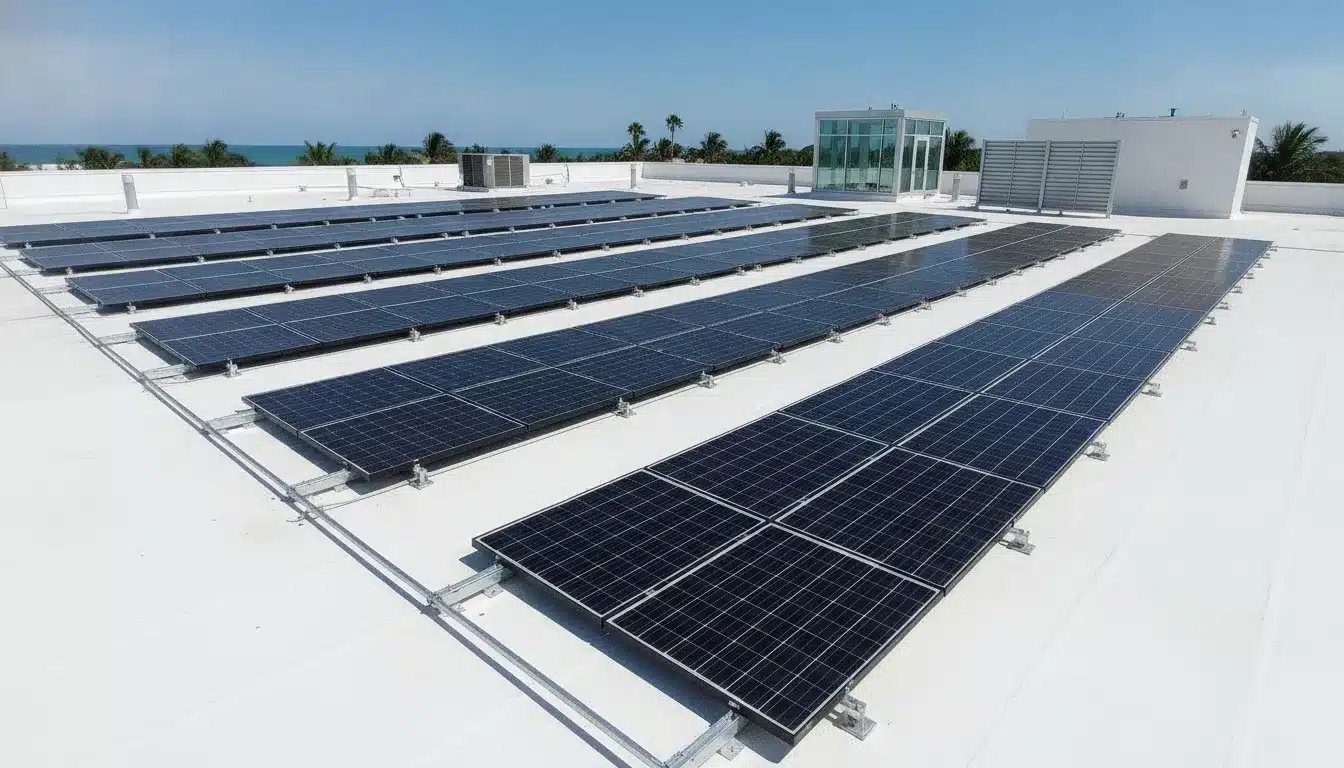
Investing in commercial solar energy in Florida is a powerful move to reduce operating costs and secure long term energy independence. However, the path to a fully operational system is paved with complex regulatory hurdles. Navigating the Florida commercial solar permit requirements demands a clear understanding of state codes, municipal variations, and utility interconnection rules. Failing to coordinate these building and electrical permits early can lead to costly project delays, stalling your return on investment.
The Florida commercial solar permit requirements dictate that every commercial installation must secure both a structural building permit and an electrical permit from the local Authority Having Jurisdiction (AHJ). These permits ensure compliance with the Florida Building Code (8th Edition, 2023) and the National Electrical Code (NEC). To obtain approval, developers must submit a comprehensive plan package. This package includes wind load calculations (ASCE 7), engineered structural drawings signed and sealed by a Florida licensed Professional Engineer, detailed electrical single line or three line diagrams, and certification from the Florida Solar Energy Center (FSEC). Proactive planning, proper document preparation, and utilizing private providers can accelerate this multi-stage review process from several months to a matter of weeks.
The regulatory framework for Florida commercial solar permits
Florida is known as the Sunshine State, making it a prime location for commercial solar projects. However, the state regulatory landscape is highly decentralized. While Florida state law supports solar development, enforcement is managed locally. Under Florida Statute 163.04, also known as the Solar Rights Act, local governments, homeowners associations, and zoning boards are legally prohibited from banning solar installations. Despite this legal protection, commercial solar projects are not exempt from strict building, structural, electrical, and safety regulations.
The primary regulatory body overseeing any installation is the local Authority Having Jurisdiction, typically the county or municipal building department. With over 67 counties and more than 400 municipalities throughout Florida, the administrative path can vary significantly. A permit package that passes smoothly in Orange County might receive multiple comments or revisions in Miami-Dade County due to regional code variations. Navigating these regional differences requires thorough pre-construction research and active permit management to keep your commercial project on schedule.
In addition to local building departments, developers must coordinate with outside government agencies. Depending on the building location and characteristics, approvals may be required from the local fire marshal, the Florida Department of Transportation (FDOT) for right of way access, and regional water management districts for environmental impacts. Understanding how these agencies interact with your local building department is a crucial first step in any successful commercial solar deployment.
The Florida Building Code and structural requirements
Structural integrity is a paramount concern for any commercial solar installation in Florida, given the state exposure to extreme weather events. All commercial solar installations must comply with the 8th Edition of the Florida Building Code, which became effective on January 1, 2024. This code sets rigid standards for roof loads, structural attachments, and wind resistance.
Wind load design and ASCE 7 compliance
Florida wind load requirements are among the most stringent in the nation. Under the current building code, structural designs must account for wind pressures calculated using the ASCE 7-22 standard. This is especially critical in High-Velocity Hurricane Zones, which include Miami-Dade and Broward counties. In these zones, structures must be engineered to withstand wind speeds of 170 mph or greater.
To secure a structural permit, a Florida licensed Professional Engineer must perform wind uplift calculations for your specific building. These calculations determine the necessary spacing, depth, and quantity of structural attachments to prevent the solar array from detaching during a hurricane. The structural review looks closely at the three main roof zones: the field (interior of the roof), the perimeter (outer edges), and the corners. Wind uplift pressures are significantly higher in the corners and perimeters, requiring stronger anchoring or specialized spacing in those areas.
Mounting systems and roof deck integration
Commercial flat roofs typically support one of two solar mounting types: ballasted systems or penetrated systems.
- Ballasted Systems: These systems use heavy concrete blocks to hold the solar racking in place without penetrating the roof membrane. While they minimize the risk of roof leaks, they add significant static weight (dead load) to the structure. A structural engineer must verify that the existing roof deck and structural framing can handle this extra load.
- Penetrated Systems: These systems anchor directly into the structural steel or concrete roof deck. They add less weight to the roof but create penetration points that must be carefully flashed and sealed. The building plans must include detailed flashing drawings to prove that the roof’s fire rating and weatherproofing will be maintained.
If you are working with an existing roof, you must specify its current condition, deck type, and material. Some jurisdictions may require a separate roofing permit or a roof re-certification if the roof is near the end of its useful life. Proactive document preparation ensures that all structural calculations, mounting details, and flashing drawings are complete before submission, preventing costly back and forth revisions with structural plan examiners.
The dual permit workflow: Building vs. Electrical permits
A common mistake commercial property teams make is viewing solar permitting as a single transaction. In reality, commercial solar installations are dual trade projects that require separate, but coordinated, reviews from building and electrical departments.
The building department reviews the physical safety and structural impact of the installation. This review ensures the building can support the physical weight of the panels, racking, and ballasts, and that the racking can withstand localized wind forces without failing. It also covers fire safety access, ensuring that firefighters have clear paths around the roof perimeter and equipment in an emergency.
The electrical department reviews the generation, transmission, and connection of the power produced by the solar array. This review ensures the electrical system is designed safely in compliance with the National Electrical Code. It covers everything from the solar modules on the roof to the main electrical service panel where the solar system connects to the building’s power grid. The primary areas of review for building and electrical permits are summarized below:
| Permit Category | Primary Review Areas | Key Requirements |
|---|---|---|
| Structural Building Permit | Roof load capacity, wind uplift calculations, racking engineering, flashing details, fire marshal clearance paths | ASCE 7 calculations, signed & sealed drawings from a Florida licensed PE, manufacturer specifications for racking |
| Electrical Permit | PV array electrical configuration, conductor and conduit sizing, system grounding, inverter specs, rapid shutdown compliance, utility service panel connection | NEC compliance, electrical three-line diagrams, voltage drop calculations, rapid shutdown device listings (NEC 690.12) |
Both permits must be issued before construction can begin. In many jurisdictions, these reviews occur in parallel, but some municipal departments require building approval before electrical review starts. Coordinating these separate tracks is a core focus of All Florida Permits’ statewide permit management service, ensuring both trades move through the system concurrently.
Crucial elements of a commercial solar plan package
To avoid plan rejections, developers must submit a complete, highly technical plan package. A missing document or unsealed page can cause the entire application to be returned as incomplete, resetting your project timeline. An authoritative commercial solar submittal package must include the following core elements:
The first element is the Site Plan. This document must show the project address, legal description, and property lines. It must show the location of all existing on site structures, easements, and the proposed layout of the solar array. If the system is a ground-mounted solar array, the site plan must include NAVD 88 datum elevations and tree locations. Any tree within 20 feet of the construction area must be documented with its species and size, along with a tree protection or mitigation table if removal is required.
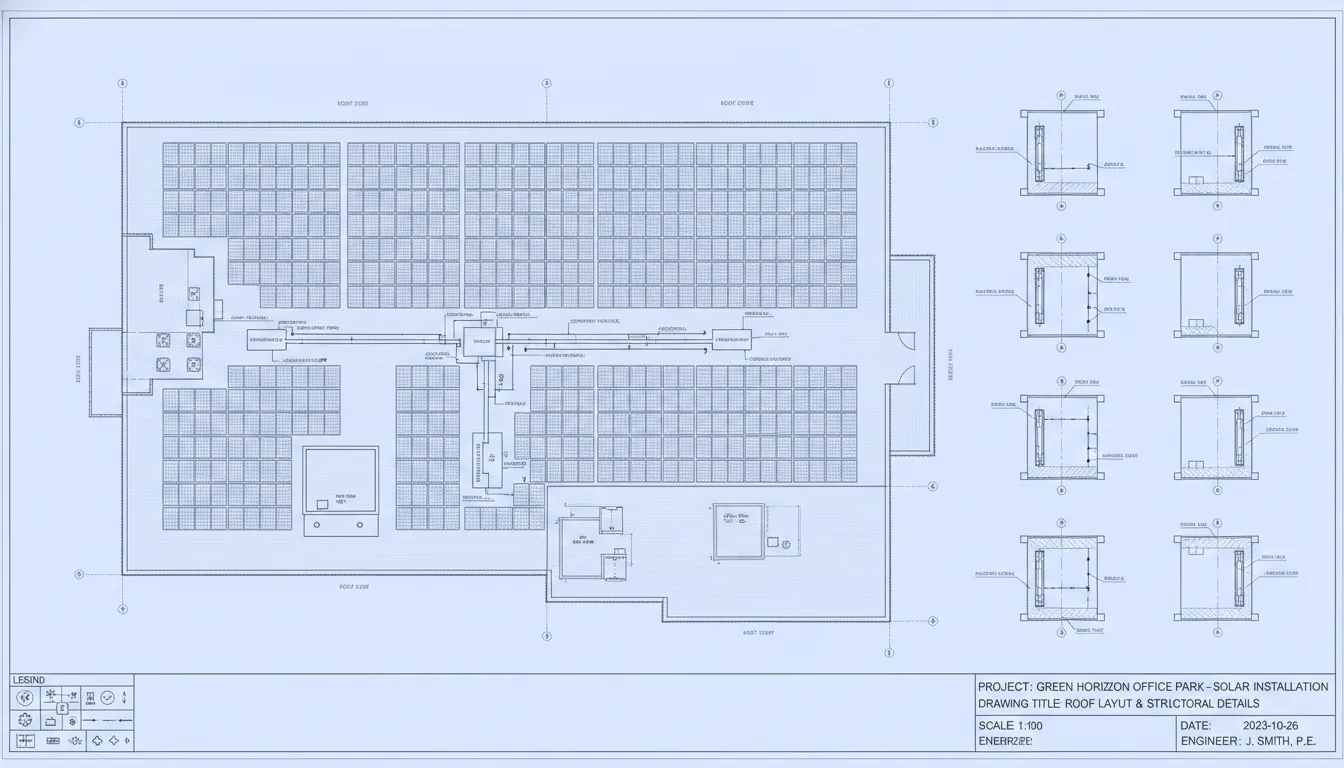
The second element is the Structural Building Plans. These plans must be signed and sealed by a Florida licensed Architect or Professional Engineer. They must detail the structural mounting method, flashing details, roof deck integration, and racking manufacturer specifications. The plans must also include the ASCE 7 wind uplift calculations, detailing the pressures for each roof zone and proving that the anchoring system can withstand those forces.
The third element is the Electrical Plans, which must also be signed and sealed by a Florida licensed Professional Engineer. These plans must include a detailed electrical single line or three line diagram. This diagram must show the PV array configuration, conductor and conduit sizing, system grounding, inverter locations, and the physical point of connection to the building’s main electrical panel. The electrical drawings must also specify compliance with the National Electrical Code, including load calculations, voltage drop math, and rapid shutdown system details (NEC 690.12) to ensure firefighter safety.
In addition to structural and electrical plans, several state-specific forms are required. You must submit a system certification approval form from the Florida Solar Energy Center (FSEC), proving that the proposed solar equipment is approved for use in Florida. You must also submit a completed and signed Owner’s Solar System Disclosure Form. If the commercial property is located in a FEMA Special Flood Hazard Area, a FEMA Substantial Improvement determination signed by the applicant is also mandatory to verify that the installation complies with local flood damage prevention ordinances.
Navigating the 2025 expedited permitting laws and Private Providers
Historically, the commercial permit process in Florida was notorious for administrative backlogs. Building departments were often understaffed, leading to weeks or months of waiting for a first round of plan reviews. However, recent legislative changes have revolutionized the permitting landscape, creating new avenues for rapid approvals.
The 2025 Regulatory Revolution
Transformative legislation passed under HB 683, HB 267, and SB 1035 has established strict guidelines for local building departments. For single trade permits, such as rooftop solar, local governments now have just five business days to review and approve permit applications. For more complex, multi trade commercial projects, the statutory review timeline is capped at 60 business days. If a local building department fails to meet these deadlines, they must automatically approve the permit and, in some cases, refund a portion of the permit fee to the applicant. These laws are designed to keep construction projects moving and prevent local bureaucracies from stalling development.
Leveraging the Private Provider Option
Even with statutory deadlines, local building departments can still become bottlenecked. To completely bypass municipal delays, developers can leverage Florida’s Private Provider law (Florida Statute 553.791). This statute allows commercial property owners to hire private, Florida licensed engineers or architects to perform plan reviews and inspections instead of waiting for government staff.
When using a Private Provider, the developer submits a Private Provider Package along with the permit application. This package must include a formal Notice to Building Official signed by the property owner and notarized, along with a Compliance Affidavit from the Private Provider confirming that the plans comply with all applicable building codes. All plans reviewed by the Private Provider must bear their professional stamp. While the local building department still issues the final permit, they are legally required to accept the Private Provider’s review, reducing the plan check phase from months to days. This is a game changing strategy that All Florida Permits frequently integrates into our client campaigns to accelerate project start dates.
Coordinating utility interconnection and grid connection
Securing your building and electrical permits from the local building department is only half the battle. To legally activate your commercial solar system and feed power back into the grid, you must coordinate with your local electric utility. In Florida, the major investor-owned utilities include Florida Power & Light (FPL), Duke Energy, and Tampa Electric Company (TECO).
The utility coordination process, known as interconnection, runs parallel to your building department reviews. You must submit an interconnection application along with your electrical plans and engineering calculations. The utility will review the system design to ensure it will not cause voltage fluctuations or safety issues on their electrical grid. Interconnection applications are categorized into three tiers based on the system’s generation capacity:
- Tier 1 (Systems ≤ 10 kW): Typically reserved for small commercial or residential systems. The review process is simplified, application fees are waived, and no extra liability insurance is required.
- Tier 2 (Systems > 10 kW and ≤ 100 kW): Covers mid size commercial installations. This tier requires a dedicated application fee and may require the property owner to carry a specific amount of general liability insurance (typically $1 million) to protect the utility grid.
- Tier 3 (Systems > 100 kW and ≤ 2 MW): Covers large commercial and industrial systems. Tier 3 applications require a detailed interconnection study, a substantial application fee, and mandatory general liability insurance (often $2 million or more).
Once the utility approves your application, they will execute a formal Interconnection Agreement. This agreement details the terms of net metering, allowing your business to receive credits on your utility bill for the excess electricity your solar panels send back to the grid. It is critical to start this coordination early. If you wait until after construction is complete to submit your utility application, your system could sit dormant on your roof for weeks while the utility processes the paperwork.
The inspection sequence and obtaining Permission to Operate
Once your permits are issued and construction begins, you must complete a strict sequence of field inspections. These inspections verify that the physical installation matches the approved, engineered plans and complies with all state building and electrical codes.
The first inspection phase is the Structural Rough Inspection. The building inspector will visit the site after the racking and structural attachments are installed but before the solar panels are mounted. They will check the anchorage points, torque specs, and flashing seals to ensure the racking is physically secure and waterproof.
The second phase is the Electrical Rough Inspection. The electrical inspector will check the rough wiring, conduit runs, junction boxes, and system grounding. They will verify that all conductors are sized correctly, conduit is securely supported, and the system grounding electrode is properly connected to prevent electrical shock.
The third phase is the Final Building and Electrical Inspections. These final inspections occur after the solar panels are mounted, the inverters are connected, and all electrical equipment is in place. The inspectors will verify that the system is fully complete, all code required safety placards and warning labels are physically installed, and the rapid shutdown system is fully functional. The rapid shutdown test is critical: the inspector will shut off the main AC breaker to confirm that the voltage on the roof drops to a safe level within 30 seconds, protecting emergency responders during a fire.
After passing final inspections, the building department will sign off on the permits, changing their status to “closed.” All Florida Permits’ inspection management service coordinates these field visits, helping resolve code disputes on site and ensuring inspectors get the exact data they need to sign off.
With closed permits in hand, you must submit the inspection records to your utility company. The utility will then schedule a meter swap, replacing your standard electrical meter with a bi-directional net meter that can track power moving in both directions. Once the new meter is installed, the utility will issue your official Permission to Operate (PDF) letter. Only after receiving your PTO can you legally turn on your commercial solar system and start generating power.
Delay-prevention tips for commercial property teams
Permit delays are the single biggest threat to a commercial solar project’s timeline and budget. A stalled permit means idle crews, carrying costs, and delayed utility savings. To keep your solar project on track, commercial property teams should implement the following proactive strategies:
- Begin Utility Coordination Early: Do not wait for building department approval to apply for utility interconnection. Start the utility application process parallel to your first design phase to ensure your meter swap is scheduled as soon as construction finishes.
- Ensure Signed & Sealed Professional Engineer Drawings: Always submit complete, professional plan sets. Every sheet must be signed, sealed, and dated by a Florida licensed Professional Engineer. Double check that the structural calculations, single line electrical diagrams, and FSEC forms use identical system sizes and equipment models.
- Leverage the Private Provider Option: If you are building in a jurisdiction known for plan review backlogs, utilize a Private Provider. The upfront cost of hiring a private engineer is often far outweighed by the weeks or months saved in plan review.
- Use All Florida Permits’ Comprehensive Services: Navigating building departments, fire marshals, and utilities is a complex, full time job. Partnering with a dedicated, statewide expeditor ensures your project has active, daily tracking.
By taking a proactive, highly coordinated approach, commercial developers can navigate the Florida commercial solar permit requirements with confidence, avoiding administrative roadblocks and accelerating their path to renewable energy savings.
Frequently Asked Questions
Understanding Florida solar permits can be challenging. Below are clear, direct answers to the most common questions commercial property teams ask about the process.
How long does it take to get a commercial solar permit in Florida?
Under Florida’s 2025 expedited permitting laws, local building departments have a 60 business day statutory limit to review commercial permits. For single trade rooftop solar applications, the timeline is shortened to just five business days. However, incomplete submittals or municipal backlogs can still cause delays. Utilizing a Private Provider for plan review can reduce this entire approval phase to under two weeks.
Do I need separate building and electrical permits for commercial solar?
Yes. Commercial solar installations are considered dual trade projects. You must secure both a structural building permit, which covers roof loads, wind uplift pressures, and anchoring, and an electrical permit, which covers wiring, grounding, inverter connections, and National Electrical Code compliance. These reviews usually occur in parallel.
What are the wind load requirements for solar panels in Florida?
All solar racking and attachments must be engineered to withstand wind pressures calculated using the ASCE 7-22 standard under the current Florida Building Code. In High-Velocity Hurricane Zones, such as Miami-Dade and Broward counties, the systems must be engineered to withstand wind speeds of 170 mph or greater, requiring sign off from a Florida licensed Professional Engineer.
What is a Private Provider, and how can they help?
A Private Provider is a Florida licensed engineer or architect hired by the property owner to perform plan reviews and inspections instead of the local building department staff, as authorized under Florida Statute 553.791. This bypasses municipal backlogs, allowing for much faster permit issuance and flexible field inspections.
When can I legally turn on my commercial solar system?
You cannot turn on your system immediately after passing final inspections. You must wait for your utility company to perform a net meter swap and issue your official Permission to Operate letter. Activating the system before receiving PTO can result in severe utility penalties and safety hazards.