

Permit requirements and procedures may vary by jurisdiction. Always verify with local building departments or consult a licensed permitting professional.
Getting a Florida construction permit can feel overwhelming. It’s more than just one application. You’re dealing with strict Florida Building Code requirements, plus a unique maze of local zoning rules, plan reviews, and inspections that vary from city to city. This is where even experienced builders get tripped up. But it doesn’t have to be confusing. Once you understand the basics of how the state and local systems work together, you can avoid the most common delays that stall projects and cost you money. This guide breaks it all down for you.
This beginner’s guide breaks down what typically requires a permit, how Florida’s codes work, what documents you’ll need, what building permit cost in Florida can include, and how Florida building permit expediting can help you move faster while staying compliant.
What’s a Florida Construction Permit (and Why Should You Care)?
A construction permit is official approval from your city or county (the “Authority Having Jurisdiction,” or AHJ) to perform specific construction work. In Florida, permits aren’t just red tape, they help ensure:
- Life safety (fire protection, structural stability, safe exits)
- Resilience (hurricane wind loads, floodplain compliance)
- Public health (plumbing and sanitation standards)
- Long-term property value and insurability
- A smoother path to your Certificate of Occupancy in Florida (for many commercial and some residential scenarios)
Skipping permits can trigger stop-work orders, fines, failed inspections, insurance issues, and problems when selling the property.
Does Your Florida Project Need a Construction Permit?
Most “real” construction work needs a permit. Exact rules vary by city/county, but these are commonly permitted across Florida.
Projects That Almost Always Need a Permit
- New construction (homes, commercial buildings, tenant build-outs)
- Additions (rooms, garages, enclosed patios, large decks)
- Structural changes (removing or moving load-bearing walls, adding beams)
- Roof replacements and significant roof repairs
- Window and door replacements (often tied to wind-load/impact requirements)
- Electrical work (service upgrades, new circuits, panel changes)
- Plumbing work (water heater replacement may require a permit in many areas)
- HVAC work (new system installs, major duct changes)
- Pools and spas
- Gas work (piping, appliances)
- Many fence installations (height/location dependent)
Kitchen and Bathroom Remodels
Cosmetic updates like painting, swapping faucets, or installing new countertops typically don’t require a permit. However, the moment you start moving things around, the rules change. If your remodel involves altering the structure—like removing a wall—or changing the electrical or plumbing layout, you’ll need a permit. As the City of Fort Walton Beach notes, you’ll need engineered plans for “major remodels that change the structure.” This ensures all work is safe, up to code, and properly inspected. Managing these plans and applications can be complex, which is why many contractors and homeowners rely on professional permit expediting services to keep their projects on track and compliant from the start.
Roof Replacements and Major Repairs
Florida’s weather makes roofing one of the most regulated areas of construction. While you generally don’t need a permit for minor fixes, the threshold for “major” is smaller than you might think. A good rule of thumb is that if the repair area is 100 square feet or more, you will likely need a permit. A complete roof replacement always requires a permit to ensure it meets Florida’s stringent wind-load and waterproofing standards. Failing to secure the proper permits for a roof job can lead to significant issues with insurance claims and future property sales, so it’s a step you can’t afford to skip.
Public Swimming Pools
Building a public or commercial swimming pool involves more than just the local building department. It’s a great example of how different government agencies can be involved in a single project. According to Florida Statutes, you must show that you have already applied for an operating permit from the Department of Health *before* you can even get your building permit. This multi-step process requires careful coordination to avoid delays. Handling these inter-agency requirements is a core part of what we do, ensuring all necessary approvals are sequenced correctly so your project can move forward without getting stuck in bureaucratic limbo.
Work That Might Be Exempt (But Always Double-Check)
Cosmetic updates (painting, some flooring, cabinets) are often exempt. The catch: if your “cosmetic” project touches electrical/plumbing/structural elements, it may require a permit.
If you’re unsure, it’s worth confirming early, this is one of the fastest ways to prevent mid-project compliance headaches.

Emergency Repairs
In Florida, unexpected events like severe weather or structural failures can force you into emergency repairs. While your first instinct is to fix the problem immediately, you still have to follow local permitting rules. For example, if you’re fixing a roof after a storm, you may need to start the work right away for safety, but you’re generally required to apply for the permit on the next business day. Many jurisdictions have specific guidelines for this; St. Johns County, for instance, notes that if a repair covers 100 square feet or more, a permit is likely necessary. The key is to address the immediate danger first, then promptly handle the paperwork to stay compliant.
It might feel like a hassle to file paperwork after a crisis, but skipping this step can create much bigger problems. Failing to secure the proper permits, even for emergency work, can lead to stop-work orders on any remaining repairs, fines, and trouble with future inspections. It can also cause major headaches with your insurance company or when you eventually decide to sell the property. Ensuring you’re compliant, even after an emergency, protects your investment and provides peace of mind during a stressful time. It’s always better to communicate with your local building department or a permitting expert to understand the correct procedure.
Florida’s Building Code: Statewide Rules and Local Exceptions
Florida uses a statewide building code, but each jurisdiction can have local processes, portals, and amendments.
Which Building Code is Florida Using?
Florida is operating under the Florida Building Code (FBC), 8th Edition, effective December 31, 2023. Most new permit applications must comply with the current edition unless your project qualifies under a specific rule or timing exception.
You can review code resources via the official Florida Building Code site:
https://floridabuilding.org/
The Upcoming Transition to the 9th Edition
While the 8th Edition is the law of the land for now, Florida is already preparing for the next evolution in building safety and design. The transition to the 9th Edition (2026) Florida Building Code is on the horizon, and it represents more than just a simple update; it’s a deliberate shift toward creating a more resilient and energy-efficient built environment. For anyone planning future projects, from a custom home in Tampa to a commercial build-out in Miami, understanding these changes early is key. The new standards will place an even greater emphasis on addressing Florida’s unique climate challenges, including hurricane preparedness and floodplain management. Staying ahead of these regulatory shifts is crucial for avoiding future compliance issues, and getting professional guidance on regulations can help ensure your long-term project is positioned for a smooth approval process.
Why Florida’s Code is So Strict (Hint: Hurricanes)
Florida building code requirements strongly emphasize:
- Wind resistance (connectors, roof assemblies, openings protection)
- Impact-rated openings in high-wind regions
- Floodplain requirements (elevation, flood vents, materials)
- Product approvals (Florida Product Approval or Miami-Dade NOA in many cases)
If your property is coastal, in a flood zone, or near sensitive environmental areas, you may need additional documentation or approvals beyond the building permit.
How the Florida Permitting System is Structured
One of the most important things to understand about getting a permit in Florida is that there isn’t a single, statewide office that handles everything. Instead, the system is decentralized, with authority given to local governments. This means the experience of getting a permit can vary significantly depending on where your project is located. While everyone follows the same core Florida Building Code, the submission process, review timelines, and specific local ordinances are managed at the city or county level. This structure makes local knowledge incredibly valuable for keeping your project on track and avoiding unexpected hurdles with the building department.
Permits are Issued by Local Governments
Florida building permits are obtained through local city or county building departments, not a central state agency. Whether you’re in Miami, Orlando, or a smaller town, your local building department is the Authority Having Jurisdiction (AHJ) for your project. They are responsible for reviewing your plans, issuing the permit, and conducting inspections to ensure all work complies with the Florida Building Code. Many municipalities now use online portals for applications and payments, but each system can have its own quirks. This local control is why a contractor who works primarily in Tampa might face a learning curve on a project in Jacksonville. Having a partner with statewide experience can be a major asset in handling these jurisdictional differences efficiently.
Special Requirement: Building Recertification
Beyond standard construction permits, some areas have special requirements for existing structures. The most well-known is the building recertification program, which is mandatory for many buildings once they reach a certain age—typically 30 or 40 years old. This process requires a licensed engineer or architect to inspect the property and certify its structural and electrical safety to the local building department. While it originated in Miami-Dade and Broward counties, other jurisdictions are adopting similar safety programs. This isn’t a simple inspection; it’s a formal process with strict deadlines and documentation. If your property is approaching this milestone, getting expert guidance on the building recertification process is key to ensuring compliance and protecting your investment.
Residential vs. Commercial Permits in Florida: What’s the Difference?
Permitting “rules of the road” are similar, but commercial projects usually involve more review layers and stricter documentation.
Common Reasons You’ll Need a Residential Permit
- Additions and remodels that touch structure, roof, MEP (mechanical/electrical/plumbing)
- Detached structures (garages, sheds) depending on size/use
- Pools, screen enclosures, solar
Common Reasons You’ll Need a Commercial Permit
- Tenant improvements and change of use
- Fire alarm/fire sprinkler work
- Accessibility compliance (ADA)
- Mechanical ventilation and energy calculations
- Life safety plans (occupancy load, egress, fire ratings)
Commercial plan reviews often involve multiple departments (building, zoning, fire, utilities, sometimes health department depending on use).
Your Step-by-Step Guide to the Florida Permit Process
While every city/county has its own portal and workflow, most Florida construction permits follow a similar path.
Step 1: Check Zoning and Define Your Scope
Before you invest in full plan sets, confirm:
- Zoning allows the use (especially for commercial)
- Setbacks and lot coverage work
- Flood zone requirements are understood
- HOA approvals (if applicable) are obtained
Step 2: Gather Your Plans and Documents
Most permitted work requires construction documents. Depending on scope, you may need signed/sealed drawings by a Florida-licensed design professional.
Step 3: Submit Your Application and Pay Fees
You’ll apply via the local online portal or in person, upload documents, and pay required intake fees.
Using Mandatory Online Permitting Services
Forget waiting in line with paper plans. Most Florida jurisdictions, from Miami-Dade to Orange County, now require you to submit permit applications through their online portals. By law, these websites must provide all necessary forms, fee schedules, and a way to track your application’s status. While these portals are meant to streamline everything—giving you one place to upload documents, pay fees, and schedule inspections—they each have their own quirks. Learning the unique system for each jurisdiction, from specific file formats to how to respond to reviewer comments, can be a major time sink and a common source of delays. This is exactly why many contractors and developers use professional permit expediting services to manage the digital legwork and keep projects moving forward.
Step 4: Understanding the Plan Review Cycle
Plan reviewers return comments (“deficiencies”). Your team responds with revisions and resubmits until approval.
Typical Permit Approval Timelines
This is the question on every project owner’s mind, and the honest answer is: it depends. Approval times can range from just a few days for simple, over-the-counter permits to several months for complex new construction in a major city like Miami or Orlando. The biggest factors influencing your timeline are the project’s complexity, the jurisdiction’s current workload, and the quality of your initial submission. Incomplete applications or plans with code deficiencies will trigger review comments, sending your project back to the drawing board and restarting the clock. Minimizing these back-and-forth cycles is the single most effective way to shorten your wait time, which is why having an expert manage the process can be a game-changer for your schedule.
The Role of the Fire Safety Inspector
For many commercial projects and some residential ones, your plans won’t just be reviewed by a building plans examiner. A fire safety inspector must also check plans for fire safety unless the building type is specifically exempt. This is a separate, critical review focused on life safety elements like proper exit pathways (egress), fire-rated walls and doors, fire alarm systems, and sprinkler layouts. The fire inspector’s comments are independent of the building department’s, so it’s another layer of compliance you need to clear. Addressing these requirements thoroughly in your initial design is essential to prevent delays during the plan review phase.
Getting a Preliminary Permit for Phased Work
On large projects, waiting for every detail to be approved before breaking ground can be a major schedule killer. Florida law allows for a potential solution: a preliminary or phased permit. This lets you get a permit for a specific portion of the work, like the foundation or site clearing, before the full set of architectural and structural plans are approved. However, this approach comes with a significant warning: you build at your own risk. There is no guarantee the full permit will be granted, and if subsequent plan reviews require changes to the work you’ve already completed, the cost of demolition and rework falls entirely on you.
Step 5: Getting Your Permit Issued
Once approved and fees are paid, the permit is issued. Many jurisdictions require permit cards and approved plans to be available onsite.
Step 6: Scheduling and Passing Inspections
Inspections happen at defined milestones (foundation, framing, rough-in, insulation, final, etc.). Missing an inspection can force rework.
The Option for Virtual Inspections
To make inspections faster and more convenient, many local agencies in Florida now offer virtual inspections for certain types of work. While an in-person visit is still the norm for most projects, state law allows authorities to use video or other digital tools for some inspections. Keep in mind, this option usually isn’t available for critical structural work on larger buildings. For more routine jobs, however, it can be a huge time-saver that lets you get approvals without waiting for an inspector to arrive on site.
For instance, jurisdictions like Miami-Dade County provide same-day virtual inspections for specific electrical, mechanical, and plumbing permits. This can cover anything from installing solar panels and changing out an AC unit to checking pool piping. You or your contractor can often use a simple smartphone video call to walk the inspector through the finished work, which makes the process incredibly efficient. Since these programs vary by city and county, it’s always smart to check what your local building department offers before you schedule anything.
Step 7: Closing Out Your Permit and Getting a CO
For many commercial projects, and some residential scenarios, successful final inspections and documentation lead to a Certificate of Occupancy Florida (CO) or Certificate of Completion.

What Documents Do You Need for a Florida Construction Permit?
Requirements vary, but beginners can use this as a starting checklist.
Your Florida Permit Application Checklist
- Property address + parcel/folio number
- Owner info + contractor info (license, insurance)
- Survey/site plan (current and legible)
- Construction drawings (architectural/structural/MEP as needed)
- Energy forms (when required)
- Product approvals (windows/doors/roofing, etc.)
- Notice of Commencement (often required for larger-dollar work; recorded with the county)
- Owner authorization (if a representative submits)
Filing a Notice of Commencement (NOC)
For larger projects, a Notice of Commencement (NOC) is a non-negotiable step. Think of it as the official starting gun for your construction, a formal document recorded with the county clerk. Its main purpose is to protect you, the property owner, from potential liens if your contractor doesn’t pay subcontractors or suppliers. In Florida, an NOC is typically required for projects costing more than $5,000—a threshold confirmed by counties like Okaloosa—or $15,000 for HVAC replacements. The key is to get this document recorded *before* your first inspection takes place, as many jurisdictions require it to be on file to proceed.
The NOC provides essential project details to all parties, including the property address, owner’s name, and contractor’s information. Filing it correctly is a critical part of maintaining clear financial responsibility and avoiding messy disputes later. It formally establishes the project’s start date and the key players involved, creating a clear public record. This simple document is one of the most effective tools you have to safeguard your property and investment throughout the construction process, ensuring a smoother path to completion without unexpected financial claims popping up.
When Are Special Inspections Required?
Some projects require a Special Inspector and a special inspection plan, commonly for larger or more complex structures (often tied to height, stories, occupancy, and structural complexity). Your engineer/architect typically guides this based on FBC triggers.
Understanding “Threshold Buildings”
For certain large-scale projects in Florida, you’ll run into the term “threshold building.” This isn’t just a casual label; it’s a specific classification for structures that, due to their size and use, require a higher level of oversight. According to state law, this includes buildings taller than three stories or 50 feet, or those with an assembly occupancy over 5,000 square feet that can hold more than 500 people. Because of their complexity and the potential public safety risk, these projects mandate a Special Inspector—a licensed engineer or architect—to perform structural inspections. This inspector works on behalf of the local building department to ensure every structural component meets the stringent requirements of the Florida Building Code.
This process goes a step beyond standard city or county inspections. While the Special Inspector reports to the local jurisdiction, the building owner is responsible for the cost, making it a critical line item in your project budget. Think of it as an added layer of quality control and safety assurance built directly into the construction timeline. The specific legal definitions are detailed in Florida Statute 553.79. Coordinating these specialized inspections and ensuring all documentation is flawless is a major part of the permitting process for these projects. Getting this right requires expert guidance to prevent significant delays and compliance headaches down the road.
The Real Cost of a Florida Building Permit
“Permit cost” isn’t one number statewide. Costs depend on jurisdiction and project scope, and may include several components.
Breaking Down the Permit Fees
- Building permit fees (often based on job valuation)
- Plan review fees
- Discipline fees (electrical, plumbing, mechanical)
- Impact fees (varies widely; not every project triggers these)
- Zoning review fees
- Fire review fees (common in commercial)
- Surcharges and tech fees (portal or processing-related)
Penalties for Working Without a Permit
Skipping the permit process might seem like a shortcut, but it often leads to significant headaches and expenses. If the building department discovers unpermitted work, they can issue a stop-work order, halting your project immediately. This is often followed by fines, which can be double or even triple the original permit fee. You’ll then have to go through the permitting process anyway, which may require opening up finished walls for inspection. Beyond the immediate costs, unpermitted work can create major problems down the road, affecting your ability to insure the property or sell it in the future. Getting the right permits from the start is the most reliable way to protect your investment and timeline.
Paying for Re-inspections
Another cost to factor into your budget is the potential for re-inspection fees. When an inspector visits your site, they are checking to see if the work matches the approved plans and meets code. If an inspection fails, you can’t move on to the next phase of construction. First, you have to correct the issue identified by the inspector. Then, you must pay a re-inspection fee and schedule another visit. These fees and the delays they cause can add up quickly, disrupting your schedule and increasing labor costs. Ensuring your plans are accurate and your team is following them closely is key to passing inspections the first time.
What Makes Permit Costs Go Up?
- Understated job valuation (can cause rejections or fee adjustments)
- Change of occupancy/use (commercial)
- Multiple resubmittals due to incomplete documents
- Flood zone documentation and additional reviews
- Engineering complexity (steel, large spans, structural retrofits)
Practical tip: a “cheap” submission that triggers multiple rounds of corrections can cost more in time, labor, and carrying costs than doing a clean, compliant package upfront.
Managing Your Permit’s Lifecycle
Getting your permit issued is a huge milestone, but it’s not the end of the administrative journey. A Florida construction permit has a lifespan, and you need to manage it actively to avoid having your project shut down. Think of it less like a permanent green light and more like a subscription that requires you to show consistent progress to keep it active. Staying on top of key dates and requirements is critical for a smooth project from groundbreaking all the way to final inspection.
How Long is a Florida Permit Valid?
In Florida, a standard construction permit is typically valid for 180 days from the date it’s issued. This can be a tricky point for many homeowners and even some contractors. The 180-day clock doesn’t just mean you have to start work; it means you have to make substantial progress. Most jurisdictions consider a passed inspection as the official event that resets the clock for another 180 days. If six months pass without a successful inspection, your permit can expire automatically, forcing you to stop all work. It’s essential to mark this date on your calendar and schedule your inspections well in advance to keep your permit active and your project moving forward without interruption.
Requesting Extensions and Renewals
If you see a delay on the horizon, you can request an extension before the permit expires. Most building departments will grant an extension if you can show a valid reason for the delay, like material backorders or weather-related setbacks. However, if you let the permit expire, you’ll have to apply for a renewal. A renewal is often more complicated and costly than an extension. It can involve reapplying, paying new fees, and sometimes even updating your plans to meet new building codes that may have been adopted since your original submission. Managing these deadlines is a key part of the permit expediting services we handle, as it prevents costly surprises and keeps your project compliant from start to finish.
Need a Permit Faster? What “Expedited” Really Means in Florida
“Expedited” doesn’t mean skipping code or cutting corners. It usually means reducing avoidable delays by improving the submission quality and managing the review process tightly.
What Causes Most Permit Delays?
- Missing documents (survey, product approvals, energy forms)
- Drawings that conflict (architectural vs. structural vs. MEP)
- Wrong permit type selected in the portal
- Zoning issues discovered late
- Unanswered plan review comments or incomplete responses
How a Permit Expediter Can Help
Professional expediting typically focuses on:
- Pre-submittal review for completeness and jurisdiction preferences
- Correct permit routing (right permit type, right discipline attachments)
- Tracking reviewers and resubmittals
- Coordinating responses between owner, contractor, architect/engineer
- Keeping the application moving so it doesn’t sit idle
If you’re building or renovating in South Florida, working with a Miami permit expediter can be especially helpful because workflows can be portal-heavy and jurisdiction-specific.
Mid-project support: If you’re already in plan review and getting stuck, All Florida Permits can often help organize resubmittals, fix routing issues, and reduce the back-and-forth that keeps permits in limbo.
Florida Permitting Laws You Should Know
The Florida Statutes include specific protections for property owners and contractors during the permitting process. Knowing your rights can save you from unnecessary frustration and delays. While these laws provide a framework, dealing with a specific jurisdiction’s interpretation can still be tricky. Understanding these key rules gives you a solid foundation for ensuring your project is treated fairly from application to final inspection. This knowledge empowers you to ask the right questions and hold the local agencies accountable, which is a critical step in keeping your project moving forward without hitting preventable roadblocks that can cost both time and money.
Your Right to a Written Denial
If a local building department denies your permit application, they can’t just say “no.” According to Florida Statute 553.79, they must provide a written explanation. This document has to identify the specific problems with your plans and cite the exact sections of the Florida Building Code that your project fails to meet. This isn’t just a formality; it’s a crucial piece of information that gives your design team a clear roadmap for making corrections. It prevents a frustrating cycle of guessing what the plan reviewer wants and ensures the revision process is efficient and targeted, directly addressing the specific compliance issues that were identified by the building department.
Protections Regarding Construction Contracts
Your financial arrangements with your builder are your business. Local governments are prohibited from requiring you to disclose the details of your construction contract as a condition for getting a permit. This means they cannot demand to see how much you are paying your contractor or what the project’s profit margin is. Your application should be judged based on its compliance with building codes and zoning regulations, not on the private financial terms of your project. This important protection ensures the permitting process remains focused on its true purpose: ensuring the safety and compliance of the structure, rather than getting involved in the private business dealings between you and your chosen professionals.
Your Rights if an Inspection Fails
A failed inspection can be a setback, but you have rights here, too. If an inspector fails a portion of your work, they are required to provide a written explanation of the failure, citing the specific code violations, within five business days. If they fail to provide this written notice in time, you are entitled to a 10% refund of your permit and inspection fees. This rule encourages timely and clear communication from inspectors, helping you understand exactly what needs to be fixed so you can get your project back on track quickly. It holds the inspection process to a standard of clarity and accountability, which is beneficial for everyone involved.
Rules for Inherited or Old Permits
Buying a property with an open or expired permit from a previous owner can be a headache, but Florida law offers some protection. A new property owner cannot be penalized or denied a new permit simply because the former owner failed to close out an old one. While you will still need to address the unpermitted work to bring the property into compliance, the building department can’t hold the previous owner’s actions against you. Resolving these “ghost” permits often requires research and a clear plan, which is where a professional permit service can be invaluable in tracing the history and creating a strategy to get the property fully compliant without unnecessary penalties.
Limits on Inspection Scope for Single-Family Homes
When an inspector visits your single-family home for a specific job, their authority has limits. For one- and two-family dwellings, inspectors are not allowed to go on a fishing expedition; they can only inspect the work directly covered by the permit. For example, if you have a permit for a kitchen remodel, the inspector shouldn’t be examining the wiring in your garage unless it’s part of the permitted scope. However, it’s important to remember that if they observe a clear, life-threatening violation in plain sight during the course of their inspection, they can still report it. This rule respects your privacy while still prioritizing safety.
Changes to Plans After a Permit Is Issued
Once your permit is issued and your plans are approved, the building department can’t arbitrarily force you to make changes. The local agency is prohibited from making substantial alterations to your approved plans unless the change is necessary to comply with building or fire safety codes. If a change is required, they must provide a written explanation detailing the reason and citing the specific code section. This rule provides a level of certainty, ensuring your project isn’t subject to last-minute, subjective changes after you’ve already received your approval to build. It protects the integrity of the approved design and helps you manage your budget and timeline effectively.
Owner-Builder vs. Hiring a Licensed Contractor
In Florida, you have the option to act as an “owner-builder,” which means you pull the permits yourself and assume full responsibility for the project. While this can sometimes save money, it comes with significant liability and restrictions. Understanding the difference between going it alone and hiring a licensed professional is critical before you decide which path is right for your project. The choice impacts everything from insurance and liability to the types of properties you’re legally allowed to work on. It’s a decision that requires a realistic assessment of your own expertise, time, and tolerance for risk in a complex regulatory environment.
Understanding Your Liability as an Owner-Builder
When you sign a permit application as an owner-builder, you become the legally responsible party for the entire project. This means you are personally accountable for making sure all work, including work done by any subcontractors you hire, complies with the Florida Building Code. If an inspection fails or something goes wrong, the responsibility falls on you, not on the tradespeople you hired. You must also supervise the work yourself. This path requires a deep understanding of construction practices and code requirements to avoid costly mistakes and potential legal issues that could jeopardize your investment and create long-term problems with the property.
Restrictions for Rental and Commercial Properties
The owner-builder option has strict limitations. You can only act as an owner-builder for a property that you own and occupy yourself. You cannot obtain permits as an owner-builder for any property that you intend to sell or lease, including rental homes or commercial buildings. For those types of projects, Florida law requires that the work be performed by a licensed contractor. This rule is in place to protect future tenants and buyers by ensuring that properties built for public use or for sale are constructed by qualified, licensed professionals who are insured and accountable for the quality and safety of their work.
How to File a Complaint Against a Contractor
If you hire a licensed contractor and run into serious problems like fraud, negligence, or substandard work, you have a formal recourse. You can file a complaint with the Florida Department of Business and Professional Regulation (DBPR), the agency that licenses and regulates contractors. The DBPR will investigate your claim and can take disciplinary action against the contractor’s license if they find violations. This can include fines, suspension, or even revocation of their license. You can submit a complaint online through the DBPR website or by calling their office directly for guidance on the process, providing a crucial layer of consumer protection.
Why “Florida Rules” Aren’t the Whole Story
Florida has a statewide code, but local procedures can be dramatically different.
Common Local Rules to Watch Out For
- Different portal formatting and naming conventions
- Different required forms/affidavits
- Local zoning overlays and historic district requirements
- Additional review steps (municipal vs. county fire review)
- Local amendments or interpretations
If your project is in these areas, start with jurisdiction-specific guidance:
- Miami-Dade County permit requirements: https://allfloridapermits.com/miami-dade-county-permits
- Palm Beach County permit requirements: https://allfloridapermits.com/palm-beach-county-permits
- Miami permit expediting services: https://allfloridapermits.com/miami-permit-expediting-services
Avoid These Common Plan Review Mistakes
Top Mistakes That Lead to Plan Corrections
- Outdated or missing survey/site plan
- No clear scope notes (demo vs. new work vs. existing to remain)
- Missing wind design criteria (especially South Florida)
- Product approvals not provided or not matched to plans
- Energy compliance documents missing (when required)
- Inconsistent addresses/parcel numbers across documents
- Zoning not addressed (setbacks, parking, use)
- No contractor license/insurance info (or expired documentation)
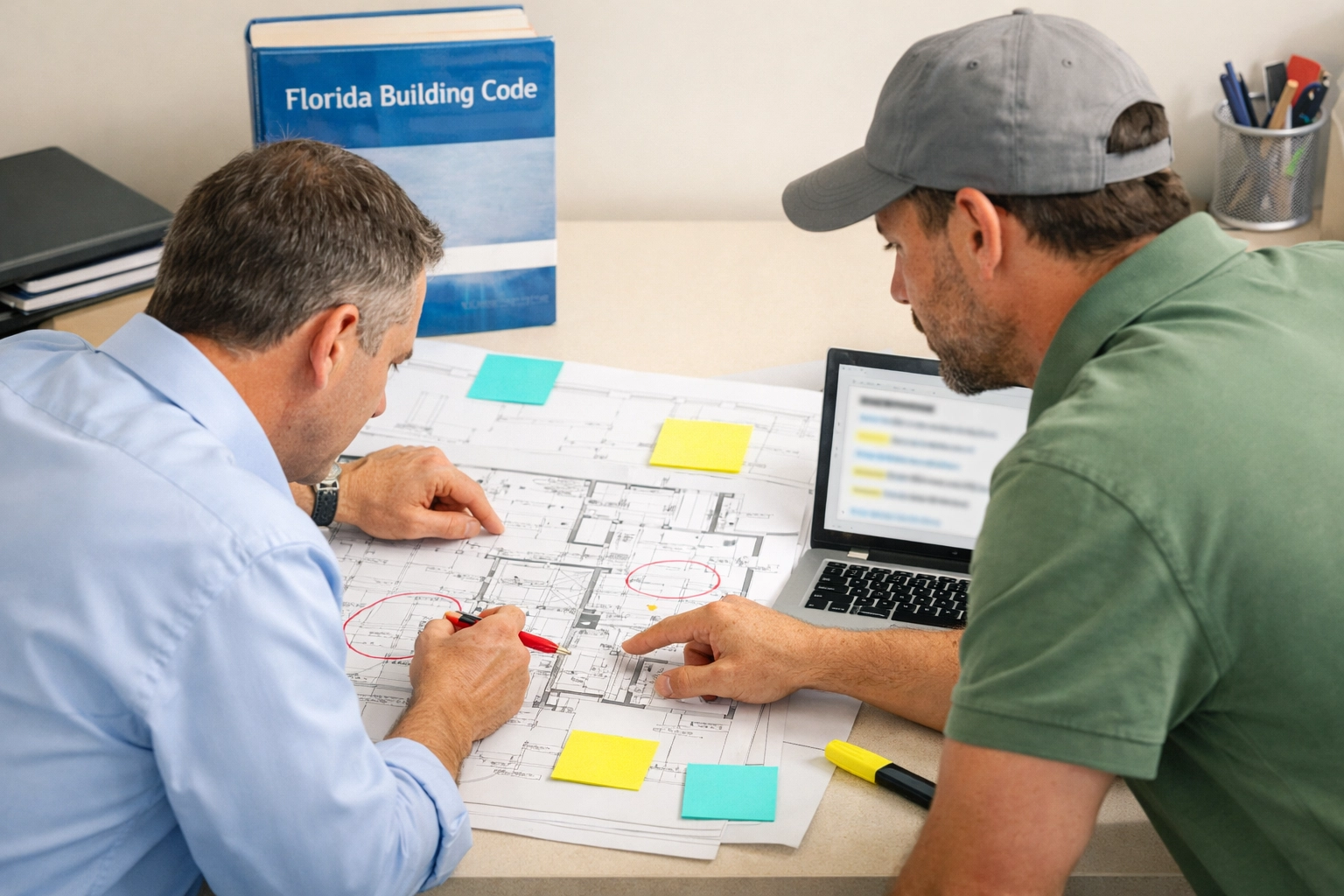
The “One Complete Story” Rule for Your Plans
Your plans and forms should tell one consistent story, same scope, same areas, same equipment, same references, so reviewers don’t have to guess.
Passing Inspections and Closing Out Your Permit
Inspections aren’t just a final hurdle, they’re the enforcement point for Florida building code requirements.
Tips for a Smooth Inspection Day
- Keep the approved plan set accessible onsite (digital or printed per AHJ)
- Schedule inspections early (some areas book out)
- Don’t cover work before inspection (especially MEP rough-ins)
- Confirm manufacturer installation requirements match what’s installed
- Document changes (field changes can require revisions)
What is a Certificate of Occupancy (CO)?
A CO confirms the building (or space) is safe for occupancy and matches approved plans for the permitted scope. It’s common for:
- New commercial buildings
- Tenant build-outs
- Change of use/occupancy
- Many multi-family projects
CO requirements vary, but typically depend on passing final inspections and completing required sign-offs (building, fire, MEP, and sometimes zoning).
FAQs: Florida construction permits for beginners
How long does it take to get a building permit in Florida?
It depends on jurisdiction, scope, and submission quality. Some smaller residential permits can move quickly; larger or commercial projects often take longer due to multiple review disciplines and resubmittals.
Can I pull my own permit as a homeowner?
In many jurisdictions, homeowners can apply as an owner-builder for certain work on their primary residence, but restrictions and documentation requirements apply. Always confirm with your local building department and consider the liability and inspection responsibilities.
Do I need a permit for a roof replacement in Florida?
In most Florida jurisdictions, yes: roof replacements are commonly permitted because they tie directly to wind resistance and code compliance.
What’s the difference between permit expediting and private plan review?
Expediting focuses on managing and streamlining the permit process (submittals, responses, routing, follow-ups). Private plan review (where allowed) involves a qualified private provider reviewing plans, with the jurisdiction still issuing the permit under its rules. Availability and rules vary by jurisdiction and project type.
Key takeaways (and how All Florida Permits can help)
Florida construction permits get easier when you treat them like a process: confirm zoning early, prepare a complete document set aligned with the Florida Building Code, submit correctly for your jurisdiction, and respond cleanly to review comments. Most delays aren’t “bad luck”: they’re preventable.
If you want help reducing resubmittals and keeping your project on track, All Florida Permits offers Florida building permit expediting for residential and commercial projects: especially in high-volume areas like Miami-Dade and beyond. Start with our main site to find the right service area and support: https://allfloridapermits.com
Related Articles
- Construction Permit 101: Your Ultimate Guide
- Permit Application: A Simple Step-by-Step Guide
- Florida Building Permit Help: A Step-by-Step Guide
- Florida Permit Application Help: A Step-by-Step Guide