


Florida builders often wait months for permit approvals that should take only a few weeks. New state laws aim to fix these costly delays by forcing local departments to move faster. Developers can now use private experts to bypass the typical government backlog.
Need help navigating Florida’s expedited permit laws? Schedule a free permit expediting consultation with All Florida Permits today.
Florida expedited permit laws HB 683 require building departments to approve or deny single-trade residential permits within five business days when a private provider is included. This 2025 law forces towns and cities to use automated plan reviews and treats forms as approved if the local building officials miss the strict five-day response window. According to PlanCheckPro, these new reforms stop cities from requiring private contracts and mandate a ten percent permit-fee reduction for each business day a municipal review is delayed. By letting private experts handle the technical work, the state has created a way to bypass standard backlogs and keeps Florida competitive for all types of new construction.
Staying compliant with these changes is vital for any builder who wants to avoid fines and speed up their projects. You must know the specifics of What Are Florida’s 2025 Expedited Permit Laws (HB 683 & HB 1035)? to make the most of these new rules. The path begins with
Florida Expedited Permit Laws HB 683: What Are Florida’s 2025 Expedited Permit Laws (HB 683 & HB 1035)?
Florida’s rapid growth creates a high demand for new homes and commercial spaces. To meet this need, builders must move quickly, but permitting backlogs often cause severe delays. To resolve this, Florida enacted new expedited permit laws HB 683 and HB 1035 on July 1, 2025, to streamline the process.
Growth and housing demand in Florida
New rules also help lower the cost of building. When a project sits idle, it loses money. These laws ensure that city offices work at a steady pace. They provide a roadmap for how to get a permit without the usual stress. This change is a big win for the building trade. It shows the state is ready to support growth with better tools.
Major updates in HB 683 and HB 1035
A key part of the new law involves private plan reviews. In the past, some local offices were slow to accept work from private firms. Now, HB 683 says that local offices must accept these reviews. This applies when the private provider uses software to check plans. These software systems can spot code issues in seconds. This helps ensure that every building is safe while saving time for the city staff.
These laws also stop cities from asking for extra paperwork. For example, building offices can no longer ask for copies of private contracts. This helps keep your business data private and cuts down on extra steps. By removing these hurdles, the state makes the whole system more expert. Builders can focus on their work instead of not needed papers. This makes the path to a finished building smoother.
New rules for city offices
The most powerful part of the 2025 update is local government accountability. Under Section 553.792 of the Florida Statutes, building departments face daily fee reductions of ten percent for each business day a review is delayed. This progressive penalty continues until the permit fee is reduced by 100 percent, shifting the financial risk of delays back to the municipality.
This sliding-scale penalty puts power back in the hands of developers. Many builders utilize professional permit expediting services to monitor these strict statutory timelines and ensure any local delays are met with the correct fee reductions, keeping public officials highly accountable.
- HB 683 and HB 1035 were signed in June 2025.
- The new laws took effect on July 1, 2025.
- Cities must accept private provider plan reviews.
- Fee refunds are needed for late city responses.
Standard Municipal Review Timelines Under s. 553.792
Florida law sets clear rules for how long a city or county can take to look at your plans. Under s. 553.792, F.S., local offices must act on a permit file once they have a full and right set of papers. These timelines keep jobs on track by stopping long waits at the building desk.
Timelines for small homes
For residential projects and small commercial builds under 7,500 square feet, local offices must complete their initial reviews within 30 business days.
- Projects under 7,500 square feet must be reviewed within 30 business days.
- This clock starts once the city gets a full and right file.
- If facts are missing, the office may pause the count until they have the right parts.
Using permit expediting services can help you meet these tight goals. Many builders find that small slips in the first file cause the most lag. Clear plans ensure the city can start the 30-day review without asking for more. This helps you start work on time and keeps you away from a stalled job site.
Rules for large jobs
Big jobs often need more time for a full safety check. For buildings that are 7,500 square feet or more, the city has 60 business days to check the plans. This longer window shows the complex side of large business or big jobs. The law still needs the city to say yes, say no, or ask for changes within this set time frame.
Knowing these dates lets you plan your build with more care. Since 60 business days is about three months of real time, getting the first file right is key. A no from the city after a long wait can push your move-in date back by weeks. Expert teams often pre-screen plans to find flaws before the city sees them.
How new laws speed up the wait
New rules have changed the way builders look at these standard wait times. The expedited permit laws HB 683 work with the state laws to create a faster path. While the main law sets the base rules, new rules give you more ways to skip slow local lines. This helps you stay on track even when the city is busy.
If a local office fails to meet these laws, you may be able to ask for some money back. The state wants to make sure cities do not sit on files for too long. By knowing both the standard and fast rules, you can keep your job moving. Always check your site size to know which review clock fits your next build.
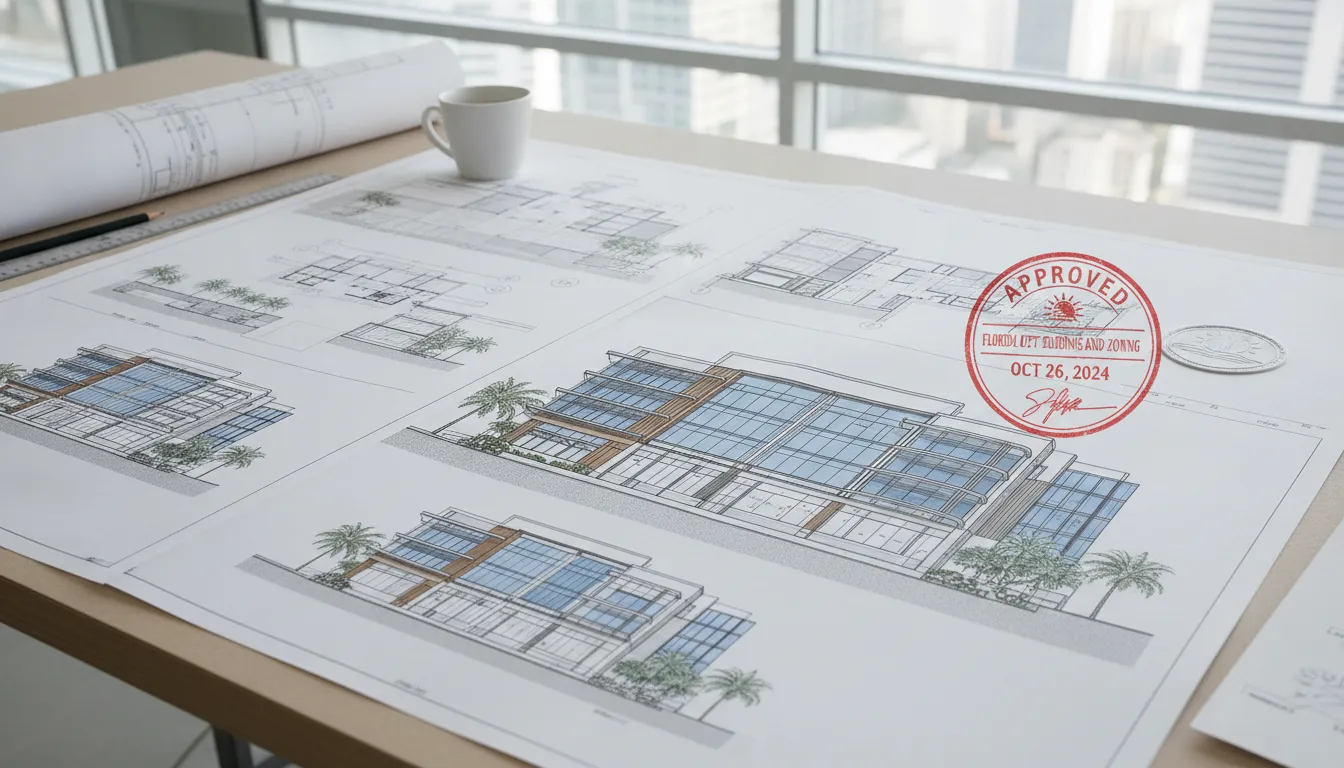
The 5-Day Single-Trade Rule and Deemed-Approved Status
Florida’s 2025 permit reforms change how local offices handle home jobs. One big update is the five-day single-trade rule. This law helps homeowners and builders get to work faster on tasks like AC swaps or roof repairs. It sets a fast clock for city staff to act on permit files.
Scope of the single-trade rule
This rule works only for one-family or two-family homes. It covers single-trade plans. These are jobs that only need one type of license. Some common examples include:
- New water heater installs
- Wiring panel upgrades
- Central AC repairs
- Roofing fixes for small homes
To use this path, you must include a plan review from a private provider. This step ensures the city has a full review to check from the start. These reviews must use software that meets state rules.
Deemed-approved status for permits
Under expedited permit laws HB 683, the city official has five business days to act. They must either approve or deny the permit in this short time. If the official does not respond in five days, the law treats the permit as approved. This is called “deemed-approved status.” It shifts the burden to the city. If they find a flaw, they must say so fast or lose the chance to stop your work.
This new speed is a big win for the Florida housing market. Before this law, a simple pipe fix could sit on a desk for weeks. Now, the 5-day clock forces local offices to move these small jobs first. It ends the long wait times in local government. Builders can now give sure start dates to their clients. This certainty helps keep costs low and crews busy all year.
Steps to activate the 5-day review
To successfully leverage the 5-day single-trade permit pathway, builders and contractors should follow these essential steps.
- Hire a certified private provider to conduct the initial plan review using compliant, software-based systems.
- Submit the complete permit package, including the private provider’s plan review, to the local building department.
- Track the calendar strictly, as the mandatory five-business-day municipal review clock begins immediately upon receipt.
- Proceed with construction if the local official approves the permit or if the five-day deadline passes without a response, triggering automatic deemed-approved status.
Role of private providers
A private provider is the key to these tight deadlines. These experts do the hard work so the city does not have to. By law, local offices must accept private plan reviews that use software-based systems. This rule helps clear the path for fast wins. It also allows for virtual inspections on many single-trade jobs. You can read more in the HB 683 bill analysis. These laws ensure that city red tape no longer stops vital home repairs.
Delay Consequences: The Permit-Fee Reduction Framework
Florida building laws now hold local offices at fault for slow permit reviews. This rule, which comes from section 553.792 of the Florida Statutes, means a city must pay the builder if they miss a due date. It ensures that local staff stay on track with their review times. If they fail to meet these goals, the cost of the delay shifts from the builder to the city.
How the daily fee drop works
The law sets up a clear math system for these refunds. If a building office goes past its legal limit, the permit fee drops by 10 percent for each business day. This means if they are one day late, you get a 10 percent refund. If they take ten extra days, the permit becomes free. These expedited permit laws HB 683 help keep project budgets safe from city lag.
This system is not just a simple refund. It is a sliding scale that hits long delays hard. The total drop can reach 100 percent of the first permit fee. Builders no longer have to pay full price for a service that fails to meet state rules. This rule puts pressure on local staff to process plans as fast as possible.
Pushing for better local service
Local offices must now manage their work better to avoid losing cash. The fee drop acts as a fine that pushes them to hire enough staff. It also forces them to use better tools for plan reviews, which helps the building office favor speed. This change is a big part of the move toward better permit expediting services across the state.
In the past, builders bore the full cost of any city delay. A slow permit could hold up a large crew and stop a job for weeks. Now, the city shares some of that money risk in a shift that creates a fairer world for builders. It turns a slow review from a small problem into a direct cost for the city.
Getting your permit refund
You must know the exact dates your permit was filed to get your money. The clock starts when the office gets a full and correct permit file. You should keep track of every business day that passes after the legal deadline. Since most cities will not hand over the cash on their own, you may need to prove how many days they were late.
Working with experts can help you track these dates. They can talk to the city for you and make sure the math is right. If a local office tries to ignore the law, you have the right to fight back. These state rules are meant to protect your time and money so that slow city offices do not keep fees they did not earn.
Residential and Commercial Project Applications of the 2025 Reforms
The new Florida expedited permit laws HB 683 change how you get permits for both homes and businesses. These rules apply to single houses and big office builds. The law aims to stop long waits at city halls. By using permit expediting services, you can move your work forward fast. The state now forces local offices to be more open and quick.
Impact on Home Building Projects
For home builders, the 2025 reforms offer a clear path to speed. If you build a new one-family or two-family home, the law sets strict rules. When you use a private pro for plan review, the city boss must act fast. They have only five business days to say yes or no to the files. If they stay silent for five days, the permit is deemed approved by law.
Big housing units also see gains from these new rules. While they may not have the same five-day rule as small homes, they get firm time limits. If a city takes too long, they must drop their fees. This keeps local offices on task. It also helps builders know their costs early on. Home projects now move at a pace that matches the market.
Growth in Business Development
Business projects often face the most red tape. The new laws help here as well. Large stores, offices, and shops now have ways to skip the long line. Using software for plan review is now a right for all builders. Cities cannot block these tools if they meet state standards. This helps find errors fast and keeps the work moving.
For big builds over 7,500 square feet, the review time is 60 business days. But if the city misses this date, the new Florida’s 2025 expedited permit laws force a fee cut. Each day of delay means the city loses ten percent of the permit cost. This pressure ensures that large jobs stay on track. Even virtual checks are now okay for things like lights and pipes.
Protecting Your Business Secrets
One of the most vital parts of the law protects your private data. In the past, some cities asked to see your private contracts. They wanted to know how much you paid for help or tools. The new law stops this at once. Local offices are now banned by law from asking for copies of your private contracts and other files to give you a permit.
This change keeps your trade secrets safe from others. Your costs and deal terms stay between you and your team. It stops the city from holding up your work just to see your money plans. This rule covers every type of job. It works for a small home fix or a big high-rise build. You can now bid on jobs without fear of your data leaking to the public.
. . . . . . . . . . . . . . . . . .
| Project Type | Key Benefit | Review Rule |
|---|---|---|
| Single-Family Home | Fastest path to start | 5-day limit with private review |
| Big Housing Units | Lower fees for delays | Standard 30-day window for small builds |
| Retail and Office | Better tech use | Mandatory automated review rules |
| Large Scale Jobs | Cost protection | 60-day review cap with daily fee reductions |
| All Projects | Data privacy | Private contracts are now protected |

Leveraging Private Permit Expediting Services in Florida
All Florida Permits helps builders and owners use the new expedited permit laws HB 683. Permitting in Florida is often slow and hard to do. Our team offers full support across all 67 counties and more than 400 local towns. We handle the tough work of dealing with local building offices for you. By using professional permit expediting services, you can avoid small mistakes that cause big delays.
Expert support for every county
Working with a pro helps you move through the rules in any part of the state. Each city has its own way of doing things, which can be hard to track. Our team knows the local codes for every corner of Florida. We make sure your files are right the first time to stop any hold-ups. This expert help lets you focus on your build while we handle the paperwork. We bridge the gap between your project and the building office.
Local rules can change fast, but our team stays up to date on all new laws. We work with local staff to ensure your permit moves through the system. Our reach covers small towns and big cities alike. This means you have one partner for all your jobs across the state. We take the stress out of the filing process so you can get to work.
Tech tools and virtual checks
Modern tools now play a large role in how plans are checked. State law now lets offices use software to review project files. This change helps speed up the review for many project types. Also, single-trade inspections can now happen in person or through a virtual call. This flex is key for tasks like electrical or plumbing work. It lets your crew stay on site while a pro checks the work through a screen. Using these tech options can save your project days of wait time.
Virtual checks mean you do not have to wait all day for an inspector to show up. You can use a phone or tablet to show the work to the building official. This saves time and fuel for everyone on the job. It also means you can close out permits faster than before. We help you set up these tech tools to keep your project moving forward.
Faster dates and fee cuts
The 2025 rules give builders more power when local offices are slow. Under Florida Statute 553.792, cities must follow strict review dates. If a city takes too long, they may have to lower your permit fees. The law cuts the fee by 10 percent for each extra day they wait. This rule makes sure that local departments stay on track. Our experts track every date to make sure you get the speed or the refunds you are owed.
City offices must now be open about how long they take to review files. If they miss their own goals, you should not have to pay the full price. We monitor the clock on every permit we file. Our team will fight for your refund if the city fails to meet the state rules. This helps you save money and keeps the local office on time.
Frequently Asked Questions
When did the Florida expedited permit law (HB 683) take effect?
Governor DeSantis signed House Bill 683 into law in June 2025, and the new rules officially took effect on July 1, 2025. It creates a faster way to secure building permits by using private firms and new software. Builders can now use these rules to stop long waits at local offices. According to PlanCheckPro, this law helps keep Florida building jobs on track.
How do I qualify for the 5-day permit review in Florida?
To qualify for a five-day review, your project must be a single-trade residential plan utilizing a registered private provider. If you meet these rules, local staff have five business days to respond. As reported by PlanCheckPro, this process helps builders avoid the standard city review lines which can take several weeks.
What happens if a building department misses a review deadline?
If a local building staff member fails to respond within the five-day window for a private review, the law deems the permit approved. For other permits. Florida law creates a strong penalty for slow reviews where local offices must reduce the permit fee by ten percent for each business day they are late. Under Florida Statute 553.792, this fee cut can continue until the builder receives a complete fee reduction.
Can a building department require copies of my private contracts?
No, local building offices can no longer require copies of your private building contracts to process a permit. This protects your business privacy and cuts down on required paperwork. According to the Florida Senate, this rule applies to all permit filings under the new reform laws. It ensures that your private costs stay between you and your client.
Does HB 1035 apply to commercial building permits?
Yes, the timeline reforms under HB 1035 apply to both residential and commercial building permits. Standard municipal review timelines require local building departments to approve or deny complete commercial permit applications within 60 business days. Working with private permit expediting services is often the fastest path to ensure compliance and avoid review delays.
Ready to schedule a free permitting consultation?
Waiting for slow municipal reviews stalls projects and escalates costs. These 2025 regulatory changes offer developers a clear path to bypass backlogs and reduce permit fees. Partnering with a professional expediting firm ensures your project utilizes every statutory tool to accelerate approvals. Keep your construction on schedule by leveraging the best permit expediting services in Florida. Our team understands these rules and will secure the approvals your build needs.
Ready to schedule? Schedule a free permitting consultation to start your project today.