

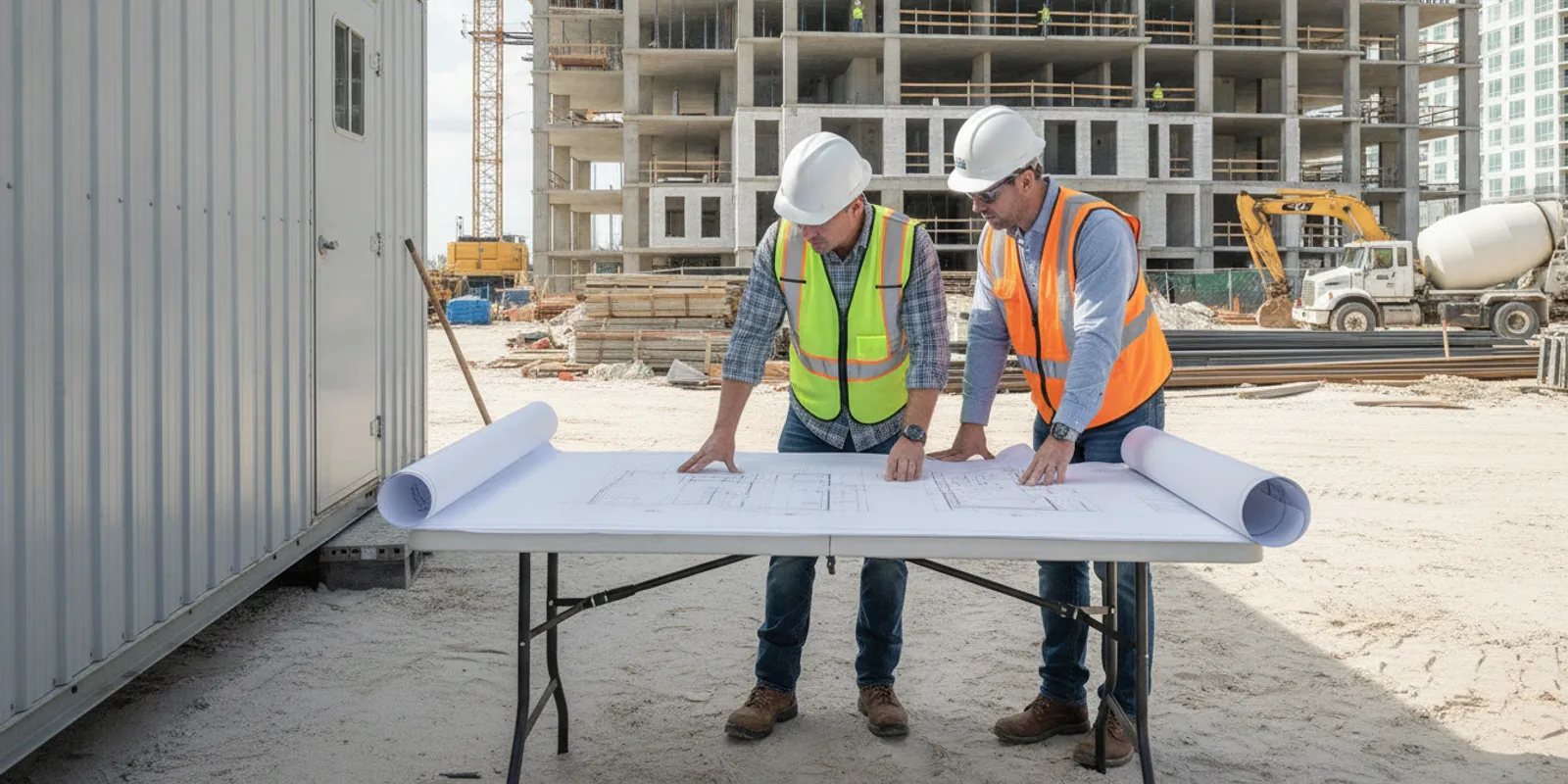
The St Johns County Florida building permit process starts by confirming which authority having jurisdiction (AHJ) reviews the work, then submitting a coordinated permit package that matches the project scope. For commercial teams, the critical controls are clear jurisdiction, complete plans, prompt correction responses, and inspection coordination tied to the construction schedule.
Request a commercial permit proposal
Who has authority over a St. Johns County commercial project?
Do not assume that a property address containing “St. Johns County” means the County is the building-permit authority. A site may fall under a municipal jurisdiction or another reviewing authority. Verify the parcel and the scope with the appropriate building department before assembling an application. The official St. Johns County website is a starting point for identifying County information and current department resources, but confirm the actual AHJ for the project directly.
Record the jurisdiction decision in the project’s permit log. Capture the site address and parcel identifier, the authority contacted, the date, and any direction received about submittal location. Confirm whether the building permit and related reviews are handled by one authority or require separate applications. Site development, land use, fire review, utilities, environmental matters, and building review may involve different reviewers or agencies depending on the site and work. Treat those as coordination questions to resolve, not as assumed County procedures.
Before design is finalized, clarify the permit scope. Identify whether the work is new construction, an addition, a change in use, a tenant improvement, or a phased project. Include associated scopes such as structural work, mechanical, electrical, plumbing, fire protection, site improvements, and signs where applicable. The AHJ can confirm its current application path and which disciplines must be submitted together or separately.
How should teams start the St Johns County Florida building permit process?
Once the AHJ is confirmed, identify its current application method and the submittal requirements for the project type. Do not rely on a saved portal link, old checklist, or a prior project’s workflow without checking that it still applies. Begin with the authority’s official website or contact channel and verify whether the project requires an online application, paper documents, or a combination. Use the County’s official site as a route to current information, then follow the instructions of the authority actually reviewing the application.
- Confirm the applicant and authorization. Establish who will apply, who may sign for the owner, and whether contractor information or an owner authorization is needed at intake. Resolve responsibility for fees, plan revisions, and responses before filing.
- Choose the correct permit and work description. Describe the proposed work consistently across the application, drawings, and supporting documents. A mismatch between the stated scope and the plan set can trigger intake questions or review comments.
- Check file and submittal rules. Confirm the accepted file types, naming conventions, signatures, drawing standards, and required forms. Verify whether each discipline is uploaded as a separate package and whether sealed documents must meet a particular electronic-signature process.
- Submit, retain proof, and monitor intake. Save the application confirmation, payment record, uploaded package, and any intake correspondence. Track whether the application is accepted for review or returned for missing information; do not treat a submission receipt as confirmation that technical review has begun.
Keep one controlled record set for the applicant and design team. At minimum, log the submission date, permit or application number when assigned, scope, plan-set revision, reviewer or department contact when known, open items, and next action owner. This helps prevent a field team from building from a superseded set while an updated package is under review.
What should a commercial permit package include?
There is no single document list that fits every project. The reviewing authority’s current checklist and scope-specific instructions govern. Use the following as a coordination framework, then check each line against the applicable AHJ requirements before upload. A complete package should tell a consistent story: what is being built, where it is located, how the work is designed, and who is responsible for each submission.
- Application and project information: application forms, owner and applicant details, contractor information when required, property address and parcel data, project valuation if requested, and a precise description of work.
- Site and land information: a current site plan and related site documents requested for the project, with property boundaries, building location, access, and proposed improvements coordinated across disciplines.
- Architectural plans: code and life-safety information, floor plans, elevations, sections, schedules, accessibility details, and other drawings necessary to explain the proposed use and construction.
- Engineering plans: signed and sealed structural documents and applicable mechanical, electrical, plumbing, fire protection, civil, or specialty plans. Include calculations and supporting reports where required for the scope.
- Supporting approvals and letters: documents the AHJ identifies for the project, such as product or system documentation, contractor authorization, energy or accessibility forms, or separate agency approvals. Do not assume every listed item applies to every application.
- Revision and coordination record: sheet index, revision dates, and a clear method for identifying replaced sheets. Check that plan notes, schedules, details, and application scope agree.
Run a cross-discipline quality check before submittal. Confirm that the address and project name match on the application and drawings; sheet references resolve; the stated use and occupant information are consistent; and building, site, and engineering plans do not conflict. Confirm the design professionals have completed required seals and signatures. If a supporting approval is pending, ask the AHJ whether it is a prerequisite to intake, plan review, or permit issuance rather than guessing.
Teams preparing a first package can also use this Florida permit documents checklist as a general organization aid. It does not replace the current checklist issued by the reviewing authority.
How do teams control schedule through the St Johns County Florida building permit process?
After intake, the reviewing authority evaluates the submitted materials against applicable requirements. The exact routing, review sequence, and timing depend on the AHJ and project. Avoid promising a review duration unless the responsible authority has provided a current, project-specific basis. Build the schedule around controllable work: submitting a coordinated package, assigning discipline leads, checking status, and returning complete responses to comments.
Use a comment log that captures the review discipline, comment text, responsible design professional, proposed response, revised sheet or document, and closeout status. Keep each response traceable to the applicable comment. Where a comment affects another discipline, coordinate the response across the full set rather than changing one sheet in isolation. Resubmit a coherent revision package with clear revision identification and retain the prior set for recordkeeping.
When a review comment is unclear, request clarification through the AHJ’s accepted communication channel. Avoid informal assumptions about a reviewer’s intent. If a response depends on a design decision, send the question to the responsible design professional and make sure the resulting change is reflected consistently in every affected drawing and calculation. The permit plans approval guide offers additional general preparation context.
Plan review also affects procurement and construction sequencing. Identify long-lead items and early work packages, but do not treat a pending application as authorization to perform work that requires an issued permit. Confirm with the AHJ what approvals are needed before construction begins. Align subcontractor mobilization, inspections, and material orders with the permit status and approved document set.
What fees and schedule controls should project teams track?
Permit costs depend on the applicable authority’s adopted fee structure and the project details. Do not apply another county’s fees or an old estimate to a St. Johns County project. Check the current fee information from the AHJ and ask how its fees are calculated, when payment is due, and whether separate reviews or permits carry separate charges. The available information in this guide does not establish a specific St. Johns County fee or review timeline.
For estimating, separate known permit charges from allowances that remain subject to the authority’s review. Track application and review fees, any separate trade or related permit charges, and potential resubmittal or revision costs only where the AHJ’s rules establish them. Identify the source and date for each budget assumption. A project team can review general fee-planning considerations in the Florida project permit fees guide, then verify current figures with the project’s reviewing authority.
| Process stage | Team control | Record to retain | Schedule risk to manage |
|---|---|---|---|
| Jurisdiction and scope | Confirm AHJ, work description, and related reviews | Parcel details, confirmation, scope summary | Submitting to the wrong authority or omitting a related review |
| Application and intake | Use current forms and complete upload rules | Application, receipt, uploaded plan revision | Incomplete intake or inconsistent scope data |
| Plan review | Assign comment owners and coordinate responses | Comment log, response package, revised sheets | Unresolved comments or conflicting revisions |
| Fees and issuance | Verify amounts, prerequisites, and permit status | Fee basis, payment evidence, issued permit | Budget assumptions or work starting before authorization |
| Inspections and closeout | Coordinate required inspections and open items | Inspection records, approvals, closeout documents | Missed inspections or incomplete closeout |
For a broader view of how fee assumptions fit into project planning, see the Florida permit runner cost overview. The scope and pricing of any expediting engagement should be evaluated separately from AHJ fees; confirm the proposed service deliverables and project assumptions in writing.
What happens after permit issuance?
Before mobilizing permitted work, confirm that the permit has been issued and that the field team has access to the approved plan set and permit conditions. Distribute the approved documents to the superintendent and relevant subcontractors. Mark the controlling revision clearly and establish a process for requesting approval before field changes that could affect the permitted scope.
Coordinate inspections against the actual construction sequence and the AHJ’s requirements. The project team should identify required inspection stages, the party responsible for requesting each inspection, the notice or access arrangements, and how results will be documented. Confirm the applicable inspection requirements with the AHJ and design team; do not infer them from another jurisdiction’s practice. Where the project uses special inspections or other third-party services, clarify the responsible parties and reporting path before work reaches the relevant milestone.
When an inspection identifies a correction, assign an owner, document the response, and confirm whether reinspection or additional documentation is required. Keep inspection records with the permit file. For a project approaching temporary or final occupancy, coordinate the remaining inspections and documentation early. The Florida certificate of occupancy application guide and temporary certificate of occupancy guide provide general closeout context; the AHJ determines the project-specific steps.
Closeout is not complete merely because construction is substantially finished. Confirm that required inspections and approvals are recorded, permit conditions are addressed, and occupancy documentation has been secured when applicable. Reconcile outstanding permit items with the owner and construction team before demobilizing staff or closing the project record.
St. Johns County commercial permit process checklist
Use this checklist at the project kickoff and update it as the AHJ confirms requirements. It is a project-control tool, not a substitute for the official application instructions.
- Verify the parcel, project address, and correct AHJ for the building work.
- Confirm the work description, permit types, and any separate or related reviews.
- Obtain current applications, checklists, file rules, and fee information from the reviewing authority.
- Assign the owner, applicant, design professionals, contractor contacts, and response leads.
- Coordinate architectural, engineering, site, and supporting documents against one scope and revision record.
- Run an intake completeness check and preserve the exact submitted package and receipt.
- Track application status and all plan review comments in a single log.
- Return coordinated responses, identify changed sheets, and retain submission history.
- Verify permit issuance and approved documents before starting regulated work.
- Schedule required inspections, close corrections, and collect final approvals and occupancy records.
Request a proposal for permit coordination
Frequently asked questions
Does every project in St. Johns County apply through the County?
No. The correct AHJ depends on the project location and scope. Verify which building department has authority over the parcel before submitting, and confirm any related reviews separately.
What documents are required for a commercial building permit?
Requirements depend on the project and the reviewing authority. Commercial packages commonly need an application and coordinated plans, with discipline-specific documents and supporting approvals determined by the scope. Use the current checklist issued by the AHJ as the controlling list.
How long does plan review take?
This guide does not state a St. Johns County review duration. Review routing and timing can depend on the authority, application completeness, project scope, and correction cycles. Ask the responsible AHJ for current information and manage the team’s response time closely.
Can construction begin while the permit is under review?
Do not treat a pending application as permission to perform work that requires a permit. Confirm the permit status and any applicable authorization directly with the AHJ before starting regulated work.
Where can a project team find current application instructions?
Start with the official website or contact channel for the confirmed reviewing authority. The St. Johns County official website provides a starting point for County information, but the project’s actual AHJ must confirm the current forms, portal path, fees, and review requirements.
A disciplined jurisdiction check and a coordinated submittal give commercial teams a stronger basis for managing permit risk, construction sequencing, and closeout in St. Johns County.