


If you are working on a construction project in the Sunshine State in 2026, you already know that the pace of development is faster than ever. From the high-rises of Miami to the residential booms in Central Florida, the pressure to break ground is intense. However, there is one hurdle that remains the biggest bottleneck for developers, contractors, and homeowners alike: the permitting process.
While Florida has introduced several new laws to speed up government reviews, the complexity of Florida building permit expediting has actually increased. A single missing signature or an incorrectly labeled PDF can still set your project back by months. In this guide, we will break down everything you need to know about navigating Florida construction permits in 2026, including costs, new laws, and how to get your project moving faster.
The State of Permitting in Florida for 2026
The landscape of Florida construction changed significantly at the start of this year. We’ve seen a massive push toward digital transformation and legislative mandates aimed at reducing wait times. For instance, many jurisdictions have now adopted the Online Application Submittal (OAS) system, which standardizes how documents are uploaded.
However, "faster" doesn't always mean "easier." The state has tightened Florida building code requirements, meaning the margin for error on your application is slimmer than ever. This is where permit expediting services Florida become less of a luxury and more of a necessity for staying on schedule.
New Streamlined Requirements You Should Know
As of 2026, local governments are under more pressure than ever to perform. Key updates include:
- The 5-Day Rule: For single-family residential projects valued under $15,000, local governments must now approve permits within five business days, or they are "deemed approved."
- Emergency Provisions: In declared emergency zones, architect- or engineer-signed applications must be processed within 48 hours.
- Extended Expirations: Permits for single-family homes now remain valid for at least 180 days, giving builders a bit more breathing room during supply chain hiccups.
What Exactly Is Florida Building Permit Expediting?
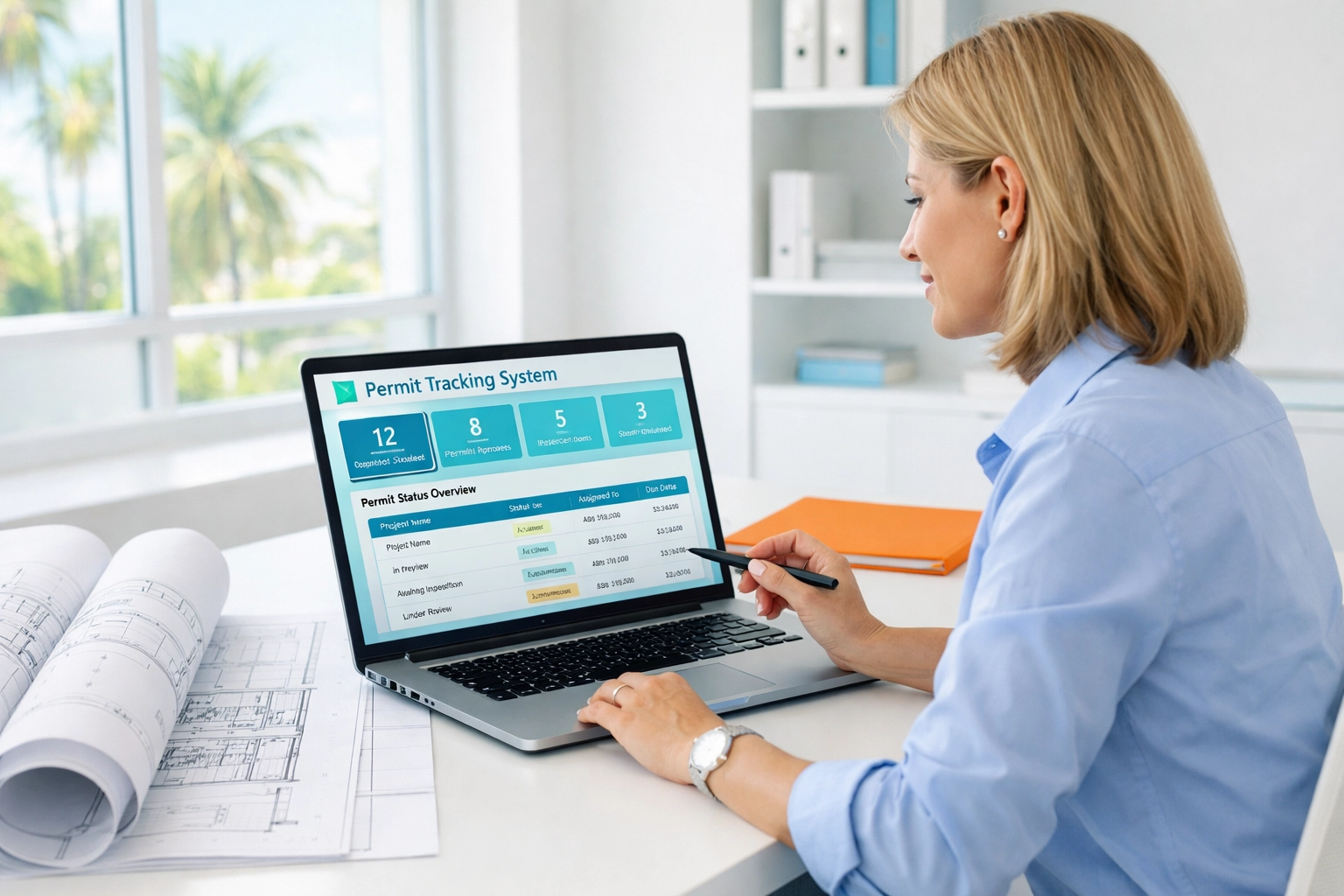
Many people think a permit expeditor is just a "courier" who drops off papers at City Hall. In 2026, that couldn't be further from the truth. An expeditor is a consultant, a project manager, and a code expert all rolled into one.
When you hire a Miami permit expediter or a statewide specialist, they handle the administrative heavy lifting. This includes:
- Pre-Screening: Reviewing your plans before they ever hit a reviewer’s desk to ensure they meet local zoning and code requirements.
- Coordination: Managing the "ping-pong" match between plumbing, electrical, structural, and fire departments.
- Digital Management: Navigating the complex OAS portals that many municipalities now use.
- Problem Solving: Knowing exactly who to call when a permit gets stuck in "Review Pending" status for two weeks too long.
By utilizing expedited building permits Florida strategies, you aren't just cutting in line; you are ensuring your "spot" in line is actually valid.
Understanding the Building Permit Cost Florida
One of the first questions we get at All Florida Permits is about the bottom line. What is this going to cost? There are two layers to this: the municipal fees and the expediting fees.
Municipal Permit Fees
The building permit cost Florida jurisdictions charge varies wildly. Generally, you can expect to pay a percentage of the total construction value (usually 1% to 3%) or a fee based on square footage. For a standard residential remodel, this might be a few hundred dollars; for a major commercial development, it can be tens of thousands.
Expediting Service Fees
Investing in professional help saves money in the long run by preventing "carrying costs": the interest and overhead you pay while a site sits idle. In 2026, typical fees for residential permit services Florida range from:
- Small Projects (Repairs/Minor Remodels): $300 – $750
- Medium Projects (Additions/New Single-Family Homes): $800 – $2,000
- Large Commercial Projects: $5,000 – $10,000+ depending on complexity.
Commercial vs. Residential: Different Paths to Success
The strategy for commercial building permits Florida is vastly different from residential ones.
Commercial Building Permits
Commercial projects involve more "cooks in the kitchen." You aren't just dealing with the building department; you’re dealing with health departments, fire marshals, and often environmental agencies. In 2026, the focus for commercial builds is on sustainability and high-velocity hurricane zone (HVHZ) compliance. An expeditor ensures that these multi-department reviews happen concurrently rather than sequentially.
Residential Permit Services
For homeowners and residential contractors, the goal is often speed. Whether it's a kitchen remodel or a pool installation, you want to get through the system before the summer rains start. Utilizing residential permit services Florida can help you navigate the nuances of your specific HOA or city-specific setbacks that often trip up DIY applicants.

The Road to the Certificate of Occupancy Florida
The permit isn't the finish line: it's the starting gun. The ultimate goal of any construction project is the Certificate of Occupancy Florida (CO). This document proves that the building is safe, compliant, and ready for use.
A common mistake is forgetting that the expediting process continues through the final inspection. An expeditor helps track your inspections, ensuring that the "final" status is recorded correctly in the municipal database so your CO isn't delayed by a paperwork glitch at the very end. You can read more about how code changes affect this in our guide on Florida building code updates 2025-2026.
Why Applications Fail (And How to Avoid It)
Even with the new 2026 fast-track laws, the "Deemed Approved" status only applies if your application is perfect. If you submit a package with a missing site plan or an unsigned affidavit, the clock stops. Here are the top reasons for delays:
- Incomplete Documentation: Missing energy calculations or product approval forms.
- Naming Conventions: In 2026, most digital portals (like the one in Davie, FL) require very specific file names (e.g.,
A-01_FloorPlan_v1.pdf). If you name itFinal_Final_v2.pdf, the system might reject it automatically. - Inconsistent Data: If your contractor's license on the application doesn't match the one on file with the state, the permit will be flagged.
- Slow Responses: When a reviewer asks for a correction, you have 10 business days to respond under current laws. If you miss that window, you might have to start over.
The Miami Factor: Why You Need a Miami Permit Expeditier
Miami remains one of the most complex jurisdictions in the country. Between the Miami-Dade County reviews and the specific city requirements (Miami Beach, Coral Gables, etc.), the layers of bureaucracy are dense. A Miami permit expediter understands the "local nuances": like which days certain reviewers are in the office and which sub-departments are currently backlogged. If you're building in South Florida, local expertise is your most valuable asset.

Steps to a Successful Permit in 2026
If you're ready to start your project, follow this checklist to maximize your chances of a quick approval:
- Early Involvement: Bring in an expeditor during the design phase. They can spot code issues before the architect finishes the drawings.
- Verify Your Contractor: Ensure all licenses and insurance (General Liability and Workers' Comp) are up to date and registered with the specific municipality.
- Go Digital: Familiarize yourself with the OAS or municipal portal. Ensure all files are high-resolution but optimized for web upload.
- Simultaneous Submission: Ask if your jurisdiction allows for "parallel review," where multiple departments look at the plans at the same time.
- Track Everything: Keep a log of every interaction with the building department.
Conclusion: Don't Let Paperwork Stop Your Progress
The Florida construction market isn't slowing down, and neither should you. While the 2026 regulations have brought some welcome speed to the review process, the administrative burden on the applicant has never been higher. Whether you are dealing with commercial building permits Florida or a simple backyard renovation, the secret to success is preparation.
Navigating permit requirements can be complex, and the rules vary significantly from Jacksonville to the Keys. At All Florida Permits, we specialize in cutting through the red tape so you can focus on building. From initial plan review to the final Certificate of Occupancy Florida, we provide the expertise needed to keep your project on track.
Ready to get started? Check out our blog for more tips, or contact us today to see how our permit expediting services Florida can streamline your next project.
Disclaimer: Permit requirements and procedures may vary by jurisdiction. Always verify with local building departments or consult a licensed permitting professional.