


If you’ve ever asked “how much will my building permit cost?” and gotten five different answers, you’re not alone. The initial application fee is just the beginning. The true permit cost in Florida includes a range of potential expenses that many people overlook. Think about the cost of a failed inspection and the subsequent re-inspection fee. Or the steep penalties for starting work even a day early. These aren’t minor inconveniences; they are significant, unplanned costs that can impact your project’s bottom line. This guide covers these “after-the-fact” fees so you can avoid them entirely.
The truth is, Florida’s permit fee structure is more complex than most people expect. Between base fees, state surcharges, plan review costs, and value-based calculations, the final number can range from a few hundred dollars to several thousand. Let’s break down exactly what you’ll pay and why.
What Are Florida’s Base Permit Fees?
Florida building departments charge base permit fees that differ by project type and scope. These fees cover the administrative work, plan review, and inspection services provided by your local jurisdiction.
For residential projects, you’ll typically encounter these standard fees:
- Electrical, mechanical, plumbing, or gas permits: approximately $115
- Roofing permits: around $160
- Demolition permits: roughly $100
- Plan review fees: $75 or more depending on complexity
Commercial projects generally carry higher base fees:
- Mechanical, electrical, plumbing, gas, or roof work on existing buildings: approximately $130
- Alternate energy system permits: around $125
- Sign permits: $235 or higher
These are baseline figures. Your actual costs will depend on your specific county or municipality, as each jurisdiction sets its own fee schedule within state guidelines. A straightforward HVAC replacement in a single-family home might cost $115 in permit fees, while a complex commercial electrical system could run significantly higher.

How Your Project’s Value Impacts Permit Costs
For larger construction projects, Florida jurisdictions calculate permit fees based on your project’s total valuation. This valuation-based approach means bigger projects pay proportionally more than smaller ones.
Here’s how it works: Your building department assesses the total construction value of your project, including materials, labor, and equipment. They then apply a fee schedule that typically charges a percentage or tiered rate based on that valuation.
Real-world example: A $221,200 construction project in Bay County results in:
- Building permit fee: $1,138
- Plan review fee: $75
- State surcharges: $30.33
- Total: $1,243.33
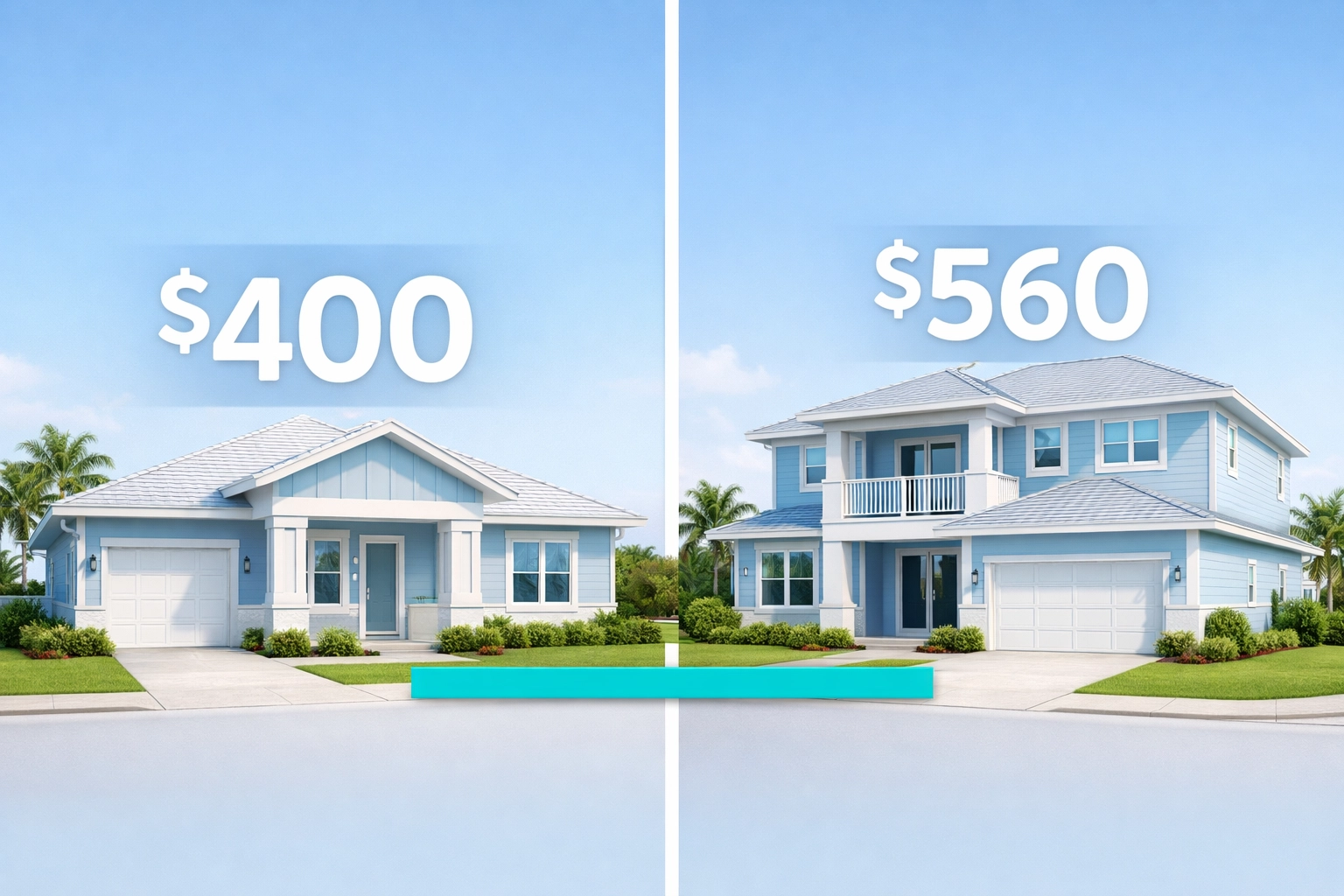
For residential new construction, Osceola County uses a square footage-based approach:
- 0-1,599 sq ft: $400 base permit fee
- 1,600-1,999 sq ft: $480
- 2,000-2,999 sq ft: $560
- Plus $20 plan review fees
This valuation-based system ensures that more complex, higher-value projects contribute more toward the inspection and review resources they require. It’s worth noting that underestimating your project valuation to save on permit fees is not advisable: building departments can adjust valuations during review, and inaccurate information can delay your approvals.
Don’t Forget These Florida State Surcharges
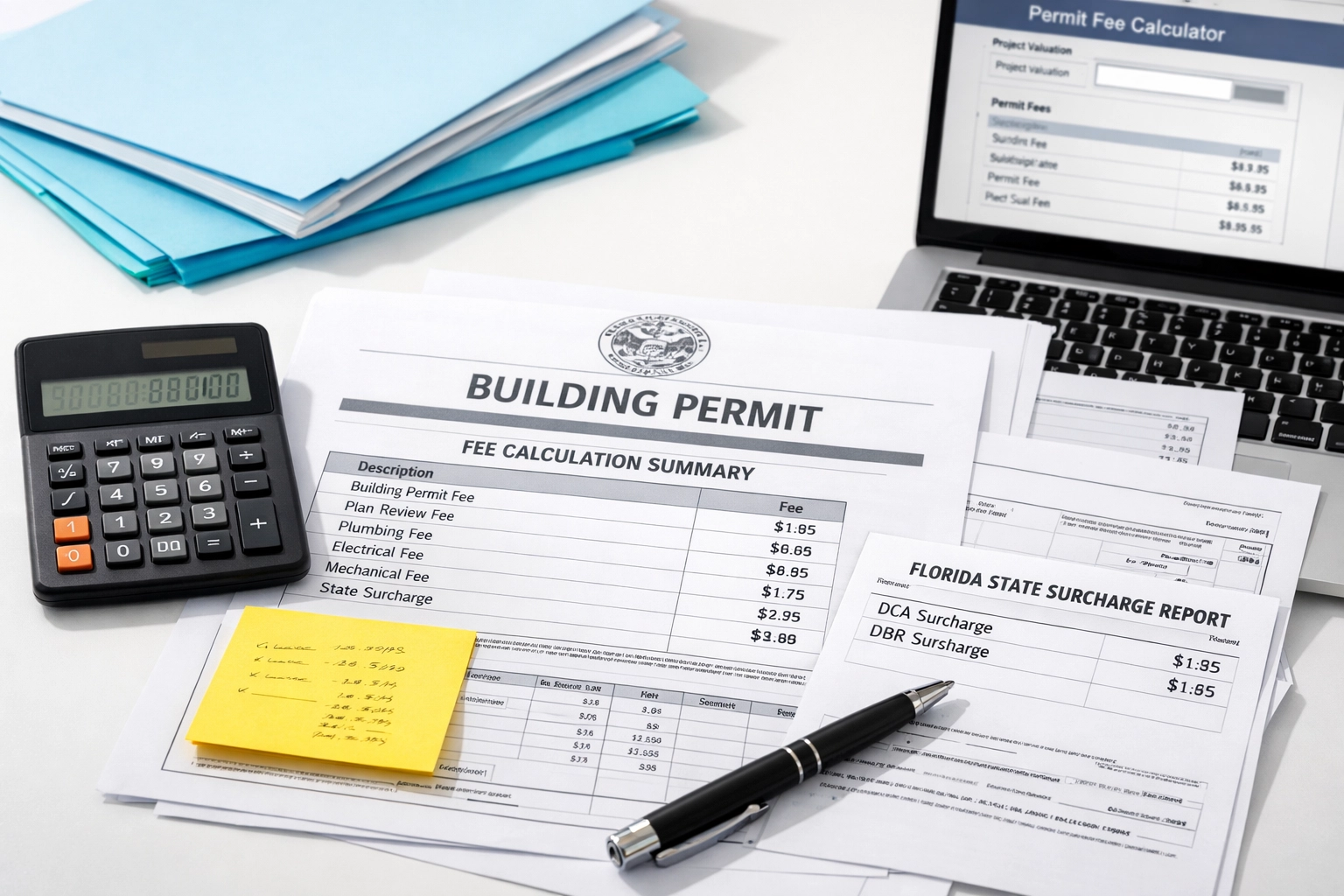
Beyond base permit fees, every Florida jurisdiction must collect mandatory state surcharges. These surcharges fund state-level building code enforcement and regulatory oversight programs.
Current state surcharge structure:
- Department of Community Affairs surcharge: 1.00% of combined permit and plan review fees (minimum $2.00)
- Department of Business & Professional Regulation surcharge: 1.50% of combined fees (minimum $2.00)
Combined, these surcharges add approximately 2.5% to 3% to your total permit costs. While this might seem minimal on a $200 permit, it adds up on larger projects. On that $1,213 Bay County example above, state surcharges added an additional $30.33.
These surcharges are non-negotiable and apply statewide. They’re collected at the local level but forwarded to state agencies that oversee Florida’s building code compliance programs.
Beyond the Basics: Other Fees That Impact Your Permit Cost
Just when you think you’ve accounted for every line item, a few other potential costs can pop up during the permitting process. These fees aren’t always part of the initial estimate, but they can significantly impact your final budget if you’re not prepared. From penalties for jumping the gun to fees for failed inspections, these additional expenses are often avoidable with careful planning. Understanding them ahead of time is key to keeping your project on track and within your financial plan. Let’s look at the most common costs that can arise after you’ve submitted your application.
Penalties for Starting Work Without a Permit
It can be tempting to get a head start on demolition or construction while waiting for your permit, but this is a costly mistake. Florida jurisdictions are very clear on this: if you begin work before a permit is officially issued, you can face a penalty that is four times the normal permit fee. This isn’t just a slap on the wrist; it’s a significant financial blow that can derail your budget. Beyond the fine, you’ll also be issued a stop-work order, halting all progress until the proper permits are secured. Working with a professional to manage your permit application ensures you have the official green light before a single nail is hammered, protecting you from these entirely preventable penalties and delays.
Re-Inspection Fees for Failed Inspections
Passing your inspections on the first try is one of the best ways to keep your project moving smoothly and your costs down. If an inspector arrives and the work isn’t ready or fails to meet code, you’ll be on the hook for a re-inspection fee. These fees are designed to escalate, making repeat failures increasingly expensive. For example, a first re-inspection might cost $60, but a second could be $120, and a third $180. These charges add up quickly and represent lost time and money. Proper coordination and a thorough understanding of code requirements are essential to avoid this. Ensuring your contractor has everything perfectly prepared for the inspector’s visit is a critical step in preventing these added costs.
Optional Fees for Faster Service
For projects on a tight schedule, waiting for a standard plan review can feel like an eternity. Many Florida jurisdictions offer an expedited review process for an additional fee. This optional service can significantly shorten your wait time, but it comes at a premium. For example, an expedited plan review could cost anywhere from $430 for a residential project to over $1,800 for a commercial one. While it’s a steep price, it can be a worthwhile investment if the cost of project delays is even higher. A permit expediting firm like All Florida Permits can help you weigh this decision and manage the expedited process to ensure your application gets priority attention and moves through the system as quickly as possible.
Why Permit Costs Vary by Florida County
One of the most frustrating aspects of Florida permit costs is the variation between jurisdictions. A roofing permit in Miami-Dade County might cost significantly more or less than the identical project in Polk County.
Why such variation exists:
- Administrative overhead: Larger counties with more complex review processes often charge higher fees to cover staffing costs
- Technology investments: Jurisdictions with advanced digital permitting systems may charge differently than those still using paper processes
- Local ordinances: Some counties or cities add supplemental fees for specific review requirements beyond state minimums
- Inspection frequency: Areas requiring more frequent inspections may reflect those costs in higher permit fees
This is particularly important for developers working across multiple Florida markets. You can’t simply budget the same permit costs for a project in Jacksonville that you’d use for Tampa. Each jurisdiction publishes fee schedules, but interpreting them correctly: and knowing which fees apply to your specific project: requires local expertise.
Smart developers and contractors build in location-specific permit cost research during their project planning phase. Understanding these variations early prevents budget overruns later.
How Legislative Changes Affect Permit Fees
Florida lawmakers recognized that excessive permit fees can slow construction and inflate housing costs. In response, the 2026 legislative session produced two bills aimed at permit cost relief.
Florida House Bill 803 and Senate Bill 526 both target administrative fee reductions by:
- Eliminating certain administrative and extra fees that inflate project costs
- Requiring at least 50% reductions on specific commercial construction permits
- Streamlining fee structures across jurisdictions
However, implementation varies by locality. Some counties have already adjusted their fee schedules, while others are still determining how to comply with the new requirements. If you’re planning a commercial project in 2026, it’s worth checking whether your jurisdiction has implemented these cost reductions yet.
These legislative changes reflect Florida’s ongoing efforts to balance proper building code enforcement with reasonable costs for property development. While permit fees will never disappear entirely: they fund essential inspection and safety services: the trend is toward more predictable, standardized pricing across the state.
Can a Permit Expediter Really Save You Money?
At first glance, hiring a permit expediting service seems like an added expense. But for most projects, professional expediting services deliver significant cost savings that far exceed their fees.
Here’s the math that many developers already understand:
Construction delays are expensive. Every day your project sits waiting for permit approval, you’re paying:
- Financing costs on construction loans
- Equipment rental fees
- Labor costs for crews in standby mode
- Opportunity costs from delayed project completion
A typical permit approval process in Florida can take anywhere from 30 to 90 days: or longer if your application has issues. An experienced permit expediter can often cut that timeline in half by:
- Submitting complete, accurate applications the first time
- Anticipating reviewer questions and addressing them proactively
- Maintaining relationships with building department staff
- Navigating jurisdiction-specific requirements efficiently
- Resolving issues quickly when they arise
Real cost comparison example:
A commercial developer carrying $50,000 per month in soft costs during construction finds their permit approval delayed by 60 days due to incomplete submittals and back-and-forth corrections. That delay costs $100,000 in extended financing and overhead.
Professional permit expediting services typically cost a fraction of one month’s carrying costs: often $2,000 to $5,000 for standard commercial projects. If those services reduce approval time by even two weeks, the ROI is substantial.
For homeowners, the calculation is similar but often involves holding costs on their existing residence, temporary housing expenses, or contractor scheduling conflicts that push completion dates.
Discounts for Using Private Providers
Here’s a strategy that can make a real difference in your budget: using a private provider for plan reviews and inspections. Many Florida jurisdictions actually offer a discount on permit fees when you offload this work from their staff. Think of it this way: when a certified private company handles the review or inspections, the city’s workload is lighter, and they pass some of those savings to you. The potential discounts can be significant—you might see a 12% reduction for using a private plan reviewer, 28% for private inspections, or even a combined 40% discount if you use a private provider for both services.
Before you get too excited, there is a catch. These discounts won’t apply if the reduced fee drops below the jurisdiction’s minimum charge for a permit. Every city and county has its own set of rules, which can make it tricky to figure out your actual savings. For example, you can see how detailed these get by looking at the permit fee schedule for Wellington, FL. This is where our permit expediting services become invaluable. We can help you understand if using a private provider is the right financial move for your specific project and location, ensuring you capitalize on every available discount.
How to Accurately Estimate Your Florida Permit Cost
Building permit costs in Florida represent an unavoidable part of any construction project. Understanding the fee structure: base fees, valuation-based calculations, state surcharges, and jurisdiction-specific variations: helps you budget accurately and avoid surprises.
The key is recognizing that permit costs extend beyond the fees themselves. Time delays, resubmittals, and compliance issues often cost far more than the permit application itself. That’s why experienced developers and homeowners approach permitting as a strategic investment rather than merely a regulatory hurdle.
Whether you’re building your first accessory dwelling unit or managing a multi-million dollar commercial development, accurate permit cost planning starts with understanding your jurisdiction’s specific requirements and fee schedules. Navigating these requirements efficiently: whether independently or with professional support: ensures your project stays on schedule and within budget.
Permit requirements and procedures may vary by jurisdiction. Always verify current fees with your local building department or consult with a licensed permitting professional for project-specific guidance.
Getting professional permit assistance often reduces review times and improves compliance outcomes. All Florida Permits helps property owners, developers, and contractors prepare complete applications and navigate jurisdiction-specific requirements throughout Florida.
Frequently Asked Questions
Why can’t I just use an online calculator to find my exact permit cost? While online calculators can give you a rough idea, they often miss the mark because permit fees aren’t one-size-fits-all. Each Florida county and city has its own unique fee schedule, local rules, and methods for calculating a project’s value. A simple calculator can’t account for these local differences, which is why the final cost on your official application can be quite different from an online estimate.
Besides the initial application fee, what are the most common “surprise” costs I should budget for? The two biggest budget-breakers are penalties and re-inspection fees. Starting work even a day before your permit is issued can result in a fine that is four times the original permit cost. Additionally, if your work isn’t ready for an inspection or fails to meet code, you’ll have to pay a re-inspection fee, which often increases with each subsequent failure. Both of these costs are completely avoidable with careful planning and scheduling.
My project is on a tight deadline. Is paying for an expedited review my only option to speed things up? Paying for an expedited review is one way to shorten the timeline, but it’s not the only strategy. The most common cause of delays is an incomplete or incorrect application that gets bounced back for corrections. The fastest path to approval is submitting a perfect application the first time. Working with a professional who knows exactly what your local building department requires can prevent these time-consuming revisions and often get your permit approved faster than a standard review, without the extra expedited fee.
How does using a private provider for inspections actually save me money on the permit fee? When you hire a certified private company to handle your plan review or inspections, you’re taking that task off the local building department’s plate. To encourage this, many jurisdictions will give you a discount on the administrative portion of your permit fee. They’re essentially passing some of their operational savings on to you. The exact discount varies, and it’s important to confirm the rules in your specific municipality to see if it’s the right financial choice for your project.
If my application is perfect, can I still face delays that cost me money? Unfortunately, yes. Even a flawless application can get held up due to a backlog of projects at the building department, a reviewer’s specific questions about your plans, or simple communication gaps. This is where having a professional on your side becomes so valuable. An experienced expediter knows the local system and can proactively communicate with department staff to resolve minor issues before they become major delays, keeping your project moving forward.
Key Takeaways
- Understand the full cost breakdown: Your final permit fee is more than just the application cost; it’s a combination of base fees, state surcharges, and additional charges calculated from your project’s total value.
- Plan ahead to prevent expensive mistakes: Starting work before your permit is issued or failing an inspection can lead to steep penalties and re-inspection fees, so proper scheduling and preparation are key to protecting your budget.
- View permit expediting as an investment: A professional permit expediter can shorten your approval timeline and prevent costly errors, often saving you more in project delay costs than the price of their service.