

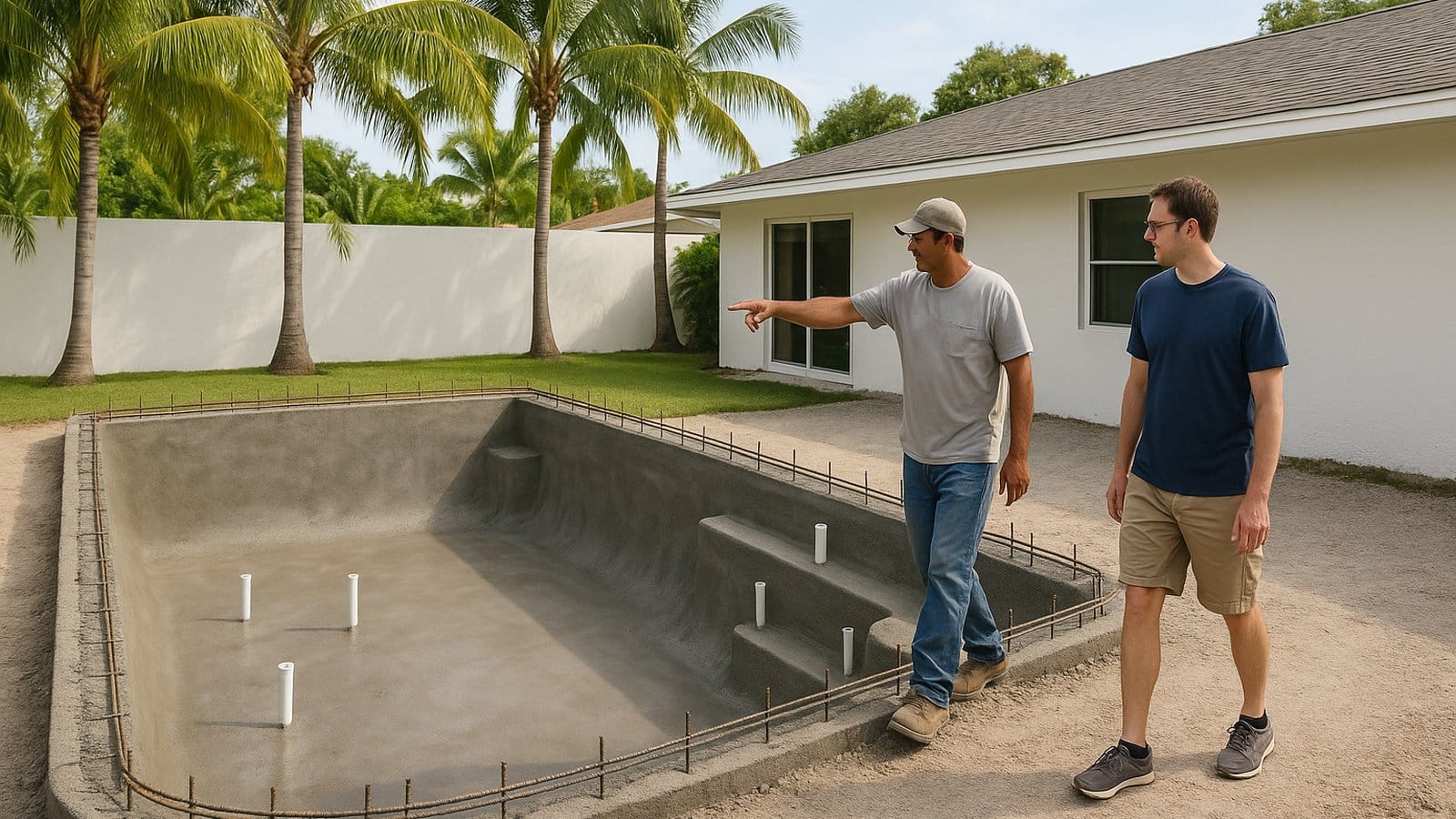
A new in-ground pool is a popular backyard upgrade in South Florida, and it is also one of the more involved residential permits to get through review. A pool permit in Miami-Dade usually covers more than the shell itself: it touches zoning, engineered structural plans, electrical bonding, plumbing, often gas or pool equipment, and the safety barrier that state law requires before final inspection. When the pool is part of a larger project with a new deck, a screen enclosure or a full backyard renovation, the number of moving parts grows. This guide explains what owners should plan for before the application goes in and where pool projects tend to stall. All Florida Permits is a private permit-expediting company, not a government agency, and every requirement described here depends on the jurisdiction that controls your property.
Which office reviews a pool permit in Miami-Dade
The first question is jurisdictional. If the lot is in unincorporated Miami-Dade, the county’s building and zoning reviewers handle the permit. If the lot is inside a municipality such as Miami, Coral Gables, Doral or Miami Beach, that city’s building department and zoning staff usually review it under their own procedures, forms and portals. Two houses a few blocks apart can follow different submittal rules simply because a city line runs between them.
For properties in unincorporated areas, the county’s swimming pool permits page states that an in-ground pool requires a building permit and that drawings showing the site plan, structure dimensions, electrical and plumbing connections and calculations must be signed and sealed by an architect or engineer. It also warns that incomplete or illegible applications will not be accepted. Municipal requirements follow a similar logic but differ in detail, so confirm the controlling jurisdiction before the design team finalizes drawings. Our Miami-Dade County permit services cover both county and municipal projects.
Zoning: where the pool, deck and equipment can go
Zoning is where a pool layout is tested against the lot. Reviewers typically look at setbacks from property lines, how much of the lot is covered by impervious surfaces, the placement of the deck and any screen enclosure, and where the pump, filter and heater will sit. A design that looks right on a rendering can fail zoning because the deck edge crowds a rear setback or the equipment pad lands in a side yard where it is not allowed.
Miami-Dade County’s zoning checklist for residential accessory structures asks for a site plan or survey with setbacks shown, and for release letters from utility companies when a pool or deck encroaches into a utility easement. Easements are an easy item to miss on older lots, and a late discovery can force a redesign. Municipal zoning codes add their own rules, and some neighborhoods have association approvals that run alongside the public process.
Zoning questions to settle early
- Is the survey current, and does it show all easements and existing structures?
- Do the pool, deck and enclosure meet the setbacks that apply to this zoning district?
- Where will the equipment pad go, and is that location allowed?
- Does the new hardscape change lot coverage enough to trigger additional review?
- Is the pool part of a larger project, such as a home addition permit in Miami-Dade, that should be coordinated in the same timeline?
Structural plans and the trade sub-permits
An in-ground pool is a structure, so the plans need engineered design for the shell, reinforcing steel and, where applicable, the deck and enclosure. Site conditions such as soils and groundwater are matters for the engineer to evaluate on each lot. Plans that leave out calculations, dimensions or connection details tend to come back with comments.
For most owners, the pool permit is only the master permit. According to the county’s pool page, electrical and plumbing work (including gas, which the county groups under plumbing) require their own subsidiary permits after the pool permit is issued, and those applications reference the pool permit number. Depending on the jurisdiction and scope, mechanical or other trade reviews can also apply, for example when a heat pump or a larger equipment package is part of the job. Each sub-permit is typically pulled by the licensed trade contractor doing that work, which means coordination across several companies.
Pieces the plan set often needs to show
- Site plan with pool, deck, enclosure, equipment and setbacks
- Structural details and calculations, signed and sealed by a design professional
- Electrical bonding and equipment connections
- Plumbing layout, including main drain and return lines
- Gas line and heater details, if a gas heater is planned
- Barrier and safety feature details
Pool safety barriers under Florida law
Florida’s Residential Swimming Pool Safety Act, Chapter 515 of the Florida Statutes, sets the baseline. Under section 515.27, a new residential pool must meet at least one of the listed safety features to pass final inspection and receive a certificate of completion. The options include a barrier that meets section 515.29, an approved safety pool cover, exit alarms on doors and windows with direct access to the pool, self-closing and self-latching doors with the release mechanism at least 54 inches above the floor, or an in-water pool alarm certified to ASTM F2208.
When a barrier is used, section 515.29 requires it to be at least 4 feet high on the outside, without gaps or features a young child could crawl under, squeeze through or climb over, with gates that open outward and are self-closing and self-latching. The county’s pool page also references the Florida Building Code and local code sections for barriers, and notes that screened patios, fences and block walls can serve as barriers when they meet the rules. For any pool permit in Miami-Dade, the barrier is not an afterthought. It should be shown on the plans and built before the final inspection is requested.
Flood zones, HVHZ and larger backyard projects
Many Miami-Dade lots sit in a special flood hazard area, and that can affect how pool equipment, electrical components and associated structures are designed and located. If the pool is part of a broader renovation, flood rules may also apply to other parts of the project. Our Florida flood zone building permit guide explains how those reviews work in general terms.
Miami-Dade is also within Florida’s High-Velocity Hurricane Zone, which our guide to HVHZ permit requirements covers in more detail. For a pool, that matters most when the project includes a screen enclosure, a new roofed structure, or new doors and windows facing the pool area, since those elements need wind-load design and approved products. Requirements depend on the jurisdiction and the exact scope.
The inspection sequence, in general terms
Inspections follow construction, and each one has to pass before work is covered. The exact names and order vary by jurisdiction, but a typical sequence looks like this:
- Layout or setback verification where the jurisdiction requires it
- Steel and bonding inspection after excavation and reinforcing are in place
- Plumbing inspection of main drain and piping before concrete is placed, including any required pressure testing
- Pre-gunite or pre-pour approval so the shell can be shot
- Deck, electrical, gas and equipment inspections as the work progresses
- Barrier or safety feature verification
- Final inspection of the pool permit and closing of each sub-permit
The county’s pool page specifically states that approvals must be obtained before covering any work, and that the first plumbing inspection comes after excavation, reinforcing steel, bonding and main drain installation, but before concrete placement. A failed inspection at this stage can stop the crew until it is corrected and re-inspected.
Where pool permit projects stall
Delays on a pool permit in Miami-Dade rarely come from a single cause. They usually build up from avoidable gaps:
- Incomplete applications. Missing calculations, unsigned drawings or an outdated survey can stop intake before review begins.
- Correction rounds. Each set of reviewer comments requires revised drawings and a resubmittal, and multiple disciplines can comment at different times.
- Missed requirements. An easement release, an association approval or a barrier detail that was not addressed up front can surface late.
- Uncoordinated sub-permits. If the electrical, plumbing or gas permits are not ready when the builder needs them, inspections cannot be scheduled.
- Poor follow-up. Status changes, comments and inspection results need someone watching them and responding quickly.
A practical checklist before you apply
- Confirm whether the property is in unincorporated Miami-Dade or in a municipality.
- Order or update the survey, and identify easements and existing structures.
- Have the designer test the pool, deck, enclosure and equipment layout against zoning.
- Get signed and sealed structural plans with all required details and calculations.
- Decide on the safety feature and show the barrier details on the plans.
- Line up the licensed trade contractors for electrical, plumbing and gas sub-permits.
- Check flood zone and hurricane design requirements if the scope includes enclosures or other structures.
- Assign one party to track comments, resubmittals and inspections through final.
For projects inside the City of Miami, our Miami permit expediting services page explains how we manage city submittals.
Frequently asked questions
Does every new in-ground pool in Miami-Dade need a permit?
The county’s pool page states that in-ground pools require a building permit. Municipalities apply their own rules, but a new in-ground pool is generally a permitted project. Confirm with the controlling jurisdiction.
Can the pool permit cover the electrical and plumbing work?
Usually not on its own. In unincorporated Miami-Dade, electrical and plumbing work (including gas) require subsidiary permits after the pool permit is issued. Municipal practices vary.
Is a fence the only way to meet the pool safety rules?
No. Chapter 515 lists several options, including a compliant barrier, an approved safety cover, exit alarms, self-closing and self-latching doors, or a certified in-water alarm. Local rules may add requirements, so confirm what your jurisdiction will accept.
How long does pool permit review take in Miami-Dade?
There is no single answer. Timing depends on the jurisdiction, the completeness of the package, the number of correction rounds and how quickly comments are answered.
Request a project proposal
All Florida Permits is a private permit-expediting company. We prepare, submit, track and manage permit packages for substantial residential projects, including new pools that are part of larger backyard and renovation work, and we coordinate with your designer, pool builder and trade contractors through final inspection. To get started, request a project proposal with the property address, the project scope and your current plans.