

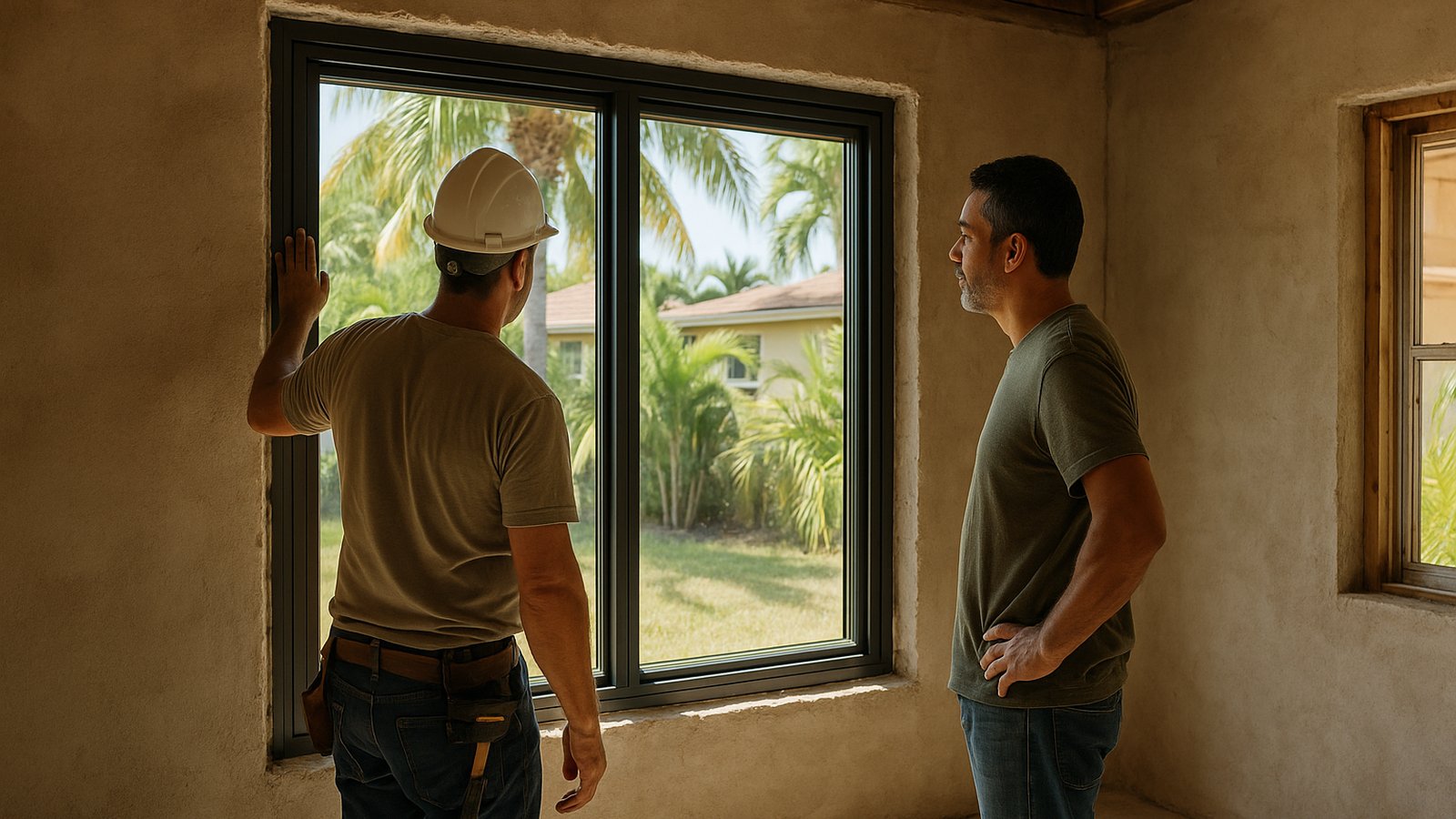
Replacing windows with hurricane-rated products is a major upgrade for many Miami-Dade owners, and the permit stage is where these projects often slow down. An impact window permit in Miami-Dade ties together a licensed installer, product approval documents, opening-by-opening drawings and inspections. This guide explains how the process generally works for a single-family home or a larger renovation, where applications get held up, and how to prepare. All Florida Permits is a private permit-expediting company, not a government agency, and requirements vary by city and project, so treat this as planning help rather than a substitute for the reviewing building department’s rules.
Why an impact window permit in Miami-Dade is rarely a “quick swap”
Florida law requires a permit before most building alterations, modifications and repairs begin; section 553.79 of the Florida Statutes states the rule, and local building departments typically review window and door replacement under that rule. Miami-Dade is within the High-Velocity Hurricane Zone (HVHZ), and the sample Miami-Dade NOA linked below states that the product was designed to comply with the Florida Building Code, including the High Velocity Hurricane Zone. Our HVHZ permit requirements guide covers the zone itself. Here the focus is the practical package an owner needs for the windows.
Whether an opening needs its own review, how a municipality splits review between zoning, structural and product sections, and what a given city accepts online all depend on where the property is. Municipalities in the county handle their own permits, and the county handles the unincorporated area. Start with the Miami-Dade County permits overview and confirm the right authority for your address.
Product approval comes before the application
Impact-rated windows, doors and shutters must have product approval before they can be used. Under section 553.842, windows, exterior doors, shutters and impact protective systems are among the product categories that must be approved under one of the methods the statute allows before construction use, and a product may not be advertised, sold or marketed as hurricane protection without that approval. In Miami-Dade, reviewers typically check the product against a Miami-Dade Notice of Acceptance, often called an NOA. An NOA lists the manufacturer, the product series, the approved configurations and a stated expiration date, and the document says it is not valid after that date. You can see the format in this sample Miami-Dade NOA.
Two practical points follow. First, reviewers generally expect the NOA to be current when the permit is applied for, and the NOA itself says it is not valid after its expiration date, so ask the window company for the document rather than relying on a brochure. Second, an NOA covers specific sizes, glazing types and anchoring methods; a product shown in a showroom is not automatically approved in every size your openings need. For more depth, read our guides to Miami-Dade product approval and the wind-borne debris region permit guide.
What goes into the permit package
Every jurisdiction publishes its own submittal checklist, but impact window packages generally include the following:
- A signed application naming the property owner and the licensed contractor responsible for the installation.
- The product approval for each window and door type, with the current NOA or state approval and the page showing the approved sizes and anchoring.
- An opening schedule that lists each opening with its location, width, height, product type and design pressure.
- Installation drawings or details showing how each opening will be anchored into the wall, as required by the product approval.
- Any engineer or architect documents a reviewer asks for when openings are being enlarged, moved or structurally altered.
- A notice of commencement, if Florida’s construction lien law and the local building department call for one for the project.
- Association or homeowner approval letters if the property is a condominium unit or sits in a managed community.
When the job also changes the footprint, such as a larger opening, a new door or an addition, review becomes broader and zoning and structural questions can enter the picture.
A practical sequence for owners
- Measure and map every opening. A simple floor plan with numbered openings and sizes makes the later schedule easy to build.
- Choose products by approval, not only by look. Ask for the NOA and confirm it covers the sizes and glazing you plan to order.
- Confirm the installer’s license and who is pulling the permit. The permit should list the party responsible for the work.
- Build the package once. Combine the application, schedule, product approvals and drawings so the reviewer can match each opening to an approved product.
- Submit through the correct authority. Use the building department that governs the property, whether a city or the county.
- Plan the inspections. Installation and final inspections generally follow the work, and the inspector can ask to see the approved documents on site.
Where impact window permits usually stall
- Expired or mismatched NOAs. The approval on file has lapsed, or it does not cover the product size actually ordered.
- Incomplete opening schedules. Missing dimensions or design pressures force a correction round.
- Scope changes mid-review. Adding or enlarging an opening after submission can require the reviewer to look at the package again.
- Association approvals arriving late. A condominium board’s approval can take longer than the permit itself.
- Open permits on the property. Older unresolved permits can complicate new applications, so check the history before you apply.
Rather than assuming a fixed number of weeks, ask the reviewing department for its current review process and plan around the corrections it commonly raises.
Coordinating windows with the rest of the renovation
Impact windows rarely arrive alone. They are often bundled with a kitchen or bath remodel, a roof replacement, a new entry door or stucco repairs, and each trade can carry its own permit and inspection. When those permits are handled separately, scheduling conflicts can arise: inspection timing for one trade can affect another trade working in the same area. Mapping the permits against one construction schedule helps the owner, the general contractor and the installer see which approvals have to land first.
It also helps to decide early who owns each document. The window supplier often holds the product approvals and the manufacturer’s installation details, the contractor usually holds the license and insurance records, and the owner holds the property documents and any association approvals. A single tracking list, updated as comments come back from the reviewer, keeps corrections from sitting unanswered. Slow responses to reviewer comments are one common source of delay.
Who this service is for
All Florida Permits works on substantial residential projects and complex commercial work in Miami-Dade and Broward. That includes whole-house impact window replacements bundled with a renovation, multi-trade packages and projects where the owner would rather not manage submittals, corrections and follow-up alone. We prepare, submit, track and manage the permit. We do not install windows, and we are not a government agency. For an overview of how that works, see our Miami permit expediting services page.
Frequently asked questions
Do I need a permit to replace windows in Miami-Dade?
In most cases, yes. Florida law requires permits for building alterations and repairs, and window and door replacement is typically reviewed by the local building department. Confirm the exact rule with the authority that governs your property.
Is impact glass the same as a product with an NOA?
Not necessarily. The product must carry the approval that the reviewing jurisdiction accepts, and the approval must cover the specific size and configuration you are installing.
Can my window company pull the permit?
Often the licensed contractor responsible for the installation applies, but the owner should still understand what is being submitted, including the product approvals and the opening schedule.
What if one opening does not match any approved size?
Raise it before submission. Options may include selecting a different approved product or having the design reviewed, depending on what the building department allows.
Does All Florida Permits install impact windows?
No. We are a private permit-expediting company that prepares, submits, tracks and manages permits for the project team.
Next step
If your project involves a full set of impact windows, a renovation, or a mix of trades, request a project proposal with the address, scope and current plans, and we will review what the permit package needs.