

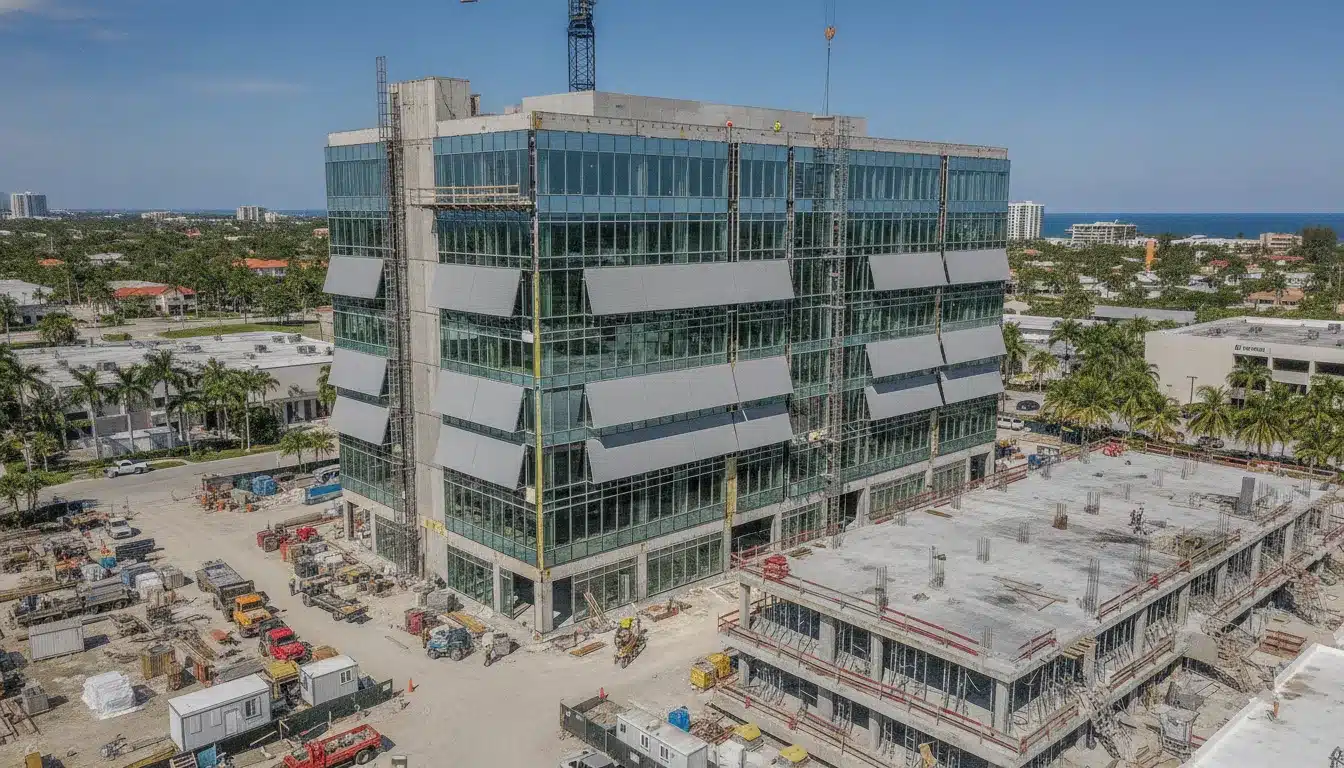
Strict impact standards in Florida’s wind-borne debris regions define the building permit approval process for commercial projects. Failing to meet these coastal codes often leads to long delays and costly changes during the plans review stage.
A Florida wind borne debris region permit requires that all outer glass doors and windows meet strict impact resistance standards set by the latest Florida Building Code. According to FBC Section 1609.1.2, sites where wind speeds reach 140 mph or higher, or 130 mph near the coast, must always use impact glass or shutters (up.codes). Builders must provide valid Florida Product Approval numbers for every single building part to prove these components can handle high winds and avoid common permit office rejections. Expert private providers help speed up this work by making sure all submittal files are completely right and ready before they go to the city for review.
Project managers should find their site’s wind zone early to avoid project stops and extra costs. Knowing the local map is the first move to get a permit for any big build. To start, one must ask: What Is a Wind-Borne Debris Region in Florida? The path begins with
Florida Wind Borne Debris Region Permit: What Is a Wind-Borne Debris Region in Florida?
The Florida Building Code defines a wind-borne debris region as a land area where high winds can blow objects into buildings during a hurricane. Structures in these zones must follow impact-resistance rules for all glass openings. These laws ensure that windows and doors can stop flying debris. This protection keeps the building safe and prevents the roof from lifting off due to wind pressure inside the house.
Official Code Limits
State laws group these regions by wind speed and how close they are to the ocean. Any place where wind speeds can reach 140 mph or more is in this zone. Also, areas within one mile of the coastal high-water line are included if wind speeds hit 130 mph or more. These rules come from Section 1609.1.2 of the state code. They tell builders how strong the outer shell of a building must be to stay safe.
Counties and High Risk Zones
Most land near the Atlantic and Gulf coasts falls into a wind-borne debris region. This includes all of Miami-Dade and Broward counties. These two areas have even stricter rules and are called High-Velocity Hurricane Zones. Coastal parts of Palm Beach, Martin, and Monroe counties are also in these regions. When designing for wind-borne debris requirements, you must check the wind speed maps for your specific job site to meet the law.
Standard for Impact Gear
Projects in these zones must use glass that can stop a hit or use shutters. All parts must pass tests set by ASTM E 1886 and ASTM E 1996. These tests show that a window can stop a heavy piece of wood moving at a high speed. To get a Florida wind borne debris region permit, you must show that your products meet these tough goals. This proof is a key part of your building plans.
When Are Impact-Rated Windows and Shutters Legally Required?
Florida building codes require impact protection for exterior openings in high-risk zones. Per FBC Section 1609.1.2, buildings in wind-borne debris regions must use impact-resistant glass or shutters. These rules apply to new builds and major repairs where safety is key. Local offices enforce these rules to stop building failures during big wind storms.
FBC opening protection rules
Properties in wind-borne debris regions must meet high test levels for all glass openings. The code says these parts must pass ASTM E 1886 and ASTM E 1996 missile tests. These tests prove windows and shutters can stop flying debris from breaking into the building. Keeping this seal stops air pressure from lifting the roof or breaking walls in a hurricane.
County requirement comparison
| County / Zone | Impact Protection Required | Wind Speed Threshold | Notes |
|---|---|---|---|
| Miami-Dade (HVHZ) | Yes | 140+ mph | Requires Miami-Dade NOA for all products; strictest statewide |
| Broward (HVHZ) | Yes | 140+ mph | High-Velocity Hurricane Zone; same missile test level |
| Palm Beach (Coastal) | Yes | 130-140 mph | Coastal strip within 1 mile of high-water line |
| Monroe (Florida Keys) | Yes | 140-180 mph | Highest wind speeds; up to 180 mph per updated maps |
| Inland counties | Conditional | Below 130 mph | Only required within wind-borne debris zone boundary |
Knowing the exact wind speed map for a job site helps teams choose compliant products from the start. A wrong assumption about a county’s zone can lead to rejected materials and long plan review delays. Project managers should check the latest Florida Building Code wind speed maps or work with a local permit expert before ordering impact-rated components.
Garage doors also fall under these safety rules in high-wind zones. To pass a check, garage door glass must meet ANSI/DASMA 115 impact rules. This rule applies to doors with windows that could fail under wind loads. Managers must check that all parts have a Florida Product Approval or Miami-Dade NOA before they apply for a permit.
County rules and HVHZ zones
The High-Velocity Hurricane Zone (HVHZ) covers Miami-Dade and Broward counties. These areas have the most strict impact rules in the state. Every outside opening in the HVHZ must have impact-rated protection. This is true no matter how far the site is from the coast. Other areas like Palm Beach and Monroe have local rules that require protection based on wind speed maps.
Inland counties may only need impact protection if the site sits in a wind-borne debris zone. This zone often follows the 140 mph wind line or the 130 mph line near the coast. Builders should talk to local departments or a permit partner to find the exact rules. Following these codes is vital for adherence to wind-borne debris building codes and avoiding plan rejections.
Florida Product Approval Numbers: What They Are and Why They Matter
Every building component used in a Florida wind borne debris region permit application must have a valid Florida Product Approval (FPA) number. This code shows that an item, such as a window or door, meets the high-wind and impact-resistance rules set by the state. Without these numbers, local building departments cannot verify that your project will stand up to heavy storms.
Required components for approval
The state needs FPA numbers for products that make up the outer shell of a building. This includes windows, exterior doors, skylights, and roofs. According to state building codes, these items must survive the hit of flying debris during a storm. When you pick a product, the maker gives a number that links to its test data and installation rules. This data ensures the product works as intended in high-wind zones.
The role of the Florida Building Commission
The Florida Building Commission keeps a list where you can look up any FPA number. Professionals use this tool to confirm that a product is safe to use in certain wind speed zones. Each entry shows the wind pressure the product can handle and how it must be fixed to the building. Correct product approval data is vital for a fast plan review process.
Impact on permit plan review
Missing or wrong FPA data is a top reason for permit rejections in Florida. Plan reviewers check these numbers against the project drawings to make sure they match the site needs. If the files are not clear, the reviewer will stop the work and ask for more facts. Providing the right approval numbers from the start helps you avoid delays and keep your build on schedule.
How Complete Submittals Prevent Plan Review Rejections
Incomplete documentation is a main cause of permit delays in Florida. For projects in a wind-borne debris region, the margin for error is small. Local building departments need clear technical data to verify that a structure can withstand high-wind events. Missing or vague files lead to quick plan review rejections. These delays can halt construction for weeks and increase project costs.
Common documentation gaps
Most rejections happen when a team fails to show they meet regional code rules. For a Florida wind borne debris region permit, you must include wind load data and structural math that match the local wind map. Common gaps include missing engineering seals or failing to list product numbers for every exterior opening. You can ensure submittal accuracy for wind-borne debris regions by checking every file before you send it to the state.
- Confirm the project site’s wind speed zone using the latest Florida Building Code wind speed maps and ATC Hazards by Location tool.
- Verify that every exterior glazed component window, door, skylight, and garage door carries a valid Florida Product Approval number matched to the site wind zone.
- Include signed and sealed structural calculations that demonstrate the building envelope withstands the design wind loads for the specific wind-borne debris region.
- Attach manufacturer installation instructions and Miami-Dade Notice of Acceptance documentation for products used in HVHZ areas.
- Review the complete submittal package for missing engineering seals, incomplete product data, or incorrect wind load designations before filing.
Florida product approval data
Checking the impact strength of windows and doors is a vital part of the review. Per industry data on permit rejections, failing to include Florida Product Approval numbers for building parts is a frequent error. These numbers show that the materials meet the high-wind standards for your zone. The state requires proof of impact-resistance for all glazed openings in these areas. Without this data, the reviewer cannot confirm that the project follows the Florida Building Code.
Benefits of permit expediting
Permit expediting helps construction teams avoid delays by checking all files before the state sees them. This step confirms that all files are full and follow both state and local laws. By finding errors early, permit consultation prevents the slow cycle of rejection and resubmittal. This work keeps projects on time. It ensures that the final approval move is as fast as possible for the builder.
Using Private Providers to Expedite Wind-Borne Debris Compliance Under Florida Statute 553.791
Florida construction projects in wind-borne debris regions often face long wait times at local building departments. To solve this, developers use private providers as allowed by Florida Statute 553.791. This law lets owners hire private firms to handle plan reviews and inspections. Using a private provider can save weeks or months on your project schedule by avoiding the standard queue at the city or county office.
The statutory basis for private providers
Section 553.791 of the Florida Statutes creates a path for faster permit approvals. It allows a fee-owner to use a private provider for building code services. These services include the review of plans for a Florida wind borne debris region permit and follow-up field inspections. The local building official must still issue the permit, but they rely on the private provider’s signed and sealed reports. This helps keep complex commercial and industrial builds on track.
Scope of private provider services
Private providers can handle most parts of building code compliance. They verify that windows and doors meet high-wind standards. However, their scope has specific limits. Under Florida Statute 553.791, private providers cannot perform reviews or inspections for fire prevention codes. Fire safety codes fall under a different law and require a separate process. You must still work with the local fire marshal to get those specific approvals for your site.
Accelerating occupancy and inspection timelines
Using a private inspector helps you get a certificate of occupancy faster. Local officials often have high workloads that delay field visits. A private provider can be on-site exactly when your crew is ready. They perform inspections for structural, mechanical, and electrical systems. Since these inspectors focus only on your project, they catch issues early. This level of service is vital for projects in areas where hurricane-grade parts are required by law.
Frequently Asked Questions
Are permits required for impact windows and doors in wind-borne debris regions?
Yes. You must get a building permit to install impact windows and doors in these zones. The permit path proves these parts meet the strict wind and debris standards of the site. Based on Florida Building Code Section 1609.1.2, outer spaces must have a cover or tough glass. Missing facts or blank forms are common causes for permit delays. You must show the parts are rated for the high wind speed of your job site.
What test standards must garage doors meet in wind-borne debris regions?
Garage doors in these zones must meet tough test rules. The Florida Building Code states that glass in garage doors must pass the ANSI/DASMA 115 test. This test proves the door can take a hit from debris during a storm. It also ensures the door stays strong under high wind stress. Using doors that lack these marks can lead to permit delays and building damage during a major storm. This helps keep the structure safe when winds are high.
How do Florida Product Approval numbers prevent permit rejections?
Florida Product Approval numbers prove that building parts meet state wind and impact rules. You must put these numbers in your permit files to show the items are safe for use in wind zones. As noted on the All Florida Permits blog, missing part data is a top reason for plan review delays. Giving valid numbers helps staff check your files fast. This step cuts down on wait times and ensures your project stays on track without costly stops.
Can private providers handle fire safety inspections under Florida Statute 553.791?
No. While Florida Statute 553.791 lets private firms do many plan reviews and checks, it has limits. The law does not include the fire safety rules found in Chapter 633. The local fire office must still handle these safety reviews. Private firms help speed up the rest of the permit path for big jobs. This choice gives you more control over your build time while meeting all state rules. It helps you get your final papers to move in much faster.
Ready to Streamline Your Wind-Borne Debris Region Permit Process?
Navigating Florida’s wind-borne debris region requirements demands precise documentation, verified product approvals, and a clear understanding of the regulatory framework. A rejected submittal means weeks of delay on an already tight construction schedule. All Florida Permits helps construction professionals prepare complete, compliant permit applications that pass plan review the first time. From Florida Product Approval verification to private provider inspection coordination, our team knows what the reviewing authority expects. Request a proposal today and keep your project moving on schedule.