

A missing structural calculation can freeze a large Florida building project for weeks. For commercial contractors, navigating local building department bottlenecks is the difference between starting on schedule and paying idle field crews.
Streamline Your Plan Review Process , Request a Consultation
The Florida building plan review process is the formal regulatory evaluation of construction plans to ensure full code compliance before a permit is issued. Because Florida is a home-rule state, individual municipal departments manage their own reviews, creating wide variations in project approval schedules. Initial municipal plans reviews typically range from 24 hours for simple permits to ten business days or more for complex commercial projects. This technical desk review is distinct from field inspections, and builders can leverage Florida Statute 553.791 to use private providers and bypass local agency bottlenecks. Understanding these administrative rules helps construction professionals eliminate common correction loops, control project costs, and secure their building permits without unexpected scheduling delays.
How do you prepare your submittals to avoid common review delays? Learning what municipal plans examiners look for is the key to keeping your project on schedule. To protect your timeline, you must master the details of the Florida building plan review process. The path begins with understanding each stage and how to prepare.
What Is the Florida Building Plan Review Process?
The Florida building plan review process is a mandatory technical review of construction plans by a qualified authority to verify compliance with the Florida Building Code and applicable local amendments. Examiners evaluate structural, mechanical, electrical, plumbing, and fire-safety systems before a building permit can issue.
The Florida building plan review process is a vital step in any construction project. It ensures that your designs meet the Florida Building Code and all local rules before any work starts. This stage protects project safety and keeps your job on schedule.
The legal rules for plan reviews
Under FBC Section 107, most builders must submit detailed plans before they can get a permit. In fact, most commercial and multi-family projects require expert plan reviews. Builders must submit full plans before any physical work can start. This step ensures that every structure meets state standards for wind, fire, and safety.
The legal rules also give builders other options to save time. For instance, Florida Statute 553.791 lets private providers review plans and inspect sites to bypass local agency delays. In addition, Florida Statute 553.792 requires local officials to approve or deny applications within set timeframes that depend on project scope.
Key areas of the review
The Florida building plan review process is not just a quick check of your drawings. It is a deep look at major areas of your project. This review ensures compliance with the Florida Building Code and any local code rules. Local boards must sign off on these plans before they issue a building permit.
Reviewers look at building, electrical, plumbing, mechanical, fire, and zoning checks. Each area has its own set of rules to keep people safe. For example, structural engineers check if the design can withstand high hurricane winds. Likewise, electrical and plumbing experts check the load limits of your power and water lines.
Fire safety experts also look at exit paths and alarms to make sure they match state codes. If any of these areas fail to meet the code, your project will face costly delays. A single error can pause your schedule and push back your start date.
How plan reviews differ from inspections
Many builders confuse plan reviews with field inspections, but they are very different. Building plan review is distinct from building inspection. Plan reviews occur before the local office issues your permit. In contrast, inspections take place on the job site as your crew builds the structure.
During the plan review, examiners study paper or digital files at their desks. They look for errors and code issues before you buy any materials. Once they approve the plans and issue the permit, physical work can start.
After permit approval, inspectors visit the job site to check the actual work. They make sure the crew builds the project exactly as shown in the approved plans. Understanding this difference helps you plan your project timeline well.
How Does the Florida Plan Review Process Work Step by Step?
The Florida building plan review process moves through a defined sequence of stages, each one gate-checking the next. Understanding this sequence helps your team plan timelines accurately and flag delays before they compound.
During this phase, local plans examiners check that your drawings meet all local building codes before work starts. This stage makes sure your plans follow the strict rules needed to keep people safe and withstand harsh storms.
Local permitting authority and the Florida home-rule context
Florida is a home-rule state. This setup means that cities and counties, not the state, have the power to control land use and issue permits. Because of this, the rules and timelines can change a lot from one city to another. Under Florida Statute 553.791, the state regulates building code inspection services, which include both building plans and site work engineering plans. But local building offices still manage the day-to-day work, which can cause local delays.
The sequential stages of the review process
To avoid delays, you should understand how the review moves through the local building department. The entire process follows a strict sequence of steps. Each phase must finish before the next one starts. Knowing this sequence helps your team plan their timelines.
- Application and Intake: You submit your completed forms and design files to the local building department. Staff will log your project into their system and assign a tracking number. This number lets you check your review status online.
- Completeness Check: Administrative clerks check your files to make sure no pages are missing. If you forget to include key forms, the clerk will reject your submittal right away. You will then have to start the intake process again from the beginning.
- Technical Code Review: Specialized plans examiners study your drawings to check for safety. They verify that your plans meet structural, mechanical, electrical, and plumbing standards. They may also check local zoning rules and environmental restrictions.
- Correction Notice: If the examiners find any errors, they will issue a formal list of required changes. Your design team must address each comment and update the plans before you can proceed. This stage is often the main cause of project delays.
- Re-Submission and Re-Review: You submit your revised plans back to the local building office. The same examiners review only the changes to make sure you fixed the errors. If some issues remain, they will issue a second correction notice.
- Final Approval: Once all examiners sign off on your plans, the building official approves the package. The department then calculates your fees and issues the building permit. You are then legally allowed to start physical construction on the site.
Mandatory documentation checklist for submittals
To pass the completeness check, you must know the exact building permit submittal requirements for your project. Most local departments need a full set of plans that show structural, mechanical, electrical, and plumbing (MEP) designs. You must also include site plans that detail stormwater flow and erosion control. Finally, you must submit proof of your state contractor licensing and active insurance. By law, local building offices cannot delay your permit indefinitely. Under Florida Statute 553.792, local agencies must approve or deny your permit application within clear timelines. If they fail to meet these limits, they must provide a written explanation of the delay.
What Are Typical Plan Review Timelines by Project Type?
Project type and size directly control how long your plan review will take. Under state law, local officials must act on plans within set limits, but real timelines depend heavily on which review path you choose. Knowing these timelines helps you plan your construction schedule without costly surprise delays.
Typical single-family residential timelines
For single-family residential projects, speed is key. Busy local building departments can take anywhere from two to ten business days to complete a first review. For example, Miami-Dade County lists a first review range of 24 hours to 10 business days on their plan review resource page. This means a simple home permit could sit in a queue for up to two weeks.
If you need a faster option, you can hire a private provider. Under Florida Statute 553.791, licensed private firms can review your plans. Private reviews for single-family homes often finish in 24 to 48 hours. This path helps you avoid long queues at local building departments.
Commercial and multi-family timelines
Commercial and multi-family jobs involve more complex codes. Local officials often take 2 to 10 business days for the first review of these larger files. If the department finds errors, the rework review can take another 2 to 10 business days after you submit corrections. These back-and-forth cycles can quickly stall your project start date.
To stay on track, contractors can use private plan reviews to speed up commercial jobs. Licensed private providers can complete commercial and multi-family reviews in about two business days. This option serves as a strategic tool to keep your schedule on time when local agencies face high volumes.
Key factors that cause delays
Even a simple project can get stuck in the review queue. Delays in the Florida building plan review process have common causes. These include incomplete application files, a lack of plan details, zoning conflicts, and high permit volume. If your file lacks key data, local departments will issue corrections that force you into a new round of review.
To prevent these delays, you should understand the permit application process before you submit plans. Preparing high-quality construction files is the best way to get fast permits. Contractors also use a private provider plan review under Florida Statute 553.791 to speed up projects when local timelines are far too long. Working with an expert firm ensures your files are complete before they reach the examiner’s desk.
AHJ Plan Review vs. Private Provider Review: Which Is Right for Your Project?
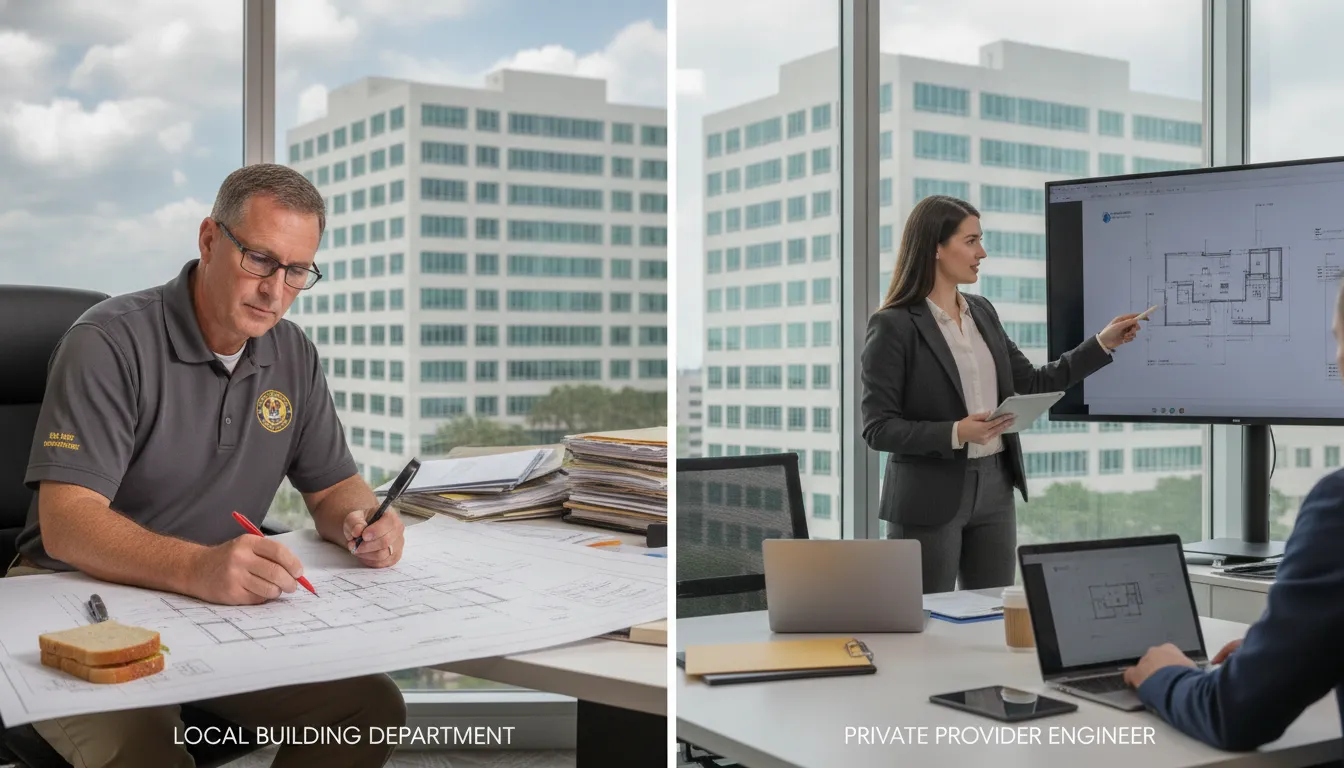
Every Florida construction project faces a choice between two review paths: the traditional local building department (AHJ) or a licensed private provider. Each carries different cost, speed, and timeline implications that directly affect your project budget and schedule.
When you start a construction project, you must choose how to handle the Florida building plan review process. You can use the local building department or hire a private firm. Both paths have pros and cons that affect your cost and speed.
The traditional local route
The standard path relies on the local building department, also known as the Authority Having Jurisdiction (AHJ). Under Florida Statute 553.792, local building officials must approve or deny permit requests within set timeframes. These limits depend on the type and scope of your project.
But many local building departments face big backlogs. High permit volume and small staff often cause long delays. While this route has the lowest direct cost, slow reviews can delay your project start.
Local reviews are a safe choice if your timeline is flexible. For example, if you build a simple project with no hard deadline, the local department is enough. But you must plan for likely delays and extra review rounds.
The private provider alternative
If you want to speed up your timeline, you can hire a private provider. Under Florida Statute 553.791, you can use a licensed engineer or architect for your plan review. The local building department still issues the permit, but they cannot repeat the review done by your private provider.
A private provider plan review is a smart tool to keep your job on track. Private reviews often take just days instead of weeks or months. This path is best when local departments are too busy or when your project has a tight deadline.
Private firms focus only on reviews and inspections. They do not manage other city tasks, so they can work much faster. When you use this service, you get expert help to answer your questions and review your plans in days.
Choosing the best approach
To pick the right path, you must weigh cost against speed. Local AHJ reviews cost less upfront, but they can hurt your schedule. Private provider reviews require you to pay a private fee, but they save you time. This trade-off is crucial for commercial projects where delays cost money.
Many commercial builders use private review to avoid holding costs. For them, paying a private fee is a small price compared to a stalled job site. You should review your budget and timeline to see which option fits your goals.
| Feature | AHJ Plan Review | Private Provider Review |
|---|---|---|
| Reviewer Authority | Local building official | Licensed private engineer or architect |
| Typical Timeline | Weeks to months based on backlog | A few business days |
| Cost Structure | Standard local government permit fees | Standard local fees plus private firm fee |
| Flexibility | Low, tied to local government hours | High, with dedicated project managers |
| Statutory Basis | Florida Statute 553.792 | Florida Statute 553.791 |
| Ideal Use Case | Simple projects with flexible timelines | Complex commercial projects on tight schedules |
What Are the Most Common Plan Review Corrections and How Can You Avoid Them?
The Florida building plan review process most often slows down because of preventable paperwork errors and design conflicts. Catching these problems before you submit is the best way to keep your project on schedule and avoid costly re-review cycles.
Local building offices inspect designs to ensure they align with the state code. If your files lack details, the city will send them back for corrections. Catching these problems before you submit is the best way to keep your project on schedule.
Frequent causes of review delays
Many issues that stall permits are paperwork errors. According to industry data, incomplete forms, a lack of detail, zoning conflicts, and high permit volume at local offices are frequent reasons for delays. For instance, if you fail to show proof of licensing, the clerk may reject your file right away. Checking these paperwork items first saves days of waiting.
These paperwork and zoning errors include:
- Unsigned or unsealed design files from the architect or engineer of record.
- Site plan designs that do not show the correct setback limits or flood zones.
- Missing forms for local fire marshal or water management districts.
Technical errors in MEP and structural plans
Technical errors on drawings are harder to fix than missing forms. The Florida building plan review process requires many key documents. A standard submittal includes structural plans, mechanical, electrical, and plumbing (MEP) plans, site plans, and proof of contractor licensing.
Reviewers often find conflicts between these separate sets of drawings. For instance, a duct from the HVAC plans might run straight through a steel beam on the structural plans. These errors require a full redesign, which forces your project back to the start of the queue.
Each drawing set must also comply with the baseline Florida Building Code and any local technical rules under Florida Statute 553.791. If your engineers use U.S. standards but ignore local wind load rules, your plans will fail. These technical changes can add weeks to your timeline because the local office must review the fixed files again.
Checklists and professional pre-reviews
To avoid many rounds of reviews, you should run your own pre-review of all documents. Using a detailed checklist ensures you meet all building permit submittal requirements before you submit your package. This step catches simple typos, missing details, and licensing paperwork. Contractors who use these checks find that their files move through the queue much faster.
Working with a permit expediter can also speed up the review process. Expediters review your files to find clashes between your structural and MEP designs. They know what local officials look for and can help you answer questions early. This smart step helps you avoid costly errors, keep your construction schedule on track, and get your permit without needless delay.
How Are Plan Review Fees Structured in Florida?
Plan review fees in Florida depend on your project scope and which review path you choose. Understanding the fee structure upfront helps you budget accurately and avoid surprise re-review charges that add up across correction cycles.
Local department fee schedules
Local building departments often charge fees in one of two ways. For simple tasks, they may use a flat fee. For larger projects, the cost is often a percentage of the total construction value. This means the fee scales with the size of your job. You can learn more about these charges by reviewing the expedited building permit guide before you submit your plans.
These official fees cover the cost to check your structural, electrical, mechanical, and plumbing plans. Most local departments include one or two rounds of review in the base price. But if your plans have errors, you must pay extra re-review fees for each correction cycle. These surprise costs can add up fast and delay your start date.
Private provider pricing models
If you choose a third-party firm, the fee structure is different. Under Florida Statute 553.791, you can hire a private provider to handle this work. These firms often charge a fixed fee per review or bill by the hour. A fixed fee gives you cost certainty, while hourly rates work well for complex designs.
Many private providers bundle plan review with inspection management services. This bundle simplifies your budget and ensures a single point of accountability. The local department must also give you a fee reduction because the city does not have to do the plan review work themselves.
Cost and velocity tradeoffs
For most contractors, the choice comes down to speed and cost. A private provider will cost more upfront than the local city department. But the speed of a private review can save you thousands of dollars in the field. Avoiding local delays helps you skip idle labor costs and keeps your project on schedule.
To make the best choice, you must weigh these upfront fees against your project timeline. If you have a tight schedule, paying more for speed is often the best business decision. You can get a clear view of your options by scheduling a plan review consultation with a professional firm.
Frequently Asked Questions
How long does the Florida building plan review process take?
The time it takes to review building plans depends on project size and local office workload. In fast areas, a home review can take 24 hours, while commercial jobs can take up to 10 business days. Under Florida Statute 553.792, local offices must check and respond to requests within set limits. If your files have errors, the recheck will add more days to your schedule.
What is the difference between plan review and inspection?
Plan review occurs before your permit is issued. Examiners check your drawings to make sure they follow the building code. Inspections happen during construction. Inspectors visit the job site to check that you are building exactly what the approved plans show. Both steps are key parts of the building permit process you must complete to pass code.
Can I expedite the Florida building plan review process?
Yes, you can speed up the review by using a private provider. Under Florida Statute 553.791, you can hire a private firm to check your plans instead of waiting for the local city office. This option can cut commercial wait times down to just two business days. The local building department must still issue the permit, but they cannot repeat the review.
What documents are required for a building plan review?
You must submit complete plans that show every part of your construction project. This includes structural drawings, MEP plans, and detailed site plans. You also need to show proof of your contractor license and business insurance. To ensure your files are complete, you can review our building permit submittal requirements checklist before you turn them in.
Ready to Streamline Your Florida Plan Review Process?
Hidden design errors during the local building plan review stage can quickly stall your entire construction project and raise your overall overhead costs. Constant back-and-forth correction loops with local building offices will inevitably push back your start dates, disrupt your team, and delay your opening day. Getting professional review support ensures you meet all building permit submittal requirements on your first try to prevent these costly municipal delays.
Ready to start? Request a consultation for your next Florida construction project to secure your schedule from the very beginning. Our dedicated team of specialists will handle your technical plans and manage the entire filing process from start to finish. Let us help you navigate local agency rules to keep your project moving forward.