

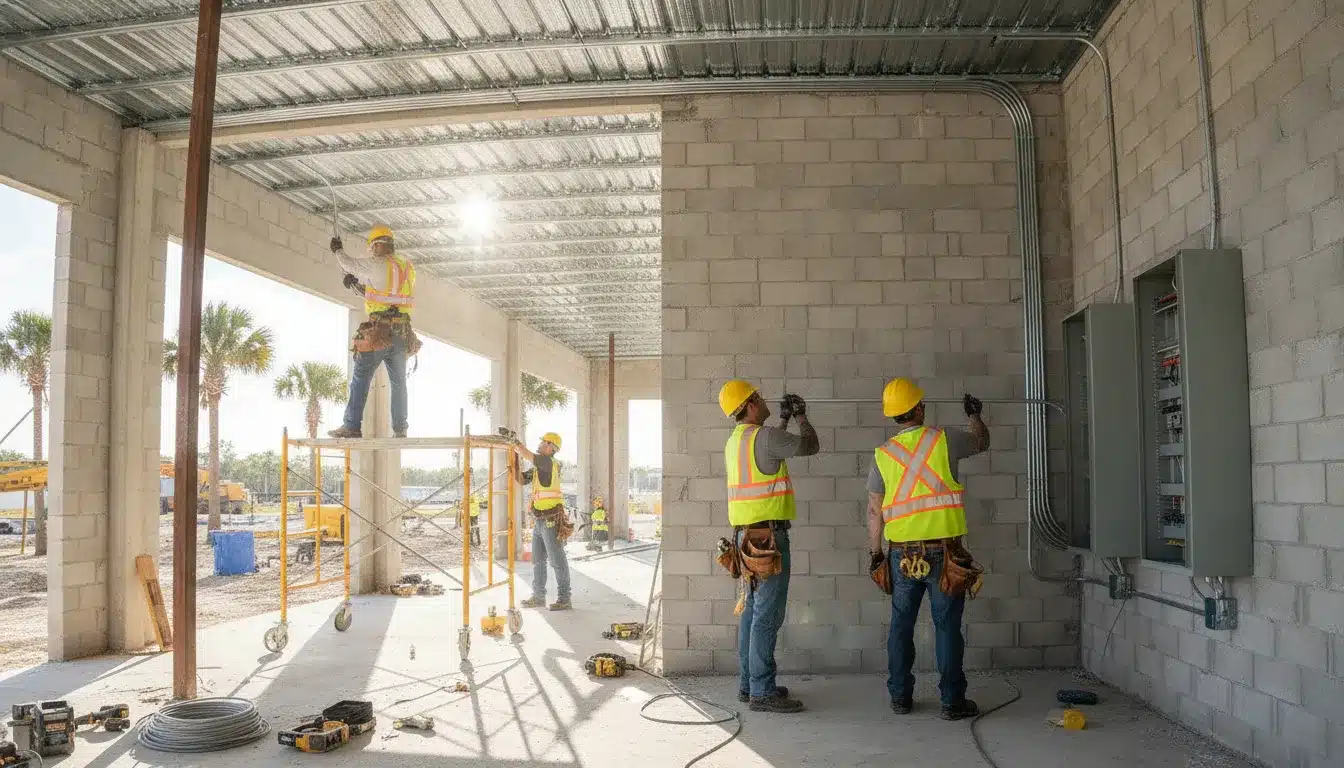
Electrical scope can affect the critical path long before conductors are installed. For a Florida commercial project, the permit strategy should be established with the plans, load calculations, equipment specifications, and AHJ requirements, not after construction is underway.
Florida commercial electrical permit requirements generally require the owner or authorized representative to apply to the building official and obtain the required permit before installing. Enlarging, altering, repairing, or replacing a regulated electrical system. The Florida Building Code provides the statewide framework, while the applicable AHJ may impose jurisdiction-specific procedures and amendments.
This requirement applies across new construction and renovation work, but the scope of the electrical activity determines the documentation, review path, inspections, and coordination needed. The first step is identifying exactly when the proposed work triggers a commercial electrical permit and how that scope fits within the governing code and local review process.
Florida Commercial Electrical Permit Requirements: When Is a Commercial Electrical Permit Required in Florida?
In Florida, a commercial electrical permit is generally required before installing, enlarging, altering, repairing, removing, or replacing an electrical system regulated by the Florida Building Code. That includes work performed by an owner or an authorized representative, not only work performed by a general contractor. The code framework incorporates the National Electrical Code (NEC), while the local authority having jurisdiction (AHJ) administers the application, review, inspection, and closeout process. See the Florida Building Code requirements before finalizing your permit scope.
New installations and capacity increases
New commercial construction requires permits for the electrical distribution system, branch circuits, equipment connections, lighting, and other code-regulated installations shown in the approved plans. A service upgrade also triggers permitting. For example, increasing a building service from 100 amps to 200 amps changes available capacity and typically requires revised load calculations, equipment documentation, and an AHJ inspection. New feeders, new panels, relocated equipment, and circuit additions should be treated as permit-triggering work rather than field changes that can be documented later.
Renovations, tenant improvements, and existing buildings
A renovation does not avoid electrical permitting simply because the structure already has a certificate of occupancy or an existing service. Alterations that change circuits, service capacity, equipment, or occupancy-related systems require review under the Florida Building Code Existing Building provisions. Those provisions provide guidance for electrical upgrades during repairs, alterations, additions, and changes of occupancy. The applicable requirements can differ from a ground-up project, but the distinction is not the same as “no permit required.”
| Aspect | New Construction | Renovation / Tenant Improvement |
|---|---|---|
| Base code | Florida Building Code (current edition) | FBC Existing Building chapter (Chapter 34) |
| Load calculations | Design for full building demand from the service in | Verify existing service can support new loads |
| Documentation | Full electrical design package coordinated with all trades | Existing conditions survey plus scope-specific drawings |
| Service upgrades | Sized during design for ultimate building load | May require upgrade if existing capacity is insufficient |
| Fire marshal review | Integrated into overall building fire protection plan | May be triggered when occupancy or egress paths change |
| Inspection sequence | Rough-in, special, trim-out, final per entire building | Often limited to the affected tenant space or renovation area |
Commercial work also carries a higher documentation and coordination burden than typical residential work. The scope may affect emergency lighting, life-safety systems, equipment loads, or other building systems, and the AHJ may apply local amendments or procedures. Commercial electrical permit requirements therefore vary by county and municipality. Confirm the local AHJ’s requirements before submitting plans, particularly when the project involves multiple trades or a change in use.
Temporary power and recurring facility work
Temporary electrical services used during construction are also subject to code requirements governing their installation, maintenance, use, and removal. A temporary power permit may be required before energizing the jobsite, with inspections tied to the service and site conditions. For facilities with recurring maintenance or minor electrical alterations, an annual facility permit may allow routine or emergency service. Repair, refurbishing, and minor renovations without a separate permit for every minor alteration. Major system changes must still be reported to the building official, who may require updated plans or inspections. Treat annual permitting as an administrative framework, not a blanket exemption from technical review.
Documentation and Plan Requirements for Commercial Electrical Permits
A complete electrical permit package gives the AHJ enough information to verify the proposed installation before review begins. For commercial work, that typically means coordinated drawings, calculations, and equipment information rather than a simple application form. The Florida Building Code requires permit applicants to submit regulated electrical work for approval before installation. And the code’s administrative provisions establish the building official’s review and inspection authority: Florida Building Code permit requirements.
Core documents to include
Start with certified load calculations that show existing demand, proposed demand, service capacity, feeder sizing, and the assumptions used for the design. These calculations are especially important for renovations and tenant build-outs, where the existing service may not support new equipment or occupancy needs. For a broader checklist, review these building permit submittal requirements.
The drawing set should also include a single-line diagram identifying the service, distribution equipment, panels, feeders, disconnects, and major electrical loads. Add equipment schedules with manufacturer information, ratings, voltage, phase, overcurrent protection, and locations. Site plans should show the building, property lines, utility connection, service route, exterior equipment, and any site lighting or emergency power components affected by the scope.
Depending on project size, occupancy, system complexity, and the AHJ’s rules, the electrical plans may need a Florida-licensed professional engineer’s seal. Confirm that requirement before finalizing the design. A seal does not replace coordination: architectural, mechanical, fire protection, civil, and electrical documents must identify the same rooms, equipment, clearances, and service assumptions.
Why incomplete packages are rejected
Incomplete load calculations, noncompliant equipment specifications, and missing special-inspection documentation are common commercial electrical permitting hurdles. Incomplete documentation is a leading cause of rejection because reviewers cannot approve what they cannot verify. A missing panel schedule or inconsistent equipment rating can trigger comments, even when the underlying design is sound.
Pre-submittal quality control
Before filing, compare every sheet against the latest architectural plans. Confirm that the project address and scope match across forms, and check that calculated loads match the schedules and single-line diagram. Verify the AHJ’s file naming, format, seal, and revision requirements. For tenant work, coordinate the electrical scope with the commercial tenant improvement permits process so base-building conditions and new tenant loads are addressed together. This review is faster and less expensive than correcting a fragmented package after plan review begins.
Inspection Stages for Commercial Electrical Work
Commercial electrical inspections follow the approved plans and the sequence established by the local AHJ. Building officials inspect installed systems for compliance with the Florida Building Code and approved construction documents, so each inspection must occur at the correct construction milestone. Resolve incomplete load calculations, equipment specifications, and special inspection documentation before requesting an inspection.
1. Rough-in inspection
Schedule the rough-in inspection after conduit, boxes, raceways, feeders, and branch-circuit wiring are installed, but before walls, ceilings, or other assemblies cover the work. The inspector needs access to verify routing, support, grounding and bonding, box placement, conductor sizing, and consistency with the approved electrical plans. Covering work before approval can require destructive access, reinspection, and schedule changes.
2. Special or threshold inspections for complex systems
Complex commercial electrical systems may require additional special inspections or threshold-related documentation beyond routine trade inspections. Confirm the project-specific requirement with the AHJ, design professional, and inspection team early, particularly when the system involves unusual equipment, significant capacity, or coordinated life-safety components. Missing special inspection documentation is a common commercial permitting hurdle. A defined inspection matrix helps the superintendent track responsible parties, required reports, and release conditions.
3. Trim-out inspection
Trim-out occurs after devices, fixtures, disconnects, panel components, and other finish-stage electrical equipment are installed. Panel terminations should be complete and identifiable, equipment should be accessible, and installed devices should match the approved plans and specifications. Coordinate this inspection with equipment startup and testing requirements so incomplete terminations or unavailable equipment do not create a failed inspection.
4. Fire marshal coordination and final inspection
Coordinate with the fire marshal when electrical work supports emergency lighting, fire alarm systems, exit signage, or other life-safety functions. These systems may require agency coordination or separate testing before the building official can close the electrical permit. The final electrical inspection confirms that permit-regulated work is complete and compliant. A successful final inspection is part of the documentation needed for the commercial Certificate of Occupancy, as addressed in Section 110 of the Florida Building Code.
Florida Statutes Section 553.791 authorizes private provider inspections, which can offer a faster alternative to the traditional AHJ inspection process when the project and jurisdiction allow it. Confirm eligibility, notice, reporting, and acceptance requirements before selecting that route. All Florida Permits can coordinate inspection management services across the permitting and closeout process.
AHJ Variation: Why Electrical Permit Requirements Differ Across Florida
Florida’s statewide code does not produce a single, interchangeable permit package for every commercial project. Local building departments and other authorities having jurisdiction (AHJs) apply the Florida Building Code through their own administrative procedures and may adopt local amendments. As a result, Florida commercial electrical permit requirements can change when a project crosses a county or municipal boundary.
Fees and review timelines are local decisions
Permit fees are established by the local jurisdiction rather than by one statewide fee schedule. Section 108 of the Florida Building Code addresses fees, but the amount, calculation method, surcharge structure, and payment workflow still depend on the AHJ. Confirm the fee basis during pre-submittal budgeting instead of assuming that a permit cost from a nearby project will apply. Review the Florida Building Code administrative provisions on fees as a starting point, then verify the current local schedule.
Review timelines and intake procedures also vary. One department may require an online portal with separate electrical, fire, and building uploads. Another may require a coordinated commercial package, a pre-application meeting, or specific naming and formatting conventions. Even neighboring jurisdictions within the same county can use different checklists, correction-notice processes, and inspection scheduling rules.
Confirm the AHJ before preparing the package
Before an electrician, engineer, or general contractor finalizes the application, identify the exact permitting authority for the parcel and confirm its current requirements. Check whether the project requires local forms, supplemental load documentation, equipment data, engineered plans, special inspection information, or coordination with the fire marshal. The same scope of work may receive different questions during plans review because each AHJ evaluates the submission through its adopted procedures.
This is why generic statewide permit lists are useful only as a starting point. An AHJ-specific checklist protects the schedule, supports accurate budgeting, and reduces avoidable resubmittals. Confirming those rules before submission is especially important when work spans multiple municipalities or when a development includes separate buildings under different permitting authorities.
How Professional Permit Expediting Keeps Electrical Projects on Schedule
Florida’s expedited permitting timelines create a framework for faster review, but they do not eliminate the work required to submit a complete, jurisdiction-ready package. Recent regulatory changes establish deadlines that can include five days for single-trade permits and up to 60 days for commercial permits. Those timelines create an opportunity for schedule control only when the application is accurate, complete, and routed through the correct AHJ process.
Prepare the package before the clock starts
A professional expeditor reviews the electrical scope, plans, load calculations, equipment specifications, contractor information, and required supporting documents before submittal. Incomplete load calculations, non-compliant equipment specifications, and missing special inspection documentation are common sources of rejection. Correcting those issues before filing is materially less disruptive than responding after a reviewer places the application on hold.
This review also accounts for local amendments and jurisdiction-specific procedures. Commercial electrical permit requirements can vary between Florida municipalities, even when the underlying Florida Building Code framework is the same. A permit expeditor confirms the AHJ’s current forms, submission pathway, review requirements, and fee process rather than relying on a package prepared for another jurisdiction.
Coordinate reviews beyond the building department
Electrical work may intersect with approvals from the fire marshal, a water management district, or the Florida Department of Environmental Protection. Emergency lighting, fire alarm systems, exit signage, site utilities, and environmental conditions can create review dependencies outside the standard building permit workflow. Coordinating those requirements early helps prevent an electrical permit from advancing while a related agency review remains unresolved.
Manage responses and protect the critical path
Expediting is not simply submitting an application and waiting for approval. It includes tracking review status, identifying actionable comments, coordinating revised documents with the design and construction team, and confirming that responses address the AHJ’s actual request. That discipline reduces idle time between review cycles and helps project managers forecast when electrical rough-in, inspections, and downstream closeout activities can proceed.
For contractors and developers managing a constrained schedule, expediting a commercial electrical permit can function as both a schedule-control and cost-management strategy. Request a proposal when the project needs jurisdiction-specific preparation, agency coordination, and active permit follow-through from submittal through approval.
Frequently Asked Questions
Are permits required for all commercial electrical work in Florida?
Most commercial electrical work requires a permit when it involves a new installation. Service or capacity change, circuit alterations, equipment relocation, or other work regulated by the Florida Building Code. The code requires the owner or authorized representative to apply to the building official before installing, enlarging, altering, repairing, removing, converting, or replacing a regulated electrical system (Florida Building Code guidance). Confirm the scope with the local AHJ before mobilizing.
Do commercial electrical permit plans need to be signed and sealed?
Commercial submittals commonly require signed and sealed plans when the project falls within professional design requirements. The exact format, seal requirements, load calculations, equipment schedules, and single-line diagram standards depend on the AHJ and project scope. Verify the submission checklist before filing so the package is complete on the first review.
What license is required to apply for a commercial electrical permit?
The permit applicant generally must be an appropriately licensed electrical contractor, or an owner or authorized representative who meets the jurisdiction’s rules. The AHJ may also request current insurance certificates, workers’ compensation documentation, and contractor qualification records. Confirm whether the jurisdiction requires state certification, local registration, or both.
Does commercial electrical work have to comply with the Florida Building Code?
Yes. Commercial electrical designs and installations must comply with the currently adopted Florida Building Code and applicable electrical standards, along with local amendments enforced by the AHJ. Review the code edition and local requirements during design, not after plan review comments are issued.
What is the “01” category for electrical permits in Florida?
In jurisdictions such as Miami-Dade, “01” may identify a general electrical permit category used for commercial or residential work. Permit category names are jurisdiction-specific, so confirm the correct classification with the permitting department before submitting an application.
Ready to Request a Proposal?
Commercial electrical permitting requires coordinated documentation, AHJ communication, and inspection planning across the project lifecycle. All Florida Permits helps contractors, developers, and property owners manage those requirements across Florida jurisdictions. To discuss your project scope and next steps, request a proposal from the permitting team.