

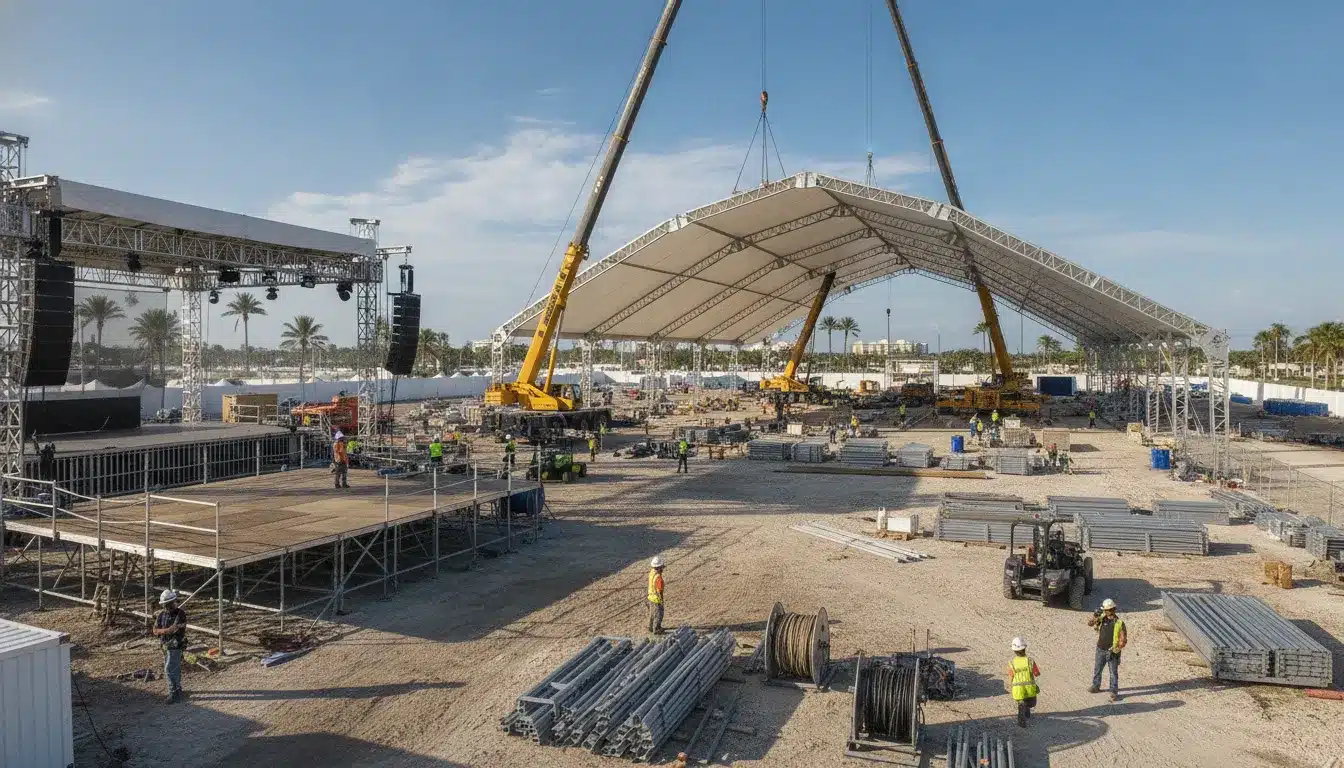
A single unapproved tent can halt a multi-million dollar Florida project hours before gates open. Local building departments frequently shut down major public gatherings because of missing municipal permits or uninspected temporary structures. These sudden, late-stage cancellations disrupt project schedules, damage professional reputations, and create severe financial liability for commercial developers.
A Florida special events permit is the primary regulatory approval required to host commercial gatherings, erect temporary structures, or serve alcohol on public or private property. Obtaining this key permit involves coordinating multiple local agencies, including municipal zoning offices, local fire marshals, and the state health department. Every local jurisdiction sets its own strict filing timeline and structural inspection criteria, making early coordination crucial for maintaining your project or operational schedule. Failure to obtain the necessary permits leads to immediate event cancellation, heavy fines, and potential legal action under Florida law. Working with professional permit managers helps developers streamline these complex municipal reviews, clear zoning requirements quickly, and protect their construction timelines. This proactive oversight ensures that your venue remains safe and compliant, allowing your team to focus on successful event execution.
Navigating this complex multi-department approval process can seem overwhelming without a structured commercial roadmap. Fortunately, understanding these local ordinances will help you secure your approvals quickly and protect your project schedule. To set up a successful planning workflow, avoid municipal bottlenecks, and keep your team on track, let’s examine: What Is a Florida Special Events Permit?
What Is a Florida Special Events Permit?
Defining the Special Event Permit
A Florida special events permit is a short-term license from a local city. It allows short-term events that exceed normal zoning rules or impact public spaces. These permits help cities manage crowd safety, noise levels, and traffic flow. To start the permit process under city rules, you must submit a detailed site plan and pay a permit fee.
Your site plan must show where everything goes. You must map out all tents, stages, and exits. City planners review these layouts to keep people safe. Making these drawings can take time, but clear plans prevent delays during city reviews.
Permitting Rules for Public and Private Land
Special rules apply depending on where you host your event. Public land has strict rules. For example, Stuart requires a permit for any group of 25 or more people on public property. Tampa also requires a permit for any outdoor event on city land with a planned crowd of 25 people or more.
Private property events are not always exempt from these city rules. In many areas, outdoor events on private land still require permits if they draw large crowds. For instance, Stuart requires a special permit for any private event that creates heavy traffic. If your event affects public safety, local city officers can step in to enforce these laws.
Attendance Thresholds and Compliance Risks
Crowd limits vary widely from one city to the next. In smaller cities like Stuart, the crowd limit is low, meaning you must get a permit for just 25 people. In contrast, Orlando requires a permit when events on city property or roadways involve more than 100 people. These local rules mean you cannot use a single plan across the state.
In Miami, a small event includes any group with up to 250 people at any one time. Larger crowds in Miami trigger longer review times and higher fees. Because these city rules change so much, you must research local codes early. Checking these codes before you book a venue will save you from major delays later.
Hosting a public or private event without the proper permit is a huge risk. Failing to get the right permits can result in closed events, steep fines, or legal action. Expert Florida building permit expediting services can guide you through every step. We handle the plans, fees, and city forms so you can focus on building a safe and great event.
Temporary Structures: Tents, Stages, and Utility Connections
To host an outdoor event in Florida, you must plan for more than just vendors and guests. To secure a Florida special events permit, you must show that your site is safe. Temporary structures like stages and large tents must meet strict rules to protect the public. Knowing these rules early helps you avoid costly delays and schedule setbacks.
Permits for temporary assets
Tents and stages are standard at major events, but they also bring safety risks. Installing temporary tents on private property often triggers safety inspections or extra permits. Local codes often define the exact size and height limits that need a building permit. If your structures exceed these limits, you must submit detailed design plans to local building officials. These plans must show that your setups can withstand high winds and heavy rain.
Large stages and closed tents also need power and water to run. Setting up temporary power or water lines may need special permits or safety checks before the event starts. To meet Florida Fire Marshal fire safety permit rules, you must keep exit paths clear. You must also map out where all wires and pipes will run. You must also mark all main power switches and water valves clearly.
Steps to secure infrastructure approvals
Event hosts should follow a clear path to manage these temporary setups. Following a simple checklist helps you track each approval from local offices. This list shows the key steps to secure your permits and pass your safety checks:
- Submit your site layout. You must give the city a plan that shows where each tent, stage, and fence will stand. This drawing must also show how far these setups are from other buildings on the lot.
- Apply for utility hookups. You will need special permits to connect temporary power and water lines to your setups. Make sure licensed pros do all the power and water hookups.
- Schedule safety reviews. Some municipalities require a pre-event inspection of temporary structures by the local building official or a private provider inspector. This check must take place before any guests arrive on the site.
- Partner with a private provider. Florida private provider building inspections can expedite the approval process for temporary structures like stages or tents. This is the best way to bypass public agency backlogs.
- Get final approval. Once all structures pass their safety checks, the city will issue the sign-off needed to open your event. Keep a copy of this permit on-site during the entire event.
Benefits of private provider inspections
Using local city staff for safety checks can lead to delays when government offices are busy. Partnering with a private provider lets you schedule reviews on your own timeline. This service keeps your project on track and ensures you meet your launch date without stress. Our team has the skill to manage these reviews fast, so your event can open on time.
Health Department Approvals and Alcohol Permits for Events
Serving food or drink at a public event adds extra steps to your planning process. You must work with state and local boards to keep your event safe and legal. Getting your health department and food service permit approvals is a key step to avoid shutdown.
Food and Beverage Sanitation Rules
State health department approvals are standard for events serving food or beverages. If your event has food truck vendors or catering, each vendor needs proper licenses. Food vendor permits or health department inspections are mandatory for any event where food is prepared or served. Local inspectors often visit your site to check food temperatures and hand-washing setups.
Managing these rules across many vendors can become hard. A single missing health permit can delay your whole event start. Our team helps you review all vendor files before the city inspection. This prep work gives you schedule control and keeps your event on track.
Alcohol Licensing and Local Zoning
Selling or serving alcohol needs careful planning with state and city boards. For events on private land, you must get alcohol permits through the local zoning office. For example, Tampa special use permits for alcohol on private land go through this department. This process ensures your venue meets local land use laws before any sales begin.
Failing to get these zoning sign-offs can lead to shutdown or fines. State laws are strict about where and how you can sell beer and wine. We guide you through the local zoning steps to make sure your venue is fully approved.
If you hold your event on public city land, different rules apply. Many towns waive some rules for city-owned land. However, you still need to get a state temporary permit to serve drinks. You must send your approved local permit to the state alcohol agency to finish the process.
Temporary Equipment and Vendor Compliance
Your food vendors will need extra equipment like tents and mobile power sources to operate. Each city sets strict safety limits on these temporary setups. In Miami, you can set up tents up to 40×40 square feet without a full building permit. Tents larger than this size need a safety check from local officials.
Power generators also face local limits. Miami rules allow you to use temporary generators up to 50KVA without extra permits. If your vendors need larger power systems, you must get approval from the local inspector. Working with experts ensures all your vendor setups meet local safety standards.
Navigating Local Municipality Variations Across Florida
Municipal variations and timelines
Every city in Florida has its own rules for hosting a public event. Planners must look at local codes to find specific facts because there is no single state standard. Early planning is key because permitting timelines vary by city and event size. If you do not plan ahead, local departments may deny your request or delay your schedule.
Some local rules require detailed safety reviews for temporary structures. For example, developers must often address Florida stormwater permit requirements if their event sites require grading or land changes. Also, some locations require a final certificate of occupancy for events before any guests can enter the property. These overlapping layers of city approval make the process tough to handle alone.
Comparing requirements by city
To show how much these rules vary, we can look at several major cities in Florida. The size of your crowd and where you hold the event will dictate which Florida special events permit you must obtain. For example, the City of Tampa requires a permit for any outdoor activity on city property with 25 people or more. Tampa also requires a site plan and fee to begin the permitting process. Other cities have much higher limits or use different fee structures.
| City | Attendee Threshold | Required Lead Time | Key Rules & Fees |
|---|---|---|---|
| Miami | 250 (small), 251 to 1,000 (medium), 1,001+ (large) | 30 days for small events; 45 days for medium and large events | Limit of 4 events per property each year. Maximum length is 7 days per event. |
| Jacksonville | 500 or more attendees | 90 days minimum; applications accepted up to 1 year in advance | Alcohol sales on city property require an exemption request 60 days in advance. |
| Sarasota | Any size requesting city services or commercial vending | 90 days minimum; 120 days recommended lead time | Requires a 50 dollar application fee. No applications accepted under 30 days. |
| Orlando | More than 100 people | Varies by event scale and required city services | Required if event is on city property or blocks a city road. |
| Stuart | 25 or more people | Varies by size and location | Applies to public property. Online portal handles submissions. |
Professional permit management benefits
As the table shows, special event rules in Florida are fragmented. Missing a single deadline can force you to cancel your gathering or pay steep fines. Each city has different rules for site plans, crowd control, and safety checks. Many cities now use online portals to streamline special event applications, which helps track files but does not reduce the rule complexity.
Working with a permit expert helps you avoid these costly mistakes. A professional team knows how to work with multiple departments to keep your project on schedule. They handle the paperwork and talk to city officials so you can focus on your event. By letting experts manage your applications, you ensure full compliance with every local code.
Fire Marshal Requirements, Noise Ordinances, and Insurance
Fire safety and department coordination
Large outdoor event permitting often involves coordination across multiple departments, including fire, police, and public works. You must work with these teams to keep your venue safe. Each group has its own review rules for a Florida special events permit. The local fire marshal plays a key role in this process.
They check your layout to make sure fire trucks can reach the site. You must meet Florida Fire Marshal fire safety permit requirements to avoid shut downs. This is true for indoor halls and open fields.
A local fire inspector will often visit your site before the gates open. They will check your fire extinguishers and exit signs. If they find any safety issues, you must fix them right away. Failing an inspection can delay your start or cause a fine.
For example, temporary tents on private property often trigger the need for special event permitting or safety inspections. You can read about these tent rules on the Stuart special events page. Fire officials must sign off on tent fabrics, exit paths, and flame certificates.
Local noise rules and speaker permits
Live sound can lead to complaints if you do not plan ahead. Noise ordinances and amplification permit requirements must be checked before planning events with live music or speakers. Most cities set clear limits on sound levels. These rules often change based on the hour of the day.
Local laws may restrict loud sound after ten at night. Other areas allow music to play later on weekends. You must check these hours before you hire any bands. A speaker permit lets you run sound equipment within set limits.
If you go over the legal decibel cap, police can fine you or end your event. Apply for these noise permits well before your event starts. Each town has its own rules for sound tests and speaker placement.
A good sound layout will point speakers away from nearby homes. You can also use shielding to damp the noise. Clear planning helps you keep the volume legal and avoid municipal fines.
Liability insurance and crowd safety
You must protect your venue and guests from unexpected risks. Insurance requirements for special events often include general liability coverage naming the municipality as an additional insured. This policy shields the town if a guest gets hurt.
Most cities need to see your insurance certificate before they issue a permit. Security and crowd management plans are often required for large events to ensure public safety. Your plan must show how guards will control the gates.
Large crowds can cause bottlenecks at entrance gates. Your security team must know how to handle these lines. Fire lanes must stay clear at all times for emergency trucks.
List your first aid spots and exit routes on the site plan. Having a clear plan in place keeps everything running smoothly. Working with local police helps you build a solid safety plan. This step keeps your guests safe and protects your business from major law suits.
Frequently Asked Questions
What happens if you run an event without a Florida special events permit?
If you do not get a permit, cities can shut down your event. You may also face steep fines or legal action from local officials. According to guides on All Florida Permits, missing permits can ruin your timeline and cost you thousands of dollars. It is best to check with local officials and file all paperwork early.
Do you need a Florida special events permit for a tent on private property?
Yes, many Florida cities need you to get a permit for short-term tents. In Stuart, for example, you must apply for a permit for tents on private property to make sure they are safe. According to the City of Stuart, these rules apply to tents and other setups that bring large crowds. You must check city zoning laws before you raise a tent.
How do you get alcohol permits for a private property event in Florida?
To serve alcohol at an event on private property, you must go through the local zoning office. In Tampa, for instance, zoning officials handle all special use permits for private land. According to the City of Tampa, you must submit a full site plan and pay an application fee to start. Always check local city rules because they can vary.
Do you need health department approval to serve food at a Florida event?
Yes, you must get health department approval if your event serves food or drinks. Food vendor checks and health permits are needed for any public event where food is prepared. According to guides on All Florida Permits, these rules protect the public and make sure food is safe. Large events with many vendors must work with state health officials early in the planning stage.
Ready to Simplify Your Florida Special Event Permitting Process?
A single missed detail in your temporary structure, tent, or alcohol permit applications can cause local municipal officials to cancel your entire event. Filing paperwork with multiple local agencies and waiting for county health inspections often takes weeks of slow communication that stalls your venue timeline. By starting the plan review and permitting process with our expert team today, you can avoid these costly schedule setbacks and open on time.
Ready to simplify your process? Avoid the stress of dealing with municipal offices, local fire marshals, and county health departments on your own. Please request a proposal for your special event permitting needs today to secure your target opening date and keep your plans on track.